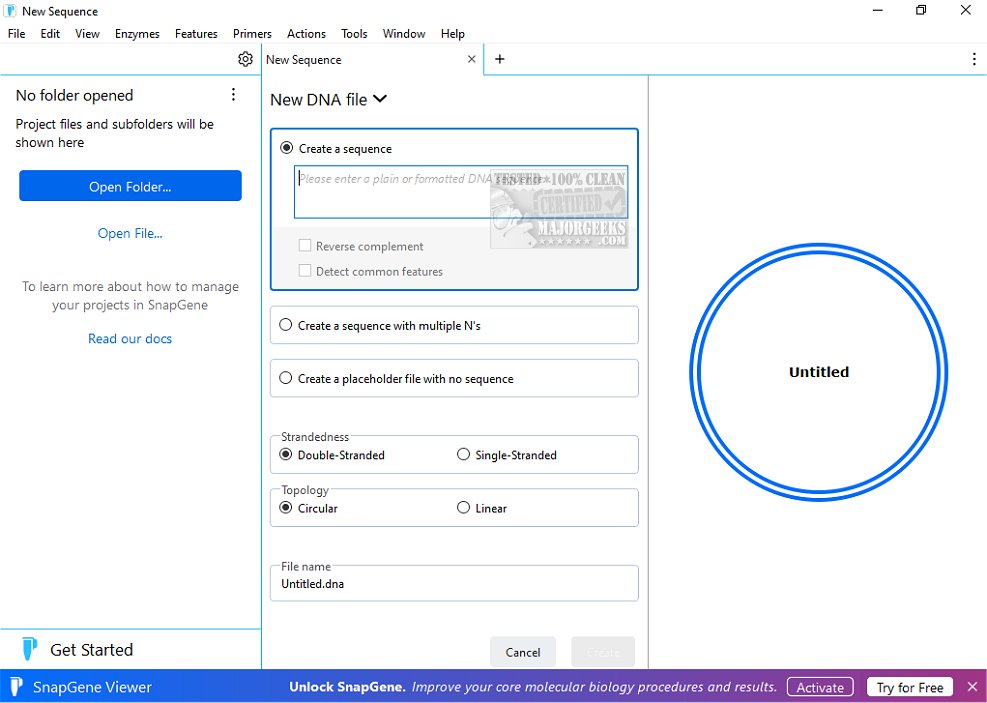
SnapGene Viewer 8.2.3 has been released, enhancing the capabilities of molecular biologists in creating, browsing, and sharing highly annotated DNA sequence files of up to 1GB. This software is particularly valuable as it offers multiple methods for inputting DNA sequences, including manual entry, importing records from GenBank, or opening sequences in various standard file formats.
Once a sequence is created, users can explore and print it with detailed annotations through customizable views, such as Map, Sequence, Enzymes, Features, Primers, and History. The software also simplifies the process of searching for specific DNA sequences, protein translations, or annotations, enabling quick access to relevant data.
In addition to browsing capabilities, SnapGene Viewer allows users to view and edit DNA sequence traces and provides options for automatic or manual annotation of common features, including coding sequences. Its primer design and annotation features are particularly noteworthy, enabling users to create custom primers for applications like PCR, sequencing, or mutagenesis, with automatic annotations included. The software also facilitates the identification of open reading frames (ORFs) with a simple click, streamlining the analysis process.
Moreover, SnapGene Viewer supports exporting plasmid maps as images and annotated DNA sequences in GenBank format, promoting easy data sharing with colleagues or clients through its universally accessible format.
Overall, SnapGene Viewer is an indispensable tool for researchers working with DNA sequences, thanks to its robust features and user-friendly interface. It not only enhances the efficiency of creating and analyzing DNA sequences but also accelerates research progress by simplifying complex tasks.
Looking ahead, future updates to SnapGene Viewer may include enhanced integration with genomic databases, advanced analytics for sequence comparison, and improved collaboration features that could further streamline teamwork among molecular biologists. As genomic research continues to evolve, tools like SnapGene Viewer will likely adapt, incorporating cutting-edge technologies and methodologies to meet the growing demands of researchers in the field
Once a sequence is created, users can explore and print it with detailed annotations through customizable views, such as Map, Sequence, Enzymes, Features, Primers, and History. The software also simplifies the process of searching for specific DNA sequences, protein translations, or annotations, enabling quick access to relevant data.
In addition to browsing capabilities, SnapGene Viewer allows users to view and edit DNA sequence traces and provides options for automatic or manual annotation of common features, including coding sequences. Its primer design and annotation features are particularly noteworthy, enabling users to create custom primers for applications like PCR, sequencing, or mutagenesis, with automatic annotations included. The software also facilitates the identification of open reading frames (ORFs) with a simple click, streamlining the analysis process.
Moreover, SnapGene Viewer supports exporting plasmid maps as images and annotated DNA sequences in GenBank format, promoting easy data sharing with colleagues or clients through its universally accessible format.
Overall, SnapGene Viewer is an indispensable tool for researchers working with DNA sequences, thanks to its robust features and user-friendly interface. It not only enhances the efficiency of creating and analyzing DNA sequences but also accelerates research progress by simplifying complex tasks.
Looking ahead, future updates to SnapGene Viewer may include enhanced integration with genomic databases, advanced analytics for sequence comparison, and improved collaboration features that could further streamline teamwork among molecular biologists. As genomic research continues to evolve, tools like SnapGene Viewer will likely adapt, incorporating cutting-edge technologies and methodologies to meet the growing demands of researchers in the field
SnapGene Viewer 8.2.3 released
SnapGene Viewer allows molecular biologists to create, browse, and share richly annotated DNA sequence files up to 1GB in length.