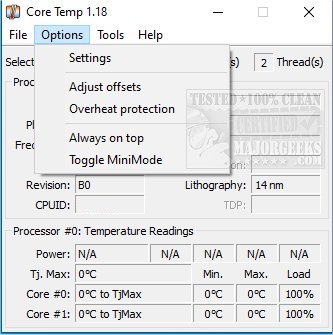
Core Temp 1.21 has been released, enhancing its role as a straightforward and efficient tool for monitoring CPU temperatures. This program stands out because it displays the temperature of each individual core in every processor within a user's system, allowing for real-time observation of temperature fluctuations as CPU load changes.
Notably, Core Temp utilizes the Digital Thermal Sensor (DTS) technology provided by Intel and AMD, which offers a significantly more precise and relevant temperature reading compared to traditional thermal diode sensors. This capability is compatible with all Intel Core and Core 2 series processors, as well as the complete AMD64 line of CPUs. Users can refer to a comprehensive CPU support list for specific compatibility details.
In addition to monitoring, Core Temp includes a logging feature that enables users to record temperature data over time. This data can easily be exported to an Excel spreadsheet for visual representation through graphing.
For those interested in maximizing their CPU monitoring experience, there are related resources available, such as guides on how to identify the number of CPU cores, recognize Intel processor generations, and find motherboard specifications.
Extension:
The release of Core Temp 1.21 not only improves the user experience for those concerned with CPU performance and longevity but also emphasizes the growing importance of hardware monitoring in gaming and high-performance computing environments. As users push their systems to the limit with demanding applications and gaming, tools like Core Temp provide essential insights that can help prevent overheating and potential damage.
Furthermore, future updates could consider incorporating additional features such as customizable alerts for temperature thresholds, integration with other system monitoring tools, or even predictive analytics that can suggest optimal cooling solutions based on usage patterns. As technology continues to evolve, the need for comprehensive monitoring tools will only increase, making applications like Core Temp vital for both casual users and professionals alike
Notably, Core Temp utilizes the Digital Thermal Sensor (DTS) technology provided by Intel and AMD, which offers a significantly more precise and relevant temperature reading compared to traditional thermal diode sensors. This capability is compatible with all Intel Core and Core 2 series processors, as well as the complete AMD64 line of CPUs. Users can refer to a comprehensive CPU support list for specific compatibility details.
In addition to monitoring, Core Temp includes a logging feature that enables users to record temperature data over time. This data can easily be exported to an Excel spreadsheet for visual representation through graphing.
For those interested in maximizing their CPU monitoring experience, there are related resources available, such as guides on how to identify the number of CPU cores, recognize Intel processor generations, and find motherboard specifications.
Extension:
The release of Core Temp 1.21 not only improves the user experience for those concerned with CPU performance and longevity but also emphasizes the growing importance of hardware monitoring in gaming and high-performance computing environments. As users push their systems to the limit with demanding applications and gaming, tools like Core Temp provide essential insights that can help prevent overheating and potential damage.
Furthermore, future updates could consider incorporating additional features such as customizable alerts for temperature thresholds, integration with other system monitoring tools, or even predictive analytics that can suggest optimal cooling solutions based on usage patterns. As technology continues to evolve, the need for comprehensive monitoring tools will only increase, making applications like Core Temp vital for both casual users and professionals alike
Core Temp 1.21 released
Core Temp is a compact, no-fuss, small-footprint program to monitor CPU temperature.