
OpenAI confirms GPT‑5.6 Sol, Terra, and Luna will launch publicly this Thursday with expanded global preview access across the API and ChatGPT. The tiered lineup drops input prices by up to 80 percent compared to the flagship while delivering state-of-the-art agentic coding and cybersecurity benchmarks backed by a layered safety framework coordinated with U.S. officials.
OpenAI confirms GPT-5.6 Sol, Terra, and Luna public launch this Thursday
OpenAI just confirmed that the GPT-5.6 family hits the public this Thursday. Sol, Terra, and Luna are finally stepping out of the developer sandbox. The company says it's expanding preview access globally now.
For months, these models have been quietly testing in the hands of a select group of partners. That group included a few trusted organizations whose participation was shared with the U.S. government. OpenAI calls this a first-of-its-kind phased rollout, but the company also makes it clear it doesn't see government coordination as the new normal. It's a short-term step, OpenAI says, before broader availability rolls out in the coming weeks.
The price of the GPT-5.6 family has been the biggest question since OpenAI hinted at the lineup. We saw the numbers drop over the past few months, but this Thursday is when the public actually gets to run them. At the time of that initial leak, OpenAI said it would roll out the models gradually. The government preview just pushed the timeline forward slightly.
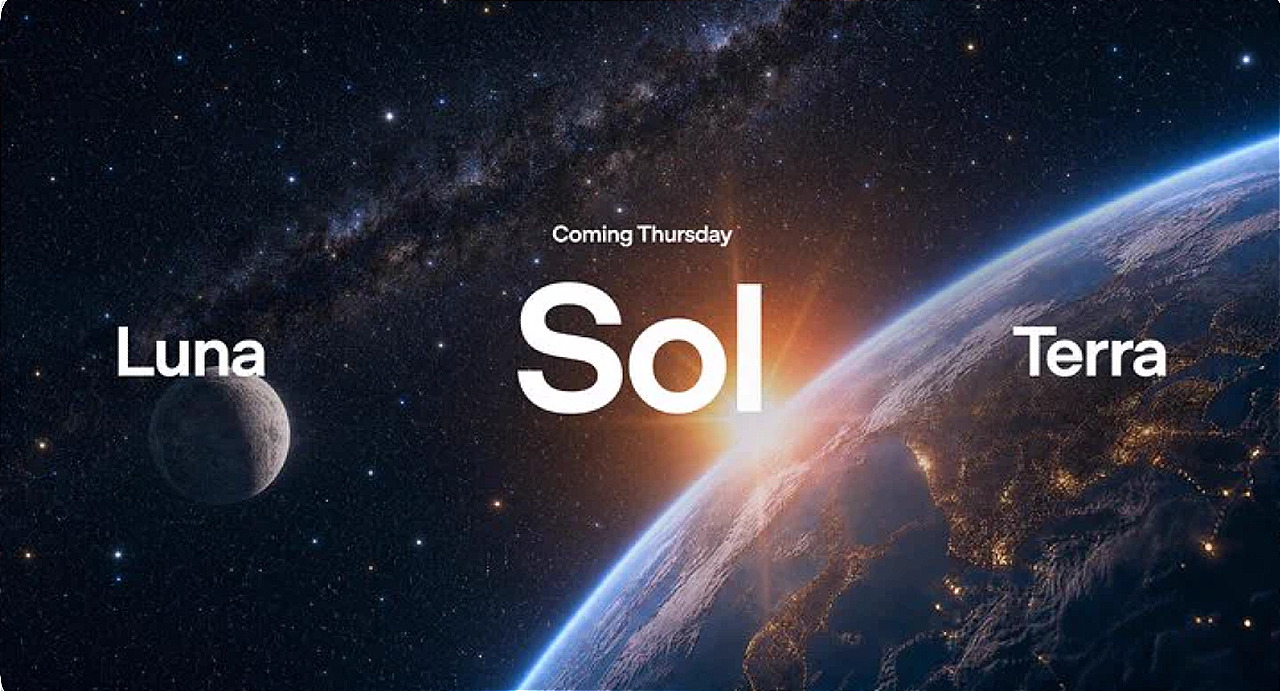
The new naming scheme and what it costs
Let's talk about the naming convention. You'll notice the number stays locked at 5.6 while the names do the heavy lifting. OpenAI is decoupling the model generation from the capability tier, which means Sol, Terra, and Luna can evolve on their own schedules. It's a move that mirrors how cloud providers structure inference tiers, and honestly, it's about time developers stop guessing which version handles which workload.
Pricing breaks down cleanly across the lineup. Sol runs $5 per million input tokens and $30 per million output. Terra sits right at half that cost. Luna, the fast and affordable option, comes in at $1 for input and $6 for output.
Prompt caching gets a proper overhaul too. You'll get explicit cache breakpoints, a 30-minute minimum cache life, and a 1.25x write rate compared to standard input. Reads still enjoy that familiar 90% discount. Not cheap for heavy users, but Terra and Luna are meaningfully cheaper than their predecessor.
What the benchmarks actually show
The benchmark claims are where things get interesting. On Terminal-Bench 2.1, Sol sets a new state of the art for agentic coding. That means it can plan, iterate, and coordinate tools across complex command-line workflows better than anything else in the arena. There are two new reasoning modes to keep an eye on: max reasoning effort for when you need the model to think as long as possible, and ultra mode, which spins up subagents to tackle multi-step tasks in parallel.
Biology gets a meaningful efficiency bump. On GeneBench v1, Sol beats GPT-5.5 while actually using fewer tokens. That's the kind of gain that matters when you're running long-horizon genomics analyses and your compute budget is tight.
Cybersecurity is where OpenAI goes straight for the competition. It says Sol tracks with Anthropic's Mythos Preview on ExploitBench, but at roughly one-third the output token cost. All three models in the family show stronger defensive capabilities as reasoning effort increases.
Health benchmarks see the biggest single-model jump since GPT-5. Sol pulls a length-adjusted score of 60.5 on HealthBench Professional, which is an 8.7 point leap over GPT-5.5. Terra and Luna don't trail far behind.
Safety and the road ahead
OpenAI rates the cyber risk at High rather than Critical. Sol and Terra can spot vulnerabilities and piece together exploit building blocks, but they couldn't run autonomous end-to-end attacks against hardened targets in testing. The safety stack itself is layered. Models are trained with reinforcement learning, and Sol and Terra get new activation classifiers that monitor outputs in real time. If the classifier flags something sketchy, generation pauses for a larger reasoning model to review it before it ever reaches you.
Red-teaming burned through over 700,000 A100e GPU hours. That's the most intensive safeguard testing OpenAI has ever run.
The launch lands in a crowded room. Anthropic's Mythos Preview already held the cybersecurity crown. Google DeepMind keeps pushing Gemini forward. OpenAI's direct claim of parity at a fraction of the cost is a bold positioning move. It's arguably competing with, if not outpricing, the established players in defensive security research. The tiered naming system also signals that frontier labs are settling into a clear cost-performance curve. You pick the tool for the job, not the most expensive one on the shelf.
The GPT-5.6 models go live publicly this Thursday. Keep an eye on the OpenAI platform for Sol, Terra, and Luna. API keys and documentation are dropping alongside the announcement. If you need to weigh the tradeoffs between raw reasoning, speed, and cost, the pricing table makes the decision straightforward.
Head here to the full system card and benchmark breakdowns.
