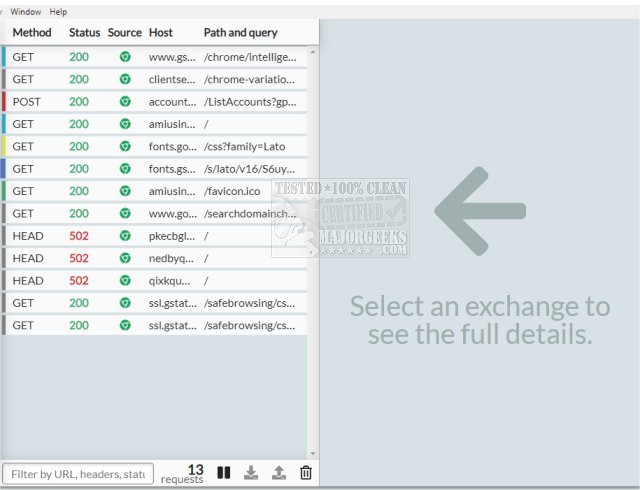
HTTP Toolkit has released version 1.27.4, providing advanced features for the automatic interception of HTTP and HTTPS traffic from a wide range of clients. This includes popular web browsers like Chrome and Firefox, various command-line interface (CLI) tools, and back-end programming languages such as Node.js, Python, and Ruby.
Designed to function as an HTTP(S) proxy, HTTP Toolkit is compatible with standard HTTP requests from virtually any programming language or tool, enabling seamless integration into various development environments. Users can sift through intercepted traffic, identifying key information through highlights of content type, status, and source. The toolkit also offers search functionalities based on URL, status, and headers, allowing users to quickly locate specific messages of interest.
With inline explanations and documentation from MDN, developers can easily examine the details of each request or response, including URL, status, headers, and message bodies. The toolkit employs the Monaco editor from Visual Studio Code, providing enhanced viewing capabilities with highlighting and auto-formatting for various data formats such as JSON, HTML, JS, and hex.
A standout feature of HTTP Toolkit is its ability to pause and edit live HTTP traffic, allowing users to match requests precisely. This means developers can modify any aspect of a request—be it the target URL, method, headers, or body—as it appears. Additionally, users have the option to manually respond to incoming requests or modify real responses before they return to the client. The toolkit supports step-through debugging of HTTP traffic requests and enables manual endpoint mocking and error simulation.
Key features of HTTP Toolkit include:
- Cross-platform compatibility (Linux, macOS, Windows)
- Comprehensive interception integrations
- Essential HTTP debugging tools
- Manual HTTP mocking and rewriting capabilities
In addition, related topics such as troubleshooting network issues on Windows and DNS management are also available for users seeking further assistance.
Overall, HTTP Toolkit 1.27.4 enhances the capabilities of developers and testers by streamlining the debugging and traffic manipulation processes, making it an indispensable tool for anyone working with web technologies
HTTP Toolkit 1.27.4 released
HTTP Toolkit offers automatic interception of HTTP and HTTPS traffic from most clients, including web browsers like Chrome and Firefox, almost all CLI tools, and back-end languages (Node.js, Python, Ruby, and more).