
Samsung is developing GAIA, a dedicated standalone NPU designed to offload generative AI workloads directly on PCs without relying on integrated CPU companions. Prototypes have already shipped to HP and Lenovo for validation, with mass production and consumer devices targeting late 2027.
Samsung is Developing a Standalone AI Chip for PCs, Codenamed GAIA
The company's first PC silicon attempt in over a decade aims to offload generative AI workloads, though mass production isn't expected until 2027.
Samsung is reportedly developing a dedicated AI accelerator chip for PCs codenamed GAIA. It's a standalone Neural Processing Unit designed to handle generative AI workloads directly on the device. This marks Samsung's first serious attempt to re-enter the PC silicon market since 2012.
Keep in mind that you won't see GAIA in any machine you buy this year. Mass production is targeted for 2027, with consumer devices expected to land in late 2027 or early 2028. Samsung has already shipped prototypes to HP in the U.S. and Lenovo in China for performance validation.
The Technical Gamble
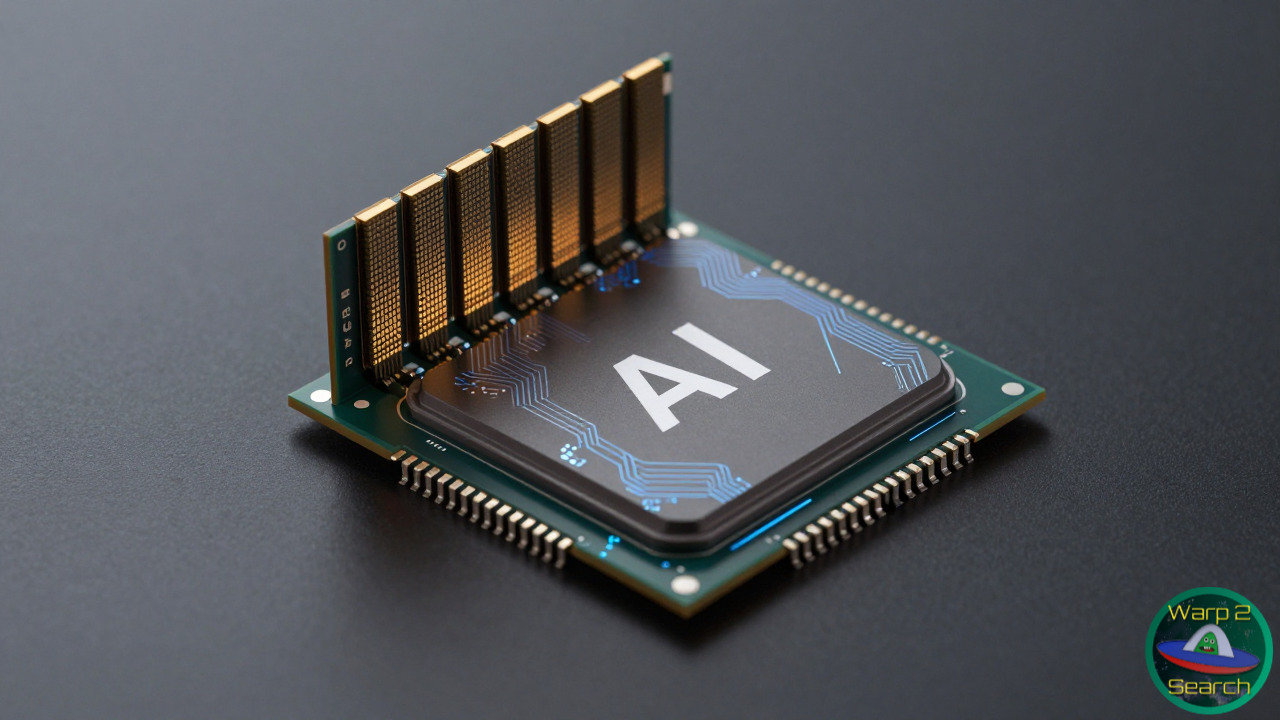
Most AI PC chips from Intel, AMD, and Qualcomm bolt NPUs directly onto their CPUs. GAIA takes a different path. It's a companion co-processor designed to offload AI inference from the main silicon. The architecture is memory-centric, placing compute logic close to memory to reduce data movement overhead.
On top of that, Samsung is co-optimizing GAIA with its Processing-in-Memory (PIM) technology. This embeds compute logic within DRAM arrays. It's a smart play for vertical integration, given Samsung manufactures its own DRAM. The chip targets on-device generative AI workloads like language model inference, real-time translation, and image generation. Samsung claims GAIA aims to deliver great performance per watt. The underlying process node is listed as 4nm-class.
Samsung's System LSI Business Division, the same unit behind Exynos mobile processors, is handling development. The division has run structural losses for years. A successful GAIA launch could provide a vital revenue lever. It also positions Samsung as a third-party NPU vendor, breaking the duopoly on integrated AI accelerators.
However, at the same time, Samsung hasn't publicly confirmed any details about GAIA. No TFLOPS, power consumption figures, or pricing have been released. OEMs are currently validating the chip to check performance, power efficiency, and software ecosystem maturity.
Building a developer ecosystem from scratch is a massive hurdle. How do framework integrations look? Which models will run natively? The timeline is distant enough that the market could shift before GAIA ships.
Business Risks and Rewards
Samsung tried PC silicon before. Exynos chips briefly powered early Samsung Chromebooks starting in 2012. The Chromebook business was shelved in 2014, and Samsung shifted to Intel and Qualcomm for Galaxy Book laptops.
There are risks, though. Nvidia and Qualcomm both use Samsung's foundry for chip fabrication. Samsung competing with its own customers in the AI PC space could complicate supplier relationships. Convincing OEMs to adopt a new silicon vendor is difficult, especially when the industry is still struggling to get consumers to care about NPUs.
If you're waiting for a GAIA-powered laptop, the wait is roughly three years away. As of right now, HP and Lenovo are testing prototypes. More details on adoption and specs should surface as those validations conclude.
