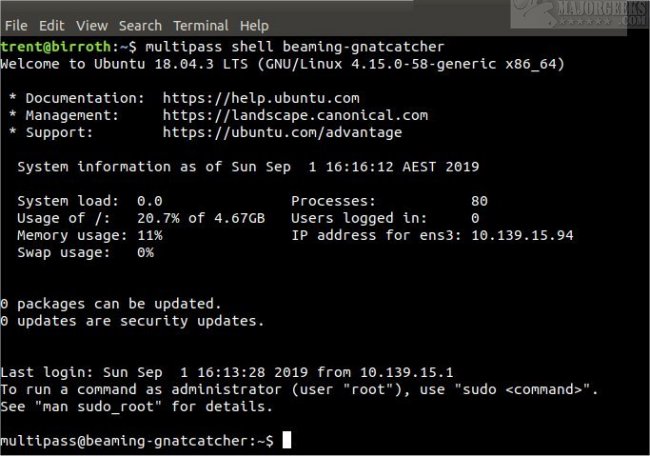
Multipass version 1.16.3 has been released, enhancing its capabilities as a lightweight virtual machine (VM) manager tailored for developers working on Linux, Windows, and macOS. This tool provides a streamlined command-line interface that simplifies the process of launching, managing, and utilizing instances of Ubuntu Linux. By leveraging virtualization technologies such as KVM on Linux, Hyper-V on Windows, and HyperKit on macOS, Multipass operates with minimal performance overhead, ensuring a seamless experience for users. Additionally, it supports VirtualBox as an alternative on both Windows and macOS platforms.
One of the standout features of Multipass is its ability to automatically fetch and update images, making it convenient for developers who need a pristine Ubuntu environment quickly. It also supports cloud-init metadata, allowing users to simulate cloud deployments directly from their local machines. This means developers can initialize instances with custom configurations through the command `multipass launch --cloud-init`, mimicking the setup process used in larger cloud environments.
To build upon this, Multipass not only streamlines development workflows but also facilitates learning and experimentation with cloud technologies. Users can easily create and destroy VM instances without the overhead of managing a full-fledged cloud infrastructure. This makes it an excellent tool for developers looking to test applications in an isolated environment or for those wanting to learn about cloud deployments without incurring costs associated with cloud services. Furthermore, as virtualization technologies continue to evolve, future updates to Multipass may introduce additional features such as enhanced networking options or integration with more cloud service providers, further enriching the development experience
One of the standout features of Multipass is its ability to automatically fetch and update images, making it convenient for developers who need a pristine Ubuntu environment quickly. It also supports cloud-init metadata, allowing users to simulate cloud deployments directly from their local machines. This means developers can initialize instances with custom configurations through the command `multipass launch --cloud-init`, mimicking the setup process used in larger cloud environments.
To build upon this, Multipass not only streamlines development workflows but also facilitates learning and experimentation with cloud technologies. Users can easily create and destroy VM instances without the overhead of managing a full-fledged cloud infrastructure. This makes it an excellent tool for developers looking to test applications in an isolated environment or for those wanting to learn about cloud deployments without incurring costs associated with cloud services. Furthermore, as virtualization technologies continue to evolve, future updates to Multipass may introduce additional features such as enhanced networking options or integration with more cloud service providers, further enriching the development experience
Multipass 1.16.3 released
Multipass provides a command-line interface to launch, manage, and utilize instances of Linux.