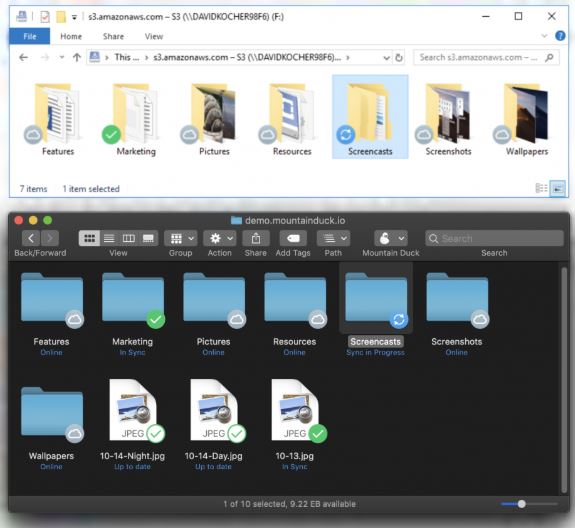
Mountain Duck has released version 5.3.1, a utility designed for Windows and macOS that allows users to mount remote storage solutions, such as FTP, SFTP, WebDAV, Amazon S3, Google Cloud, and more, as local drives. This innovative software enables seamless access to cloud files directly through familiar file management applications like Finder and Explorer, eliminating the need for file syncing or switching between different applications.
By acting as a translator between the user's desktop and cloud storage, Mountain Duck allows files to be manipulated as if they reside on a local hard drive—no cumbersome uploads or downloads are necessary. For instance, when a Google Drive is mounted as a local drive (e.g., D:), users can effortlessly open, edit, and save files without the traditional hassles of cloud storage.
The tool is particularly beneficial for professionals working with remote servers or cloud storage, as it streamlines workflows and saves time. Rather than downloading and re-uploading files for editing, users can directly interact with cloud files, making processes like coding on remote servers or managing cloud backups significantly more efficient.
Mountain Duck offers a fully functional 14-day free trial, allowing potential users to experience all features without any limitations or credit card requirements. Key features include support for multiple protocols, deep integration with file management systems, smart caching for offline access, and secure login management.
While Mountain Duck offers many advantages, such as compatibility with various cloud protocols and seamless integration with existing applications, it does require a paid license after the trial period. Additionally, new users may need some time to become accustomed to the remote mounting process. Performance may also be impacted by slow networks or servers.
In summary, Mountain Duck transforms the way users interact with remote storage by providing local-like access to cloud files, making it an invaluable tool for those frequently working with cloud-based resources. With a generous trial period, it is highly recommended for anyone tired of the typical challenges associated with cloud storage management.
Extension: As remote work continues to rise, tools like Mountain Duck become increasingly vital for efficient file management. In addition to the current features, future updates could focus on enhancing performance when dealing with large files or slow connections, as well as expanding support for emerging cloud storage solutions. Integrating collaboration features could also be beneficial, allowing multiple users to work on files simultaneously from different locations. Overall, Mountain Duck stands out as a powerful solution for modern workflows, and its ongoing development will likely keep it relevant in an evolving digital landscape
By acting as a translator between the user's desktop and cloud storage, Mountain Duck allows files to be manipulated as if they reside on a local hard drive—no cumbersome uploads or downloads are necessary. For instance, when a Google Drive is mounted as a local drive (e.g., D:), users can effortlessly open, edit, and save files without the traditional hassles of cloud storage.
The tool is particularly beneficial for professionals working with remote servers or cloud storage, as it streamlines workflows and saves time. Rather than downloading and re-uploading files for editing, users can directly interact with cloud files, making processes like coding on remote servers or managing cloud backups significantly more efficient.
Mountain Duck offers a fully functional 14-day free trial, allowing potential users to experience all features without any limitations or credit card requirements. Key features include support for multiple protocols, deep integration with file management systems, smart caching for offline access, and secure login management.
While Mountain Duck offers many advantages, such as compatibility with various cloud protocols and seamless integration with existing applications, it does require a paid license after the trial period. Additionally, new users may need some time to become accustomed to the remote mounting process. Performance may also be impacted by slow networks or servers.
In summary, Mountain Duck transforms the way users interact with remote storage by providing local-like access to cloud files, making it an invaluable tool for those frequently working with cloud-based resources. With a generous trial period, it is highly recommended for anyone tired of the typical challenges associated with cloud storage management.
Extension: As remote work continues to rise, tools like Mountain Duck become increasingly vital for efficient file management. In addition to the current features, future updates could focus on enhancing performance when dealing with large files or slow connections, as well as expanding support for emerging cloud storage solutions. Integrating collaboration features could also be beneficial, allowing multiple users to work on files simultaneously from different locations. Overall, Mountain Duck stands out as a powerful solution for modern workflows, and its ongoing development will likely keep it relevant in an evolving digital landscape
Mountain Duck 5.3.1 released
Mountain Duck lets you mount remote storage like FTP, SFTP, WebDAV, Amazon S3, and more as local disks on Windows and macOS, so any file‑based app can open, save, or edit files directly in the cloud.