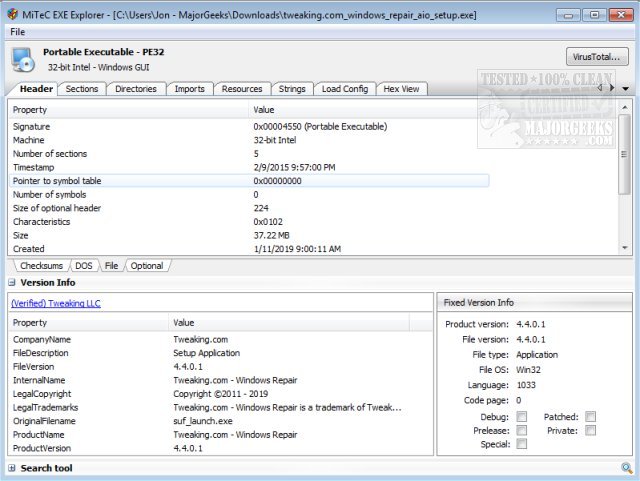
MiTeC EXE Explorer version 3.7.5 has been released, providing users with a portable utility designed for analyzing executable files. This tool is compatible with various executable formats, including PE32 (Portable Executable), PE32+ (64-bit), NE (New Executable for Windows 3.x), and VxD (Virtual Device Driver for Windows 9x). It also supports .NET executables, allowing for a comprehensive examination of their properties and structure.
One of the key features of MiTeC EXE Explorer is its ability to export detailed information extracted from executable files into plain text format for further review. The application can enumerate classes, used units, and forms from files compiled by Borland compilers, making it particularly useful for developers who work in that environment.
Additionally, the software includes a robust Resource Viewer that can analyze and display a variety of resource types, such as JPEG, PNG, GIF, AVI, and registry files. The Type Library viewer is another significant feature that enumerates all objects and generates an import interface unit in Object Pascal language.
Moreover, MiTeC EXE Explorer can generate a detailed text report on the selected file and offers search functionality that allows users to sift through all resources that can be interpreted as text. It evaluates a wide range of structures, including DOS, File, Optional, and CLR headers, CLR Metadata streams, sections, directories, imports, exports, resources, ASCII and Unicode strings, .NET metadata, load configurations, debug information, thread-local storage, exceptions, units, forms, packages, classes, flags, version info, and a hexadecimal file content view.
In summary, MiTeC EXE Explorer 3.7.5 is a powerful tool for developers and IT professionals looking to examine executable files in detail, with extensive capabilities for exporting, searching, and analyzing various structures within these files. Its portable nature and comprehensive feature set make it a valuable addition to any software toolkit. Future updates could potentially enhance its compatibility with more file formats or introduce additional analytical tools to further aid developers in understanding executable files
One of the key features of MiTeC EXE Explorer is its ability to export detailed information extracted from executable files into plain text format for further review. The application can enumerate classes, used units, and forms from files compiled by Borland compilers, making it particularly useful for developers who work in that environment.
Additionally, the software includes a robust Resource Viewer that can analyze and display a variety of resource types, such as JPEG, PNG, GIF, AVI, and registry files. The Type Library viewer is another significant feature that enumerates all objects and generates an import interface unit in Object Pascal language.
Moreover, MiTeC EXE Explorer can generate a detailed text report on the selected file and offers search functionality that allows users to sift through all resources that can be interpreted as text. It evaluates a wide range of structures, including DOS, File, Optional, and CLR headers, CLR Metadata streams, sections, directories, imports, exports, resources, ASCII and Unicode strings, .NET metadata, load configurations, debug information, thread-local storage, exceptions, units, forms, packages, classes, flags, version info, and a hexadecimal file content view.
In summary, MiTeC EXE Explorer 3.7.5 is a powerful tool for developers and IT professionals looking to examine executable files in detail, with extensive capabilities for exporting, searching, and analyzing various structures within these files. Its portable nature and comprehensive feature set make it a valuable addition to any software toolkit. Future updates could potentially enhance its compatibility with more file formats or introduce additional analytical tools to further aid developers in understanding executable files
MiTeC EXE Explorer 3.7.5 released
MiTeC EXE Explorer is a portable utility meant for reading/displaying the properties and structure of executable files.