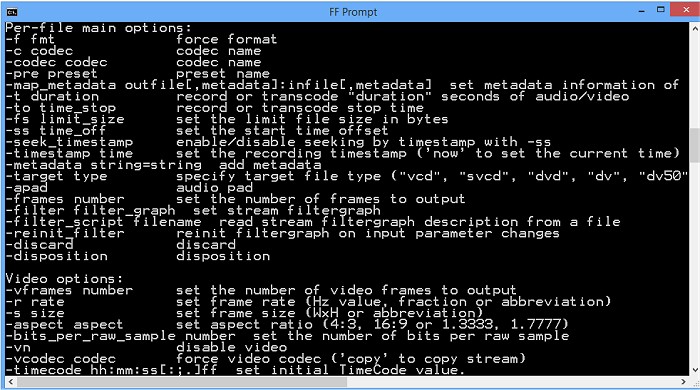
FFmpeg 9.1-2026-11-20 has been released, continuing its legacy as a powerful freeware command-line tool designed for converting multimedia files across various formats. Renowned for its versatility, FFmpeg serves as a comprehensive multimedia framework capable of decoding, encoding, transcoding, muxing, demuxing, streaming, filtering, and playing a vast array of media types. It supports everything from rare, outdated formats to the latest technologies, regardless of their origins—be they from standards organizations, community contributions, or corporate entities.
The FFmpeg suite includes essential libraries such as libavcodec, libavutil, libavformat, libavfilter, libavdevice, libswscale, and libswresample, which developers can utilize in their applications. Additionally, it features user-friendly tools like ffmpeg, ffserver, ffplay, and ffprobe for tasks such as transcoding, streaming, and playback. The project's mission is to deliver the most technically advanced solutions for both developers and users, striving to integrate the best available free software options while minimizing dependencies on other libraries.
FFmpeg is distributed in a 7z format, requiring users to employ a third-party application to extract the files. As the software evolves, it continues to support both traditional and modern formats, empowering users with the flexibility to choose based on their needs.
In addition to the release announcement, users may find related resources helpful, such as guides on enabling Windows Sonic Surround Sound on the latest Windows versions, converting media files using VLC Media Player, and troubleshooting audio issues like delays and latency in Windows environments. These resources enhance the overall multimedia experience for users
FFmpeg 9.1-2026-11-20 released
FFmpeg is a freeware command-line tool to convert multimedia files between formats.