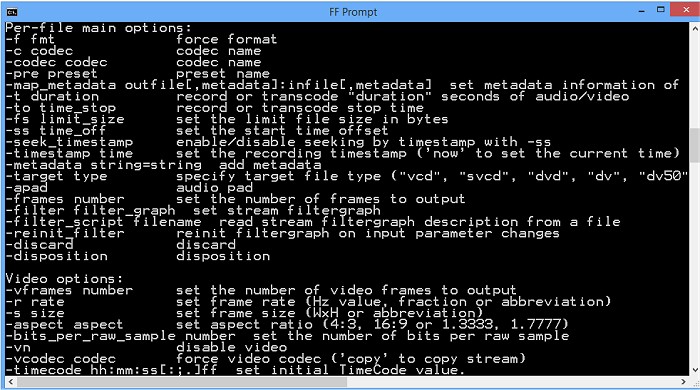
FFmpeg version 8.1.2-2026-06-27 has been released, continuing its legacy as a powerful, freeware command-line tool designed to convert multimedia files across various formats. Recognized as the leading multimedia framework, FFmpeg can decode, encode, transcode, mux, demux, stream, filter, and play a vast array of media formats, from the most obscure and ancient to the latest cutting-edge technologies. It supports formats developed by standards committees, community contributions, and corporate entities alike.
The framework comprises several key libraries, including libavcodec, libavutil, libavformat, libavfilter, libavdevice, libswscale, and libswresample. These libraries serve as the backbone for applications and tools like ffmpeg, ffserver, ffplay, and ffprobe, which users can utilize for transcoding, streaming, and playback.
The FFmpeg project aims to deliver the most technically advanced solutions for both developers and end-users, merging the best available free software options. The authors prioritize minimizing dependencies on other libraries to enhance code sharing across different components of FFmpeg, while still providing options for users to select their preferred solutions.
FFmpeg is distributed in a 7z format, requiring a third-party application for file extraction.
In addition to this release, users may find related topics of interest such as enabling Windows Sonic surround sound on Windows 10 and 11, converting audio or video using VLC Media Player, disabling video tips in Windows, and diagnosing sound delays, lags, and audio latency on Windows systems.
As FFmpeg continues to evolve, users can expect ongoing improvements, support for new formats, and enhanced features that cater to the ever-changing landscape of multimedia technology. The community-driven nature of FFmpeg ensures that it remains a vital tool for both professionals and enthusiasts in the multimedia space
The framework comprises several key libraries, including libavcodec, libavutil, libavformat, libavfilter, libavdevice, libswscale, and libswresample. These libraries serve as the backbone for applications and tools like ffmpeg, ffserver, ffplay, and ffprobe, which users can utilize for transcoding, streaming, and playback.
The FFmpeg project aims to deliver the most technically advanced solutions for both developers and end-users, merging the best available free software options. The authors prioritize minimizing dependencies on other libraries to enhance code sharing across different components of FFmpeg, while still providing options for users to select their preferred solutions.
FFmpeg is distributed in a 7z format, requiring a third-party application for file extraction.
In addition to this release, users may find related topics of interest such as enabling Windows Sonic surround sound on Windows 10 and 11, converting audio or video using VLC Media Player, disabling video tips in Windows, and diagnosing sound delays, lags, and audio latency on Windows systems.
As FFmpeg continues to evolve, users can expect ongoing improvements, support for new formats, and enhanced features that cater to the ever-changing landscape of multimedia technology. The community-driven nature of FFmpeg ensures that it remains a vital tool for both professionals and enthusiasts in the multimedia space
FFmpeg 8.1.2-2026-06-27 released
FFmpeg is a freeware command-line tool to convert multimedia files between formats.