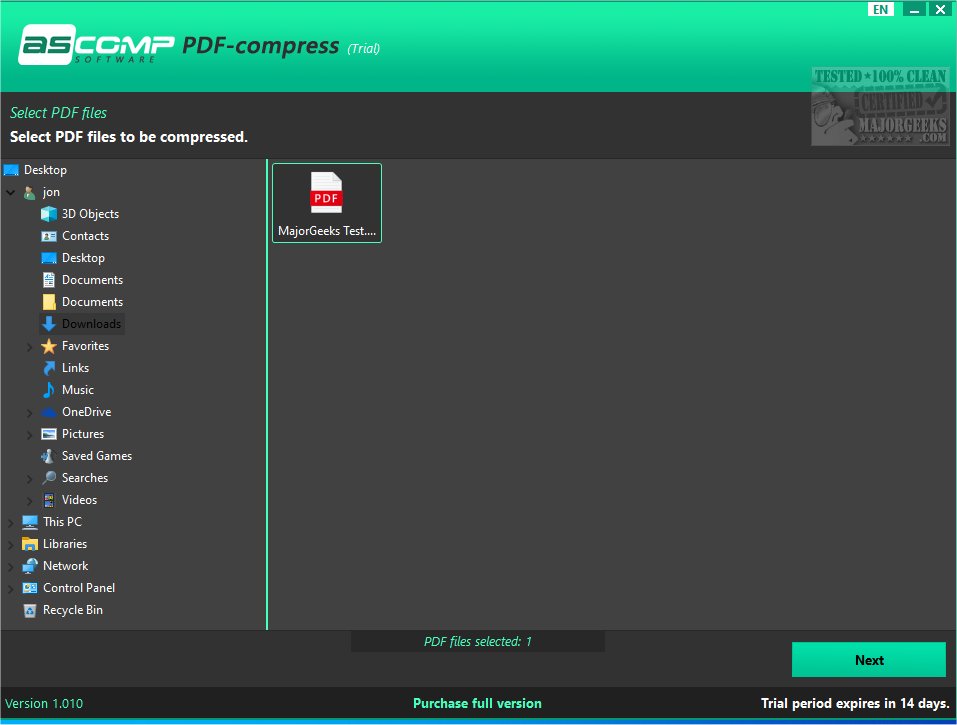
ASCOMP has released version 2.001 of its PDF-compress tool, which is engineered to optimize PDF files by achieving impressive compression rates of up to 95%. This capability allows users to significantly reduce file sizes while preserving the quality of the original documents. Given the PDF format's utility in sharing complex materials such as texts, diagrams, graphics, and forms, ASCOMP PDF-compress addresses the common issue of large file sizes that can complicate sharing processes.
In testing involving over 1,000 randomly selected PDF files, ASCOMP's solution demonstrated an average compression rate of nearly 50%, indicating its effectiveness in saving storage space and enhancing document sharing efficiency. The tool is particularly useful for dealing with various content types, whether they include text-heavy reports or image-rich presentations.
ASCOMP PDF-compress utilizes advanced compression techniques, including lossless compression for images, which maintains original quality during size reduction. It also employs Mixed Raster Content (MRC) optimization, which separately compresses text and images to further enhance the efficiency of the PDF. Additionally, users can identify and eliminate unnecessary elements, such as blank pages and annotations, to streamline the document's structure. The software allows for adjustable image quality and includes a feature optimized for web display, enhancing accessibility and loading times for online PDFs.
Overall, ASCOMP PDF-compress is a robust and moderately priced solution for anyone needing to manage large PDF files efficiently. By simplifying the compression process, it empowers users to share and store documents with ease while maintaining high quality.
In extending the utility of ASCOMP PDF-compress, users might consider integrating this tool with cloud storage solutions to facilitate seamless sharing and collaboration. Moreover, as digital documentation continues to grow, the ability to compress files efficiently will become increasingly valuable. Future updates could include enhanced features, such as batch processing for multiple files or integration with popular document management systems, further elevating the user experience
ASCOMP PDF-compress 2.001 released
ASCOMP PDF-compress is a tool designed to optimize PDF files (achieving compression rates of up to 95%), ensuring they occupy minimal storage space.