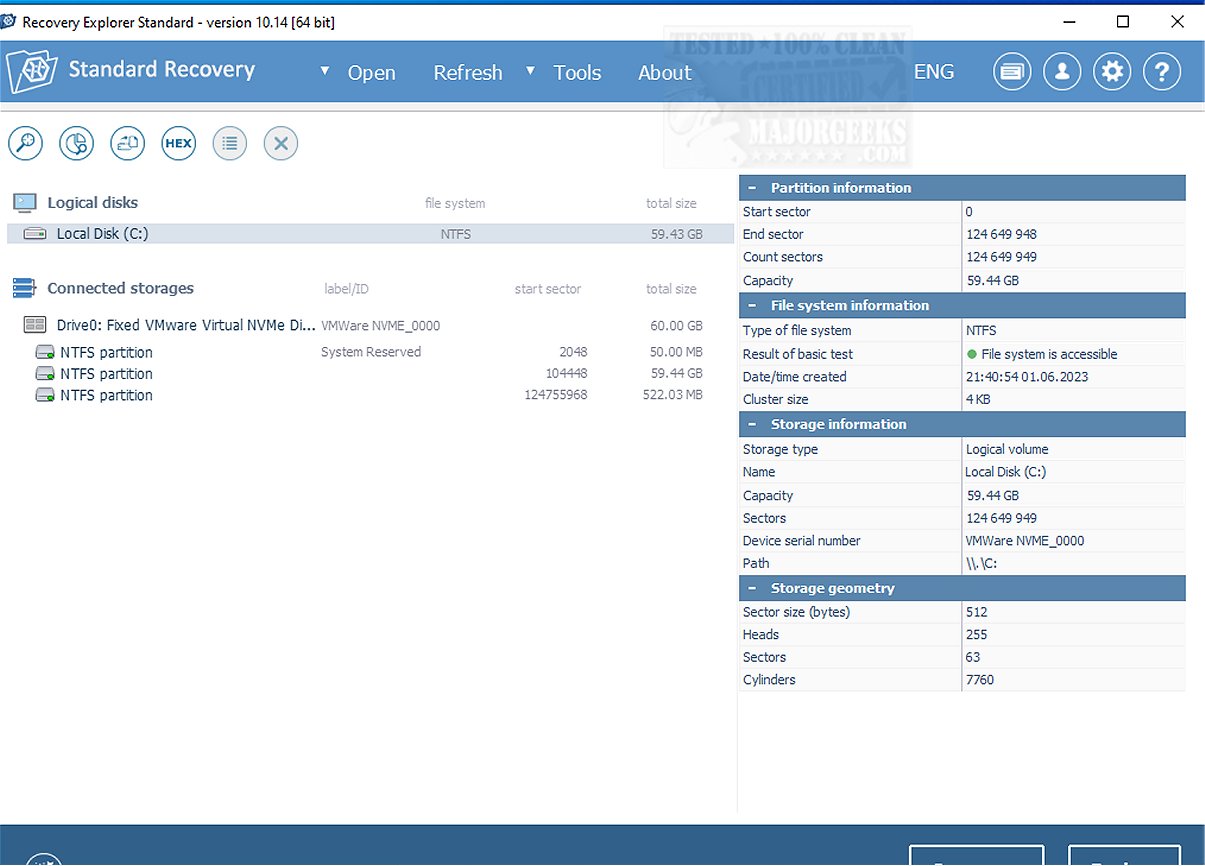
The recent release of Recovery Explorer Standard 10.20 promises to enhance the data recovery process, making it efficient and user-friendly. This software is specifically tailored to assist users in recovering lost data due to accidental deletions, formatting errors, and file system corruption.
Comprehensive Compatibility with File Systems and Storage Media
Recovery Explorer Standard stands out for its compatibility with a variety of file systems, including FAT, FAT32, NTFS, and exFAT on Windows, as well as Ext2 through Ext4, UFS/UFS2, JFS, ReiserFS, XFS, and Btrfs that are prevalent in Linux. macOS users also benefit from its support for APFS and HFS+ file systems. The software is capable of recovering data from various storage media, including local and external hard drives, USB flash drives, and memory cards used in mobile devices and cameras. It can also recover from disk images and virtual disks associated with virtualization platforms like VMware, Hyper-V, QEMU, XEN, and VirtualBox. Notably, it can retrieve data from Apple’s Time Machine backups, including complex structures such as spanned volumes and Windows dynamic disks.
User-Friendly Features with Wizard Mode
To facilitate an intuitive recovery experience, Recovery Explorer Standard incorporates a Wizard Mode, allowing users to navigate the recovery process with minimal experience. This feature streamlines the procedure into just a few clicks, which can be particularly beneficial during stressful recovery situations.
Additional Tools to Enhance Recovery Experience
In addition to its core recovery features, Recovery Explorer Standard offers a suite of tools designed to improve the user experience. These include a hexadecimal viewer for detailed analysis of raw file content, customizable scanning options for targeted searches, and a built-in disk image creator. A S.M.A.R.T monitoring tool is also included to assess drive health, while file previews allow users to view images and documents before recovery, ensuring precise retrieval.
Conclusion: A Reliable Data Recovery Solution
Overall, Recovery Explorer Standard emerges as a robust data recovery solution, especially for users seeking a straightforward approach to managing data loss. Its intuitive interface, extensive compatibility with various storage devices and file systems, and powerful recovery capabilities make it a dependable choice for those navigating the challenges of data loss. With the release of version 10.20, users can look forward to a more seamless recovery experience, empowering them with confidence in their data retrieval efforts.
Additional Resources:
- Learn how to securely delete files in Windows 10/11 with PowerShell and Cipher.
- Discover how to utilize Storage Sense for automatic junk file deletion in Windows 10/11.
- Find out how to protect files and folders from accidental deletions.
- Add 'Secure Delete' functionality to the context menu in Windows 11, 10, 8, and 7 for enhanced file security
Comprehensive Compatibility with File Systems and Storage Media
Recovery Explorer Standard stands out for its compatibility with a variety of file systems, including FAT, FAT32, NTFS, and exFAT on Windows, as well as Ext2 through Ext4, UFS/UFS2, JFS, ReiserFS, XFS, and Btrfs that are prevalent in Linux. macOS users also benefit from its support for APFS and HFS+ file systems. The software is capable of recovering data from various storage media, including local and external hard drives, USB flash drives, and memory cards used in mobile devices and cameras. It can also recover from disk images and virtual disks associated with virtualization platforms like VMware, Hyper-V, QEMU, XEN, and VirtualBox. Notably, it can retrieve data from Apple’s Time Machine backups, including complex structures such as spanned volumes and Windows dynamic disks.
User-Friendly Features with Wizard Mode
To facilitate an intuitive recovery experience, Recovery Explorer Standard incorporates a Wizard Mode, allowing users to navigate the recovery process with minimal experience. This feature streamlines the procedure into just a few clicks, which can be particularly beneficial during stressful recovery situations.
Additional Tools to Enhance Recovery Experience
In addition to its core recovery features, Recovery Explorer Standard offers a suite of tools designed to improve the user experience. These include a hexadecimal viewer for detailed analysis of raw file content, customizable scanning options for targeted searches, and a built-in disk image creator. A S.M.A.R.T monitoring tool is also included to assess drive health, while file previews allow users to view images and documents before recovery, ensuring precise retrieval.
Conclusion: A Reliable Data Recovery Solution
Overall, Recovery Explorer Standard emerges as a robust data recovery solution, especially for users seeking a straightforward approach to managing data loss. Its intuitive interface, extensive compatibility with various storage devices and file systems, and powerful recovery capabilities make it a dependable choice for those navigating the challenges of data loss. With the release of version 10.20, users can look forward to a more seamless recovery experience, empowering them with confidence in their data retrieval efforts.
Additional Resources:
- Learn how to securely delete files in Windows 10/11 with PowerShell and Cipher.
- Discover how to utilize Storage Sense for automatic junk file deletion in Windows 10/11.
- Find out how to protect files and folders from accidental deletions.
- Add 'Secure Delete' functionality to the context menu in Windows 11, 10, 8, and 7 for enhanced file security
Recovery Explorer Standard 10.20 released
Recovery Explorer Standard is designed to streamline the data recovery process, ensuring a hassle-free experience following accidental deletions, formatting mishaps, and other instances of data loss or file system corruption.