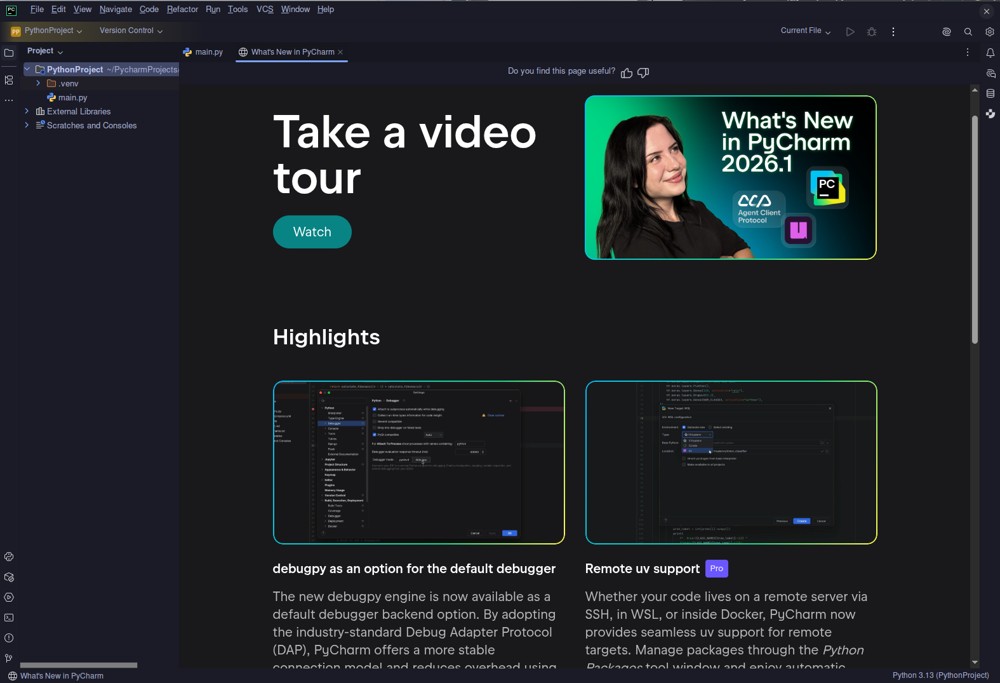
The recent release of PyCharm 2026.2.4 has solidified its reputation as the premier IDE for Python development. This version embraces a unified licensing model which merges the Community and Professional editions, allowing users to access the full core IDE for free indefinitely. However, advanced features for web frameworks, Jupyter notebooks, SQL databases, and Cython are available through a Pro subscription.
JetBrains has maintained its commitment to modern Python practices, enhancing support for the latest interpreter versions, improving Docker Compose integration, and refining the integrated terminal for a more authentic shell experience. Installation is straightforward, with the IDE bundling its own OpenJDK to streamline the setup process. For Linux users, JetBrains provides both .tar.gz archives and snap containers, catering to different preferences for terminal compatibility.
Under the new pricing model, users can download PyCharm without any financial commitment and still benefit from essential features like code completion, version control, and Docker management. The Pro subscription is reasonably priced for enhanced functionality that benefits serious developers, particularly for those working on production web applications or data pipelines.
PyCharm's architecture, built on the robust IntelliJ Platform, offers advanced code analysis and refactoring capabilities, enabling developers to catch subtle bugs and refactor code with confidence. The IDE supports various testing frameworks and integrates virtual environment management seamlessly.
However, PyCharm is not without its drawbacks. Its significant memory usage, particularly for large projects, can lead to performance issues, and its startup times lag behind lighter editors like VS Code. Additionally, the absence of a built-in GUI designer can be a limitation for developers using PyQt or PySide.
In summary, PyCharm remains the go-to choice for professional Python development, especially after the 2025 unification that eliminated the need for users to compromise between free and paid features. While it may present a steep learning curve for beginners and be resource-intensive, its powerful tools and features make it indispensable for serious developers. As Python continues to grow in popularity, PyCharm is likely to evolve further, potentially introducing new features and optimizations that enhance the user experience even more
PyCharm 2026.2.4 released
PyCharm is the gold standard for serious Python development, adding native support for recent interpreter versions, tightening Docker Compose integration, and refining the integrated terminal to actually feel like a proper shell instead of a half-hearted wrapper.