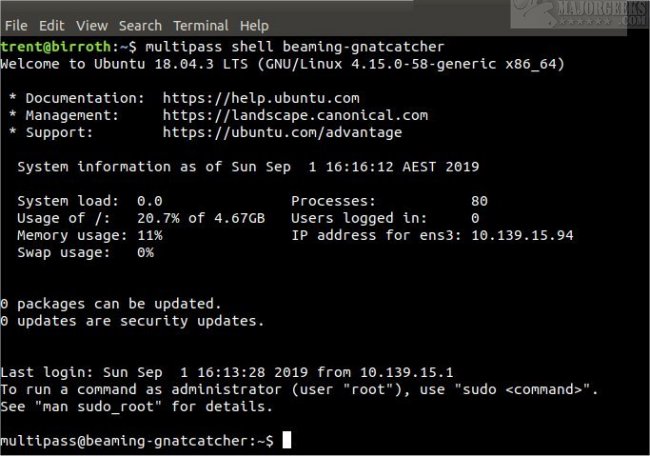
Multipass version 1.17.1 has been released, enhancing its functionality as a lightweight virtual machine (VM) manager that operates seamlessly across Linux, Windows, and macOS platforms. Designed primarily for developers, Multipass simplifies the process of launching and managing Ubuntu instances with just a single command. It leverages various virtualization technologies, including KVM for Linux, Hyper-V for Windows, and HyperKit for macOS, ensuring efficient resource usage and minimal overhead. Additionally, Multipass can utilize VirtualBox as an alternative on both Windows and macOS systems. One of its standout features is its ability to automatically fetch and update images, providing users with the latest Ubuntu environments effortlessly.
Moreover, Multipass supports cloud-init, allowing users to simulate small cloud deployments directly from their laptops or workstations. By using the `multipass launch --cloud-init` command, developers can initialize instances with custom configurations just as they would in a traditional cloud environment, enhancing the flexibility and power of local development setups.
In the evolving landscape of software development, tools like Multipass are increasingly valuable for creating consistent, isolated environments that mirror production systems. This capability is crucial for developers seeking to test applications in different configurations or to experiment with cloud-native technologies without the need for extensive infrastructure. As cloud computing continues to dominate the tech industry, solutions that bridge local development and cloud environments will become even more essential for efficient workflows.
With the recent updates in Multipass, users can expect continued improvements in performance and usability, confirming its position as a go-to tool for developers looking to streamline their development processes
Multipass 1.17.1 released
Multipass provides a command-line interface to launch, manage, and utilize instances of Linux.