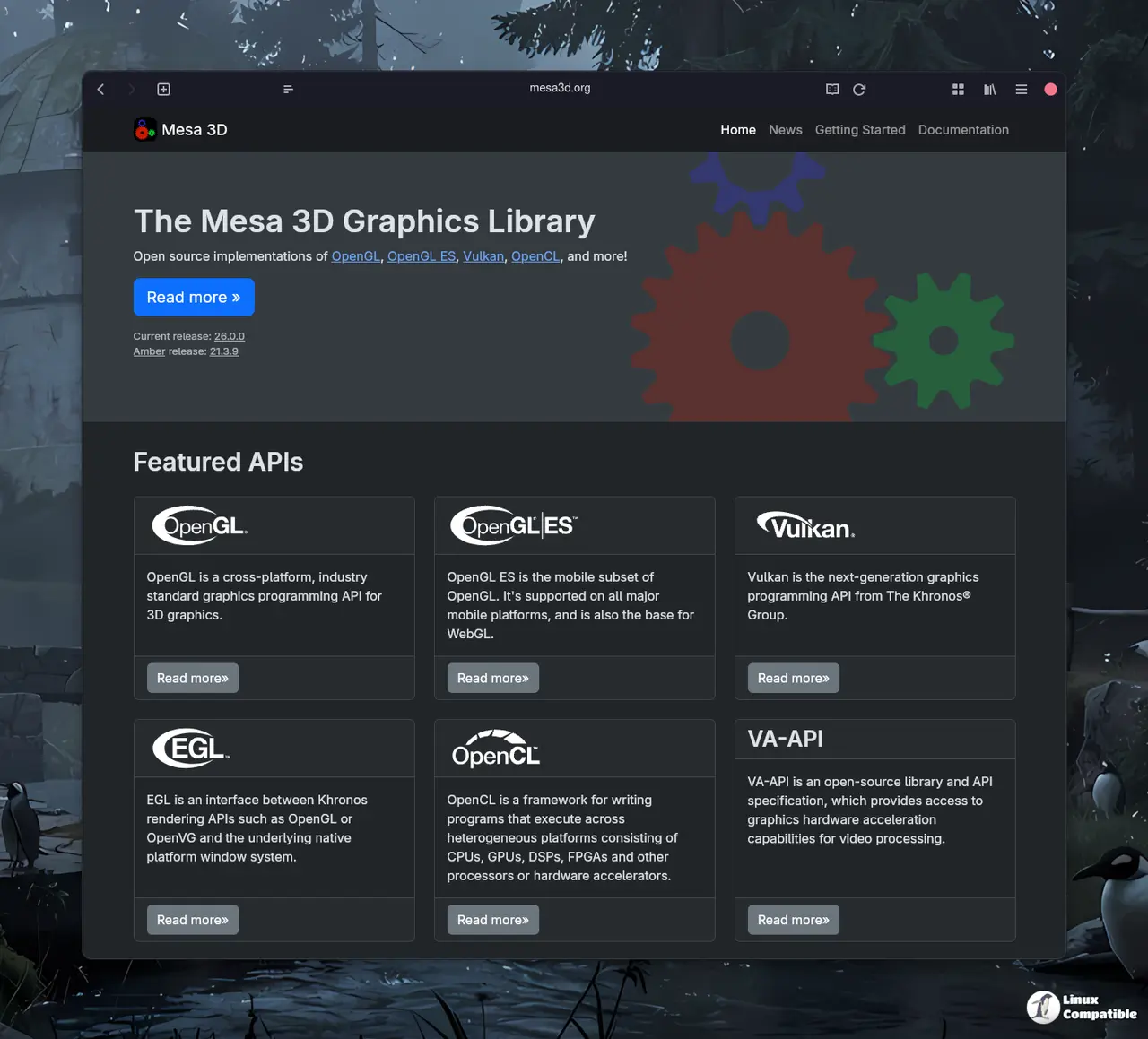
Mesa 26.1.0 released
Mesa 26.1.0 delivers a solid graphics stack update that finally gives Intel virtual machines faster VirtIO-GPU passthrough without the usual emulation overhead. The project officially drops support for VirGL, which means anyone still relying on that legacy translation layer needs to migrate to native Vulkan drivers before the code completely rots. Developers packed in dozens of new Vulkan and OpenGL extensions across AMD, Intel, PowerVR, and ARM hardware to close feature gaps that modern games and productivity apps actually need. The release also patches several driver crashes and enforces stricter build requirements like static C++ linking for Rusticl, so users can expect a noticeably more stable rendering pipeline without chasing experimental gimmicks.
Mesa 26.1.0 released
Mesa 26.1.0 has been released, providing significant updates to the graphics stack, including enhanced VirtIO-GPU passthrough for Intel virtual machines, which improves performance by eliminating emulation overhead. The release officially phases out support for VirGL, urging users still relying on it to transition to native Vulkan drivers, as maintenance for the legacy code will cease. Additionally, the update introduces numerous new Vulkan and OpenGL extensions across various GPU architectures, enhancing compatibility with modern games and applications while also tightening driver stability with stricter build requirements. Overall, Mesa 26.1.0 prioritizes improved performance and stability over legacy support, making it crucial for users to adapt to the changes for optimal functionality