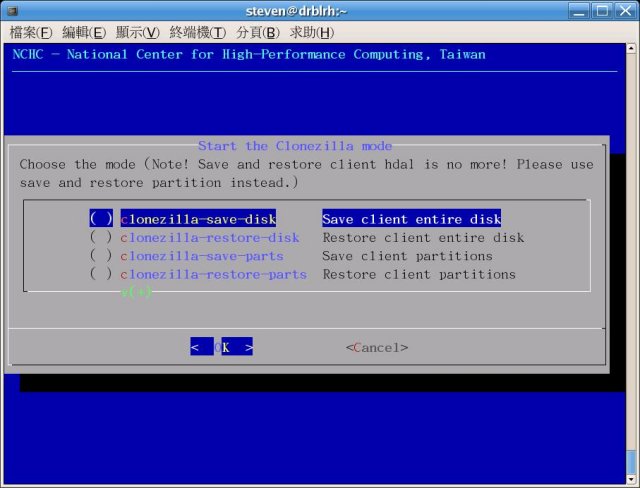
Clonezilla has recently released version 3.3.5-3, an open-source software tool designed for partitioning, disk imaging, and cloning, offering functionalities similar to commercial products like True Image and Norton Ghost. Its primary uses include system deployment, bare-metal backup, and restoration. Clonezilla Live is tailored for single-machine backups, while its advanced capabilities allow for the simultaneous cloning of over 40 computers, making it ideal for large-scale deployments. The software efficiently saves and restores only the utilized blocks of hard drives, which enhances cloning speed and effectiveness.
In high-performance environments, such as a 42-node cluster, Clonezilla has achieved impressive multicast restoration speeds of up to 8 GB per minute. Supported file systems include ext2, ext3, ext4, ReiserFS, FAT (various versions), NTFS, HFS+, UFS, and VMFS, allowing users to clone a diverse range of operating systems, including GNU/Linux, Windows, macOS, FreeBSD, and VMware ESX across both 32-bit and 64-bit architectures. For unsupported file systems, Clonezilla defaults to a sector-by-sector copy.
Key features of Clonezilla include support for LVM2, reinstallation of bootloaders like Grub and Syslinux, compatibility with both MBR and GPT partition formats, and the capability to boot on BIOS or UEFI systems. It also offers an unattended mode for automation, supports multicast cloning for bulk operations, and allows image files to be stored on various servers, including local disks and network file systems. Clonezilla uses tools such as Partclone, Partimage, ntfsclone, and dd for imaging and cloning, and it integrates with drbl-winroll to automatically change hostnames and configurations for cloned Windows machines.
In summary, Clonezilla version 3.3.5-3 is a powerful, versatile tool for disk imaging and cloning, suitable for both individual and large-scale deployments. It continues to evolve with features that meet the needs of diverse operating systems and user requirements, making it a valuable resource for system administrators and IT professionals. Future developments may include further enhancements in user interface and additional support for emerging file systems and technologies, ensuring that Clonezilla remains relevant in the fast-paced world of data management and recovery
Clonezilla 3.3.5-3 released
Clonezilla is an Open Source partition, disk imaging, and cloning program similar to True Image or Norton Ghost.