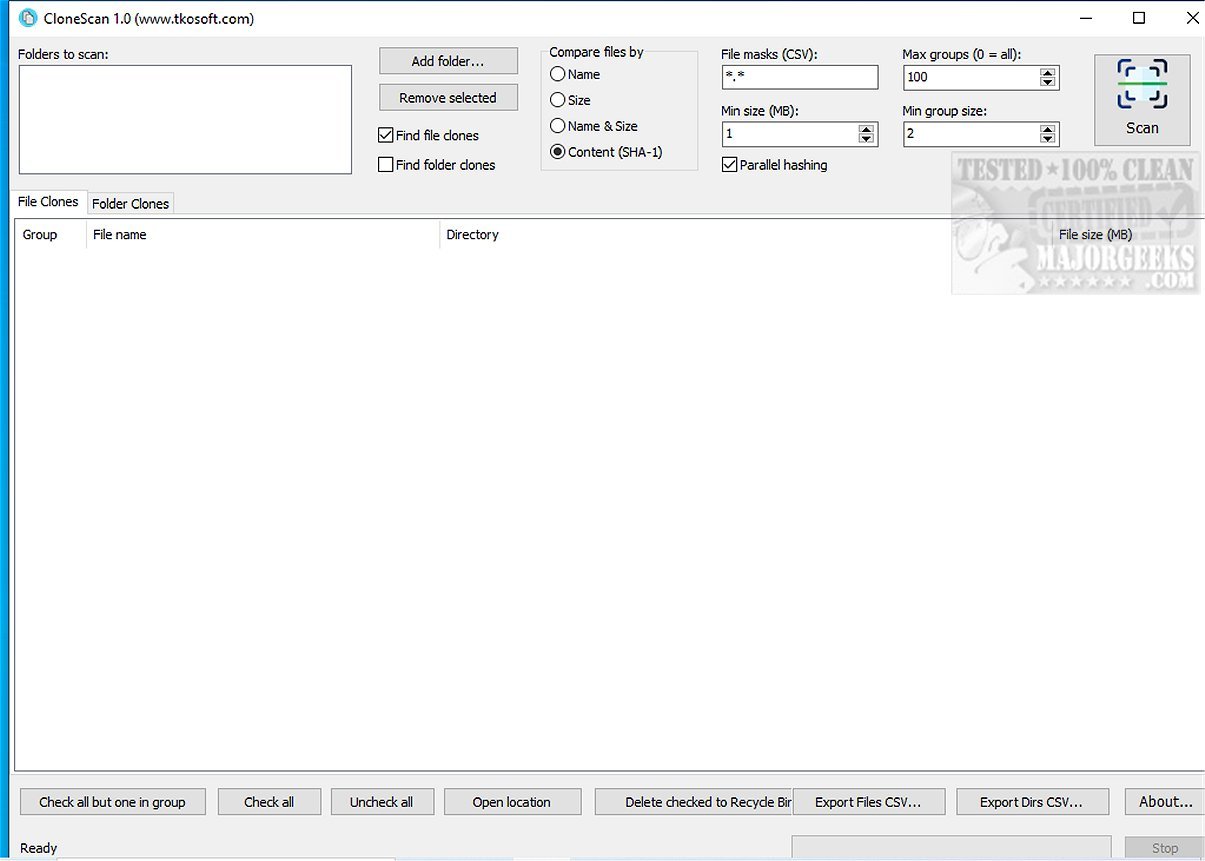
CloneScan 2.1 is an efficient and user-friendly utility designed for Windows users, enabling them to identify, evaluate, and securely eliminate duplicate files and folders from their computers. This free tool streamlines the process of organizing digital spaces by scanning for duplicate content that can consume unnecessary storage and create clutter.
CloneScan is equipped with an intuitive interface that simplifies the review of detected duplicates, allowing users to make quick decisions on which files and folders to keep or delete. By utilizing this software, users can enhance their system’s storage efficiency and overall performance, leading to a more organized digital environment.
In addition to identifying duplicate files, CloneScan extends its functionality to scanning for duplicate folders. It thoroughly analyzes the contents of directories, creating folder signatures based on their files and subfolders. This feature is particularly useful for locating duplicate directory structures, such as copied project folders, unnecessary backups, and redundant archives.
During testing, CloneScan proved to operate quickly, even with extensive scanning criteria. The organized results presentation made it easy to view and remove duplicates. The straightforward interface significantly contributed to a seamless user experience.
- Free Duplicate File Finder: Available for personal and commercial use.
- Versatile Duplicate Detection: Find duplicates based on name, size, or SHA-1 content hash.
- Folder Detection: Identify duplicate folders and copied directory structures.
- File Mask Filtering: Tailor scans to specific file types, enhancing the search process.
- Parallel SHA-1 Hashing: Speeds up the scanning process.
- Grouped Results: Sort duplicates based on total wasted space.
- Safe Deletion: Items are moved to the Recycle Bin, allowing for easy recovery.
- Results Export: Export scan results to CSV for reporting or further analysis.
CloneScan allows users to customize their scanning process with file masks, enabling them to specify particular file types or patterns. This targeted approach minimizes unnecessary scanning and increases efficiency. Users can employ multiple masks, separated by commas, semicolons, spaces, or vertical bars.
A key aspect of CloneScan's functionality is that it does not immediately delete selected files or folders. Instead, checked items are moved to the Windows Recycle Bin, providing a safety net for users to restore any mistakenly deleted items. Additionally, the ability to export scan results to CSV files allows for easy reporting and archiving.
CloneScan emerges as a reliable ally in decluttering digital spaces. This intuitive tool facilitates the detection, evaluation, and safe removal of duplicate files and folders, enhancing storage efficiency and system performance. With its robust features and user-friendly design, CloneScan is an indispensable tool for anyone looking to streamline their digital environment. Say goodbye to file chaos and embrace a more organized system with CloneScan!
For those interested in further optimizing their digital storage, consider exploring the following resources:
- Using Storage Sense: Automate junk file deletion in Windows 10/11.
- Disk Cleanup Automation: Run cleanup tasks automatically with all items checked.
- Drive Cleaner Comparisons: Evaluate CCleaner, Wise Disk Cleaner, and PrivaZer.
- Library Management in Windows: Guide on showing, hiding, adding, or removing folders from Libraries in Windows 10 & 11
Key Features and Functions
CloneScan is equipped with an intuitive interface that simplifies the review of detected duplicates, allowing users to make quick decisions on which files and folders to keep or delete. By utilizing this software, users can enhance their system’s storage efficiency and overall performance, leading to a more organized digital environment.
In addition to identifying duplicate files, CloneScan extends its functionality to scanning for duplicate folders. It thoroughly analyzes the contents of directories, creating folder signatures based on their files and subfolders. This feature is particularly useful for locating duplicate directory structures, such as copied project folders, unnecessary backups, and redundant archives.
Performance and User Experience
During testing, CloneScan proved to operate quickly, even with extensive scanning criteria. The organized results presentation made it easy to view and remove duplicates. The straightforward interface significantly contributed to a seamless user experience.
Notable Features Include:
- Free Duplicate File Finder: Available for personal and commercial use.
- Versatile Duplicate Detection: Find duplicates based on name, size, or SHA-1 content hash.
- Folder Detection: Identify duplicate folders and copied directory structures.
- File Mask Filtering: Tailor scans to specific file types, enhancing the search process.
- Parallel SHA-1 Hashing: Speeds up the scanning process.
- Grouped Results: Sort duplicates based on total wasted space.
- Safe Deletion: Items are moved to the Recycle Bin, allowing for easy recovery.
- Results Export: Export scan results to CSV for reporting or further analysis.
Customizable Scanning Options
CloneScan allows users to customize their scanning process with file masks, enabling them to specify particular file types or patterns. This targeted approach minimizes unnecessary scanning and increases efficiency. Users can employ multiple masks, separated by commas, semicolons, spaces, or vertical bars.
Safety and Recovery
A key aspect of CloneScan's functionality is that it does not immediately delete selected files or folders. Instead, checked items are moved to the Windows Recycle Bin, providing a safety net for users to restore any mistakenly deleted items. Additionally, the ability to export scan results to CSV files allows for easy reporting and archiving.
Conclusion
CloneScan emerges as a reliable ally in decluttering digital spaces. This intuitive tool facilitates the detection, evaluation, and safe removal of duplicate files and folders, enhancing storage efficiency and system performance. With its robust features and user-friendly design, CloneScan is an indispensable tool for anyone looking to streamline their digital environment. Say goodbye to file chaos and embrace a more organized system with CloneScan!
Related Tools and Articles
For those interested in further optimizing their digital storage, consider exploring the following resources:
- Using Storage Sense: Automate junk file deletion in Windows 10/11.
- Disk Cleanup Automation: Run cleanup tasks automatically with all items checked.
- Drive Cleaner Comparisons: Evaluate CCleaner, Wise Disk Cleaner, and PrivaZer.
- Library Management in Windows: Guide on showing, hiding, adding, or removing folders from Libraries in Windows 10 & 11
CloneScan 2.1 released
CloneScan is a user-friendly Windows tool that helps you identify, evaluate, and securely remove duplicate files and folders on your computer. This free utility simplifies organizing your digital space by scanning your system for duplicate content, which can waste storage and create clutter.