Suricata 8.0.2 has been released, enhancing its capabilities as a powerful network threat detection engine designed for real-time intrusion detection. This tool is specifically tailored for network administrators, security engineers, IT technicians, and advanced users, making it unsuitable for casual PC users.
To get started with Suricata, users must install WinPcap and Cygwin, along with several additional packages such as w32api, mpfr, pthreads, GCC-core, gcc4-core, make, Zlib, Autoconf, Automake, libtool, glib, Pkg-config, and git. If these terms are unfamiliar, it may be advisable to reconsider using Suricata.
The software is categorized under Networking, and while it hasn’t been prominently featured on social media or as a highlighted Pick, it remains accessible for those who know where to look. Users interested in installation can find a detailed guide to assist them.
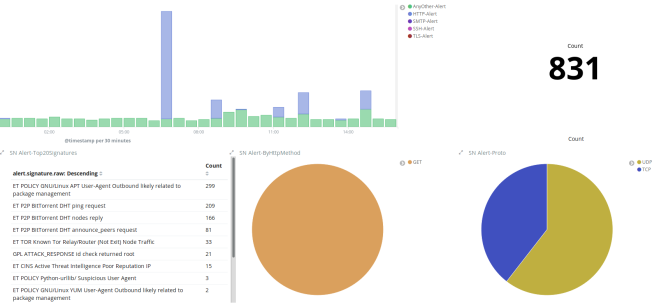
Suricata's capabilities include inspecting network traffic with a robust set of rules and a signature language, along with Lua scripting support for identifying advanced threats. It supports standard input and output formats like YAML and JSON, allowing for seamless integration with existing Security Information and Event Management (SIEM) systems, Splunk, Logstash/Elasticsearch, Kibana, and other databases.
The development of Suricata is community-driven, with a strong emphasis on security, usability, and efficiency. It is evident that Suricata is not intended for home users; rather, it caters to professionals who require sophisticated intrusion detection and protection systems.
In summary, Suricata 8.0.2 represents a significant tool for advanced users in the field of network security. Its comprehensive features and integration capabilities make it a valuable asset for those tasked with protecting networks from threats. As the landscape of cybersecurity continues to evolve, tools like Suricata will remain essential for maintaining robust security measures. For those interested, keeping abreast of updates and community contributions will ensure they maximize the potential of this powerful engine
To get started with Suricata, users must install WinPcap and Cygwin, along with several additional packages such as w32api, mpfr, pthreads, GCC-core, gcc4-core, make, Zlib, Autoconf, Automake, libtool, glib, Pkg-config, and git. If these terms are unfamiliar, it may be advisable to reconsider using Suricata.
The software is categorized under Networking, and while it hasn’t been prominently featured on social media or as a highlighted Pick, it remains accessible for those who know where to look. Users interested in installation can find a detailed guide to assist them.
Suricata's capabilities include inspecting network traffic with a robust set of rules and a signature language, along with Lua scripting support for identifying advanced threats. It supports standard input and output formats like YAML and JSON, allowing for seamless integration with existing Security Information and Event Management (SIEM) systems, Splunk, Logstash/Elasticsearch, Kibana, and other databases.
The development of Suricata is community-driven, with a strong emphasis on security, usability, and efficiency. It is evident that Suricata is not intended for home users; rather, it caters to professionals who require sophisticated intrusion detection and protection systems.
In summary, Suricata 8.0.2 represents a significant tool for advanced users in the field of network security. Its comprehensive features and integration capabilities make it a valuable asset for those tasked with protecting networks from threats. As the landscape of cybersecurity continues to evolve, tools like Suricata will remain essential for maintaining robust security measures. For those interested, keeping abreast of updates and community contributions will ensure they maximize the potential of this powerful engine
Suricata 8.0.2 released
Suricata is a robust network threat detection engine capable of real-time intrusion detection.