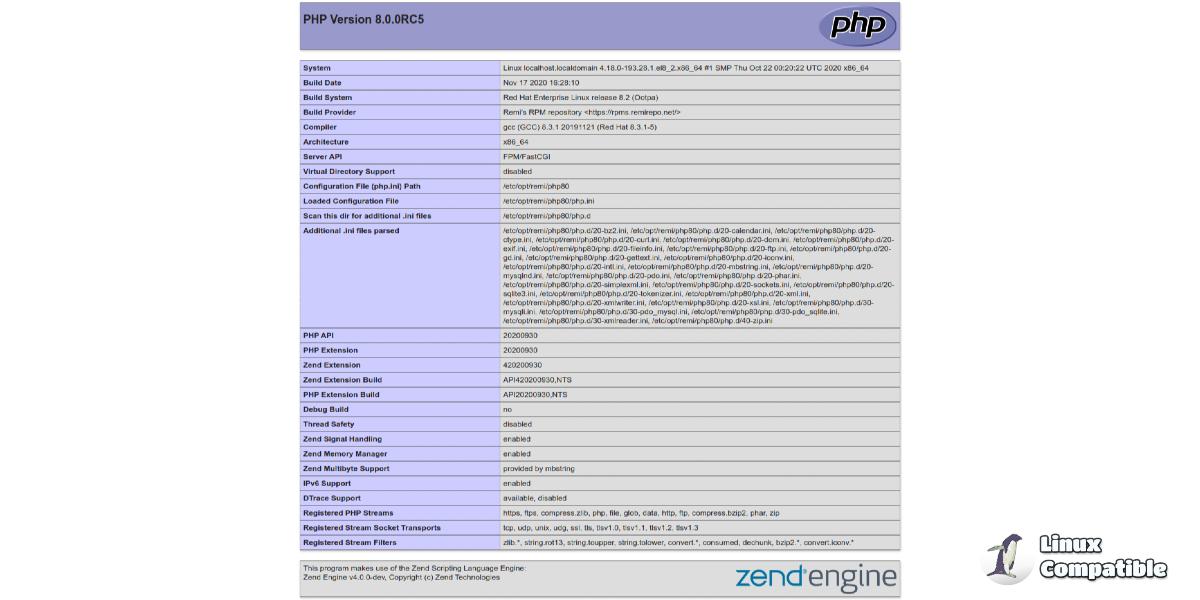
The Release Candidate versions of PHP 8.3.30RC1, 8.4.17RC1, and 8.5.2RC1 have been released for testing on Fedora and Enterprise Linux distributions such as RHEL, CentOS, Alma, and Rocky. This release allows users to experiment with new features without disrupting their current environments, as these versions can be installed as separate software collections (SCL).
These RC versions provide a preview of the final product, with a deadline for additional changes set for January, allowing for testing and feedback before the stable releases. The official releases of PHP 8.3.31, 8.4.18, and 8.5.3 are scheduled for January 15th.
To install the PHP 8.5.2RC1 version, users can utilize the remi-modular-test repository, suitable for Fedora 41-43 and Enterprise Linux version 8 and above. Likewise, PHP 8.4.17RC1 and PHP 8.3.30RC1 can be installed following similar procedures, with the latter now in a limited security mode and no further RCs planned for it.
For managing multiple PHP versions, users can install an RC version independently. For example, to install PHP 8.5.2RC1, the command `yum --enablerepo=remi-test install php85` can be used. If users want to upgrade their default PHP version system-wide, they would typically run `dnf module switch-to php:remi-8.4` and then update the PHP components.
When installing these versions, it is crucial to consider the dependencies and operating system compatibility. For instance, the oci8 extension depends on the availability of Oracle Instant Client 23.9, while the intl extension requires libicu version 74.2.
As the testing phase progresses, users are encouraged to engage with these Release Candidate versions to ensure a smooth final release and provide feedback where necessary.
In summary, the PHP 8.3.30RC1, 8.4.17RC1, and 8.5.2RC1 versions are available for testing, and users have the opportunity to experience new features while preparing for the upcoming official releases in January
These RC versions provide a preview of the final product, with a deadline for additional changes set for January, allowing for testing and feedback before the stable releases. The official releases of PHP 8.3.31, 8.4.18, and 8.5.3 are scheduled for January 15th.
To install the PHP 8.5.2RC1 version, users can utilize the remi-modular-test repository, suitable for Fedora 41-43 and Enterprise Linux version 8 and above. Likewise, PHP 8.4.17RC1 and PHP 8.3.30RC1 can be installed following similar procedures, with the latter now in a limited security mode and no further RCs planned for it.
For managing multiple PHP versions, users can install an RC version independently. For example, to install PHP 8.5.2RC1, the command `yum --enablerepo=remi-test install php85` can be used. If users want to upgrade their default PHP version system-wide, they would typically run `dnf module switch-to php:remi-8.4` and then update the PHP components.
When installing these versions, it is crucial to consider the dependencies and operating system compatibility. For instance, the oci8 extension depends on the availability of Oracle Instant Client 23.9, while the intl extension requires libicu version 74.2.
As the testing phase progresses, users are encouraged to engage with these Release Candidate versions to ensure a smooth final release and provide feedback where necessary.
In summary, the PHP 8.3.30RC1, 8.4.17RC1, and 8.5.2RC1 versions are available for testing, and users have the opportunity to experience new features while preparing for the upcoming official releases in January
PHP 8.3.30RC1, 8.4.17RC1 and 8.5.2RC1 Fedora RHEL Packages released
Release Candidate versions of PHP 8.3.30RC1, 8.4.17RC1, and 8.5.2RC1 are now available for testing on Fedora and Enterprise Linux (RHEL/CentOS/Alma/Rocky) systems. These versions can be installed separately as software collections (SCL), allowing users to test new features without interfering with their regular setup.
PHP 8.3.30RC1, 8.4.17RC1 and 8.5.2RC1 Fedora RHEL Packages released @ Linux Compatible