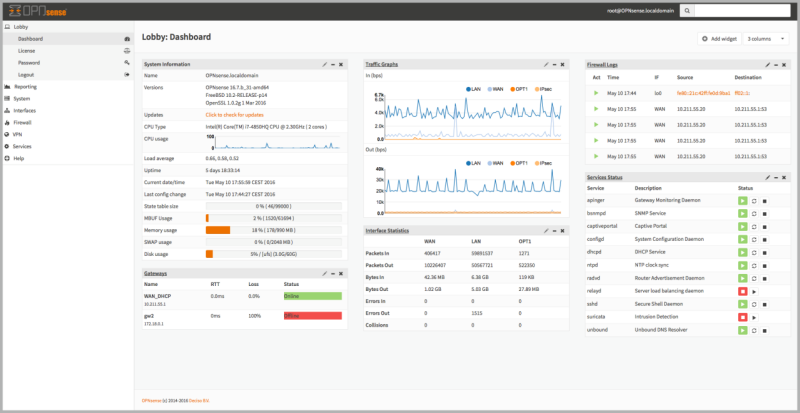
OPNsense 26.1 has been released, marking another significant update in the development of this open-source firewall and routing platform. Built on the robust HardenedBSD operating system, OPNsense stands out for its user-friendly interface and ease of deployment, making it an attractive alternative to costly commercial firewalls. Since its inception in 2014 as a fork of pfSense and m0n0wall, OPNsense has quickly evolved to incorporate a comprehensive set of features that often surpass those offered by traditional commercial solutions, all while maintaining open and verifiable source code.
The project's commitment to security and code quality is evident in its practice of providing weekly security updates, allowing users to stay ahead of emerging threats. Additionally, OPNsense adheres to a fixed release cycle, delivering two major updates each year, which helps organizations plan their upgrade strategies effectively. Each major release is accompanied by a detailed roadmap to ensure transparency in development and to set clear objectives for future enhancements.
For users interested in downloading OPNsense, there are four available options:
1. DVD: An ISO installer image with live system capabilities, compatible with VGA mode and supporting UEFI boot on amd64 systems.
2. VGA: A USB installer image, also featuring live system capabilities in VGA mode and GPT boot, with UEFI support on amd64.
3. Serial: A USB installer image that operates in serial console mode (115200) and supports MBR boot.
4. Nano: A preinstalled image for USB sticks, SD cards, or CF cards that automatically adjusts to the media size after the first boot.
OPNsense is designed for users who have experience with Linux, emphasizing that it may not be suitable for beginners. For those new to Linux, a variety of user-friendly distributions are available to explore.
In summary, OPNsense continues to solidify its position as a powerful, open-source firewall solution, combining advanced security features with a commitment to community-driven development. As it progresses, OPNsense remains a top choice for businesses and tech-savvy individuals seeking a reliable and flexible networking platform
The project's commitment to security and code quality is evident in its practice of providing weekly security updates, allowing users to stay ahead of emerging threats. Additionally, OPNsense adheres to a fixed release cycle, delivering two major updates each year, which helps organizations plan their upgrade strategies effectively. Each major release is accompanied by a detailed roadmap to ensure transparency in development and to set clear objectives for future enhancements.
For users interested in downloading OPNsense, there are four available options:
1. DVD: An ISO installer image with live system capabilities, compatible with VGA mode and supporting UEFI boot on amd64 systems.
2. VGA: A USB installer image, also featuring live system capabilities in VGA mode and GPT boot, with UEFI support on amd64.
3. Serial: A USB installer image that operates in serial console mode (115200) and supports MBR boot.
4. Nano: A preinstalled image for USB sticks, SD cards, or CF cards that automatically adjusts to the media size after the first boot.
OPNsense is designed for users who have experience with Linux, emphasizing that it may not be suitable for beginners. For those new to Linux, a variety of user-friendly distributions are available to explore.
In summary, OPNsense continues to solidify its position as a powerful, open-source firewall solution, combining advanced security features with a commitment to community-driven development. As it progresses, OPNsense remains a top choice for businesses and tech-savvy individuals seeking a reliable and flexible networking platform
OPNsense 26.1 released
OPNsense is an Open Source, easy-to-use, easy-to-build HardenedBSD-based firewall, and routing platform.