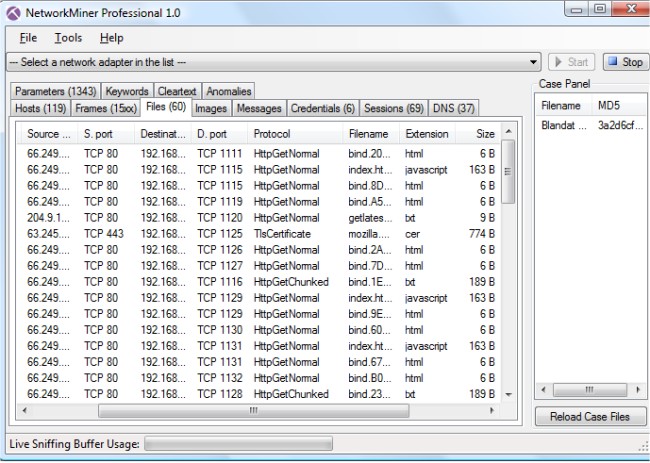
NetworkMiner, a powerful network forensic analysis tool, has reached its 3.1 release, enhancing its capability to gather forensic evidence without injecting traffic into the network. Unlike traditional packet-centric tools that analyze network traffic, NetworkMiner focuses on host-centric data collection, categorizing and presenting information based on each host's activity. This approach provides a clearer understanding of individual devices rather than overwhelming users with raw packet data.
Usage in Law Enforcement and Incident Response
Since its inception in 2007, NetworkMiner has gained traction among law enforcement and incident response teams worldwide. Its ability to extract files, certificates, and user credentials from network traffic makes it invaluable for security investigations. NetworkMiner can analyze PCAP files or capture traffic directly, allowing users to retrieve media files streamed over the internet and extract sensitive information such as usernames and passwords from various protocols, including FTP, HTTP, and SMB.
Advanced Functionality and Features
NetworkMiner 3.1 supports live sniffing, parsing of PCAP and PcapNG files, and offers IPv6 support. It efficiently retrieves files across multiple protocols and can extract SSL-encrypted X.509 certificates from secure traffic. The tool also facilitates searches through data sniffing based on specific keywords, enabling users to quickly locate pertinent information within network traffic.
Key features of NetworkMiner include:
- Live sniffing capabilities
- Compatibility with various file formats (PCAP, PcapNG)
- IPv6 support
- Extensive file extraction from numerous protocols (FTP, HTTP/2, SMB, etc.)
- Decapsulation of several protocols (GRE, PPPoE, etc.)
- Portability via a USB flash drive, allowing for easy access and operation without installation
Conclusion: A Vital Tool for Network Forensics
NetworkMiner is heralded as an essential tool for network forensics, recognized for its robustness and versatility. It excels in analyzing a broad range of network incidents, including those involving encrypted communications, making it a critical resource for investigators tackling intricate digital challenges. Its continued evolution ensures that users have access to advanced features that enhance network analysis and security.
Future Prospects
Looking ahead, NetworkMiner may expand its capabilities to incorporate more advanced analytics, machine learning for anomaly detection, and enhanced user interfaces to improve usability. As cybersecurity threats evolve, tools like NetworkMiner will need to adapt continuously to meet the demands of investigators and security professionals, ensuring they remain at the forefront of network forensic analysis
Usage in Law Enforcement and Incident Response
Since its inception in 2007, NetworkMiner has gained traction among law enforcement and incident response teams worldwide. Its ability to extract files, certificates, and user credentials from network traffic makes it invaluable for security investigations. NetworkMiner can analyze PCAP files or capture traffic directly, allowing users to retrieve media files streamed over the internet and extract sensitive information such as usernames and passwords from various protocols, including FTP, HTTP, and SMB.
Advanced Functionality and Features
NetworkMiner 3.1 supports live sniffing, parsing of PCAP and PcapNG files, and offers IPv6 support. It efficiently retrieves files across multiple protocols and can extract SSL-encrypted X.509 certificates from secure traffic. The tool also facilitates searches through data sniffing based on specific keywords, enabling users to quickly locate pertinent information within network traffic.
Key features of NetworkMiner include:
- Live sniffing capabilities
- Compatibility with various file formats (PCAP, PcapNG)
- IPv6 support
- Extensive file extraction from numerous protocols (FTP, HTTP/2, SMB, etc.)
- Decapsulation of several protocols (GRE, PPPoE, etc.)
- Portability via a USB flash drive, allowing for easy access and operation without installation
Conclusion: A Vital Tool for Network Forensics
NetworkMiner is heralded as an essential tool for network forensics, recognized for its robustness and versatility. It excels in analyzing a broad range of network incidents, including those involving encrypted communications, making it a critical resource for investigators tackling intricate digital challenges. Its continued evolution ensures that users have access to advanced features that enhance network analysis and security.
Future Prospects
Looking ahead, NetworkMiner may expand its capabilities to incorporate more advanced analytics, machine learning for anomaly detection, and enhanced user interfaces to improve usability. As cybersecurity threats evolve, tools like NetworkMiner will need to adapt continuously to meet the demands of investigators and security professionals, ensuring they remain at the forefront of network forensic analysis
NetworkMiner 3.1 released
NetworkMiner allows you to collect data (such as forensic evidence) about hosts on the network without putting any traffic on the network.