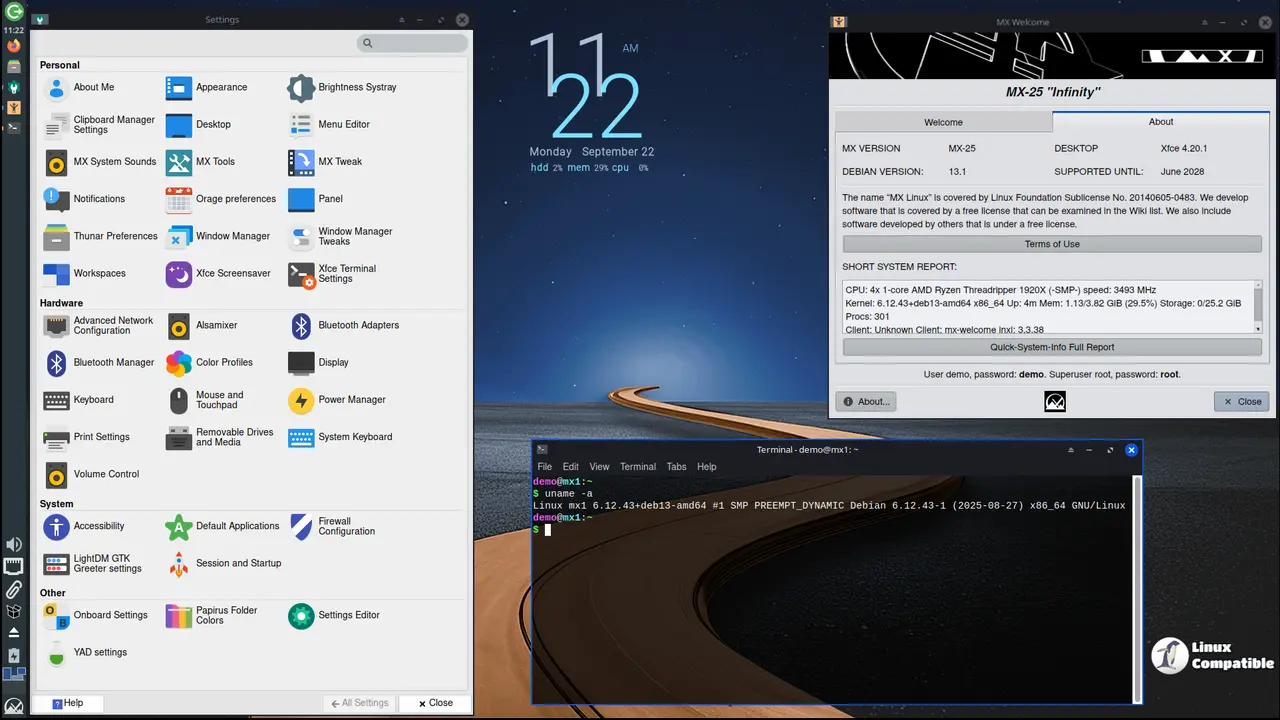
MX Linux 25.1 has officially been released for users to download, showcasing a range of enhancements and updates. This version features updated Debian kernels, with most variants utilizing kernel version 6.12, while the Xfce-ahs variant benefits from a more advanced 6.18 Liquorix kernel. AHS-enabled releases have also been upgraded to Mesa version 25.3.3, ensuring improved graphical performance.
A significant highlight of this release is the reintroduction of the dual-init system setup option, which allows users to select between systemd and sysvinit for their default startup system. This feature not only addresses persistent issues faced by users but also streamlines the build process by reducing the number of builds required for different versions. On first boot, users will encounter a straightforward menu that enables them to choose their preferred init system, and this selection can be adjusted even in live sessions with the advanced boot option.
The new dual-init setup appears to resolve previous issues associated with systemd-shim, such as difficulties with polkit/dbus during logins and root privilege escalations. Additionally, the shift to sysvinit as the default init system enhances security, as systemd updates are now managed directly through Debian, simplifying the update process for users.
While the dual-init boot menus are not yet available for snapshots, users transitioning from older versions will find a seamless experience, as the system retains the init option active prior to installation. However, there is a noted issue regarding persistence on live USB setups with dual-init, particularly with semi-automatic saving during shutdown. Developers are currently working to resolve this complication.
For those interested, MX Linux 25.1 can be downloaded in various desktop environments, including Xfce, KDE Plasma (AHS-enabled), and Fluxbox, through the provided links.
Extensions:
The release of MX Linux 25.1 is a testament to the project's commitment to user choice and system stability. The dual-init system not only caters to the preferences of seasoned users but also enhances the overall user experience by minimizing common issues associated with init systems. This flexibility is particularly valuable in a diverse Linux ecosystem, where user needs can vary significantly.
Moreover, the integration of updated kernel versions and graphical improvements like Mesa 25.3.3 reflects MX Linux's dedication to keeping pace with technological advancements and ensuring that users have access to the latest features and security enhancements.
The developers' proactive approach in addressing known issues, such as those related to the dual-init setup and persistence on live USBs, indicates a responsive and community-focused development strategy. As MX Linux continues to evolve, it is likely to attract new users while retaining its loyal base, thanks to its blend of user-friendliness, customization options, and robust performance.
Looking ahead, users can anticipate further updates and enhancements as the development team continues to refine and expand the capabilities of MX Linux, making it an increasingly appealing choice for both newcomers and experienced Linux enthusiasts
A significant highlight of this release is the reintroduction of the dual-init system setup option, which allows users to select between systemd and sysvinit for their default startup system. This feature not only addresses persistent issues faced by users but also streamlines the build process by reducing the number of builds required for different versions. On first boot, users will encounter a straightforward menu that enables them to choose their preferred init system, and this selection can be adjusted even in live sessions with the advanced boot option.
The new dual-init setup appears to resolve previous issues associated with systemd-shim, such as difficulties with polkit/dbus during logins and root privilege escalations. Additionally, the shift to sysvinit as the default init system enhances security, as systemd updates are now managed directly through Debian, simplifying the update process for users.
While the dual-init boot menus are not yet available for snapshots, users transitioning from older versions will find a seamless experience, as the system retains the init option active prior to installation. However, there is a noted issue regarding persistence on live USB setups with dual-init, particularly with semi-automatic saving during shutdown. Developers are currently working to resolve this complication.
For those interested, MX Linux 25.1 can be downloaded in various desktop environments, including Xfce, KDE Plasma (AHS-enabled), and Fluxbox, through the provided links.
Extensions:
The release of MX Linux 25.1 is a testament to the project's commitment to user choice and system stability. The dual-init system not only caters to the preferences of seasoned users but also enhances the overall user experience by minimizing common issues associated with init systems. This flexibility is particularly valuable in a diverse Linux ecosystem, where user needs can vary significantly.
Moreover, the integration of updated kernel versions and graphical improvements like Mesa 25.3.3 reflects MX Linux's dedication to keeping pace with technological advancements and ensuring that users have access to the latest features and security enhancements.
The developers' proactive approach in addressing known issues, such as those related to the dual-init setup and persistence on live USBs, indicates a responsive and community-focused development strategy. As MX Linux continues to evolve, it is likely to attract new users while retaining its loyal base, thanks to its blend of user-friendliness, customization options, and robust performance.
Looking ahead, users can anticipate further updates and enhancements as the development team continues to refine and expand the capabilities of MX Linux, making it an increasingly appealing choice for both newcomers and experienced Linux enthusiasts
MX Linux 25.1 released
MX Linux 25.1 is now available for download, featuring updated Debian kernels and other improvements. One notable change is the reintroduction of a dual-init system setup option, which allows users to choose between systemd and sysvinit as their default startup system. This feature helps solve persistent issues and simplifies the build process. Additionally, the new release addresses known problems with systemd-shim and improves security by using sysvinit as the default init system.