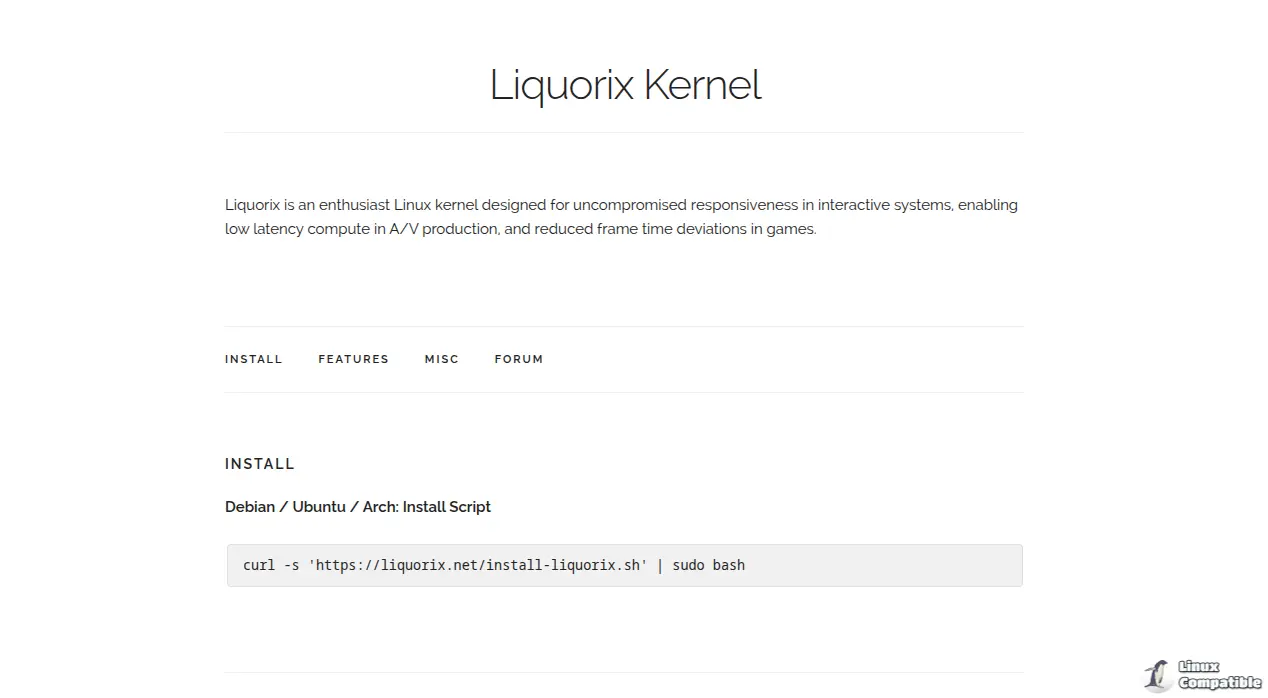
The Liquorix Linux Kernel 6.18-2 has been officially released by Steven Barrett, presenting enhancements tailored to optimize desktop performance, particularly for multimedia and gaming environments. This latest iteration transitions the kernel from NO_HZ_IDLE to NO_HZ_FULL mode, significantly altering the system's idle management, which in turn influences performance and power consumption.
As a custom kernel, Liquorix is specifically engineered to refine the desktop experience by maximizing speed and responsiveness, especially for resource-intensive tasks. The kernel introduces several key features, including Zen Interactive Tuning, which prioritizes system responsiveness over energy efficiency, making it especially advantageous for gaming and demanding applications.
In terms of system management, the Liquorix kernel enhances I/O and memory handling capabilities. Noteworthy improvements in the Block Layer allow for better memory management through background reclaim for hugepages. Additionally, it has set minimum cache time-to-live (TTL) at 1000 ms to minimize network latency, while opting against older features that could compromise stability for marginal gains in performance.
The CPU frequency control has also received fine-tuning, adjusting parameters to ensure swift responsiveness when necessary. This includes modifications to the ondemand sampling, which dictates how the system adapts to power-saving conditions.
Furthermore, Liquorix 6.18-2 includes advanced scheduling features that enable high-resolution timing control, ensuring smooth operation without interruptions. The kernel also integrates the Budget Fair Queue (BFQ) for managing disk I/O, maintaining fairness among applications, and introduces TCP BBR2 Congestion Control for enhanced data transfer during network congestion.
Another intriguing enhancement is the implementation of Compressed Swap using LZ4 compression, which effectively reduces memory usage for swap by compressing in-use pages, thereby minimizing the virtual memory footprint.
Installation of the Liquorix kernel is straightforward for users of Debian, Ubuntu, or Arch Linux, as it provides binary builds for various distribution releases, easily accessible through their PPA. Users can swiftly install the kernel using a simple script available on their website, requiring only basic terminal commands.
Overall, the Liquorix Linux Kernel 6.18-2 stands out as a robust choice for users seeking to enhance their computing experience, seamlessly integrating performance optimizations while ensuring broad hardware compatibility. As always, users are advised to verify compatibility with their systems prior to installation.
Extension:
This release highlights the ongoing development and importance of specialized kernels in the Linux ecosystem, as they cater to specific user needs, such as gaming and multimedia performance. With the rise in demand for high-performance computing, particularly in gaming and content creation, customized kernels like Liquorix play a critical role in bridging the gap between default distributions and user expectations for speed and responsiveness.
Moreover, as technology evolves, we can anticipate further advancements in kernel development, including better support for emerging hardware technologies, enhancements in security measures, and more sophisticated power management features that balance performance with energy efficiency.
Future iterations of Liquorix may also explore integrating AI-driven resource management, potentially leveraging machine learning algorithms to dynamically allocate system resources based on real-time usage patterns and demands. This could lead to even more adaptive and efficient performance, making Linux a more formidable choice for power users and professionals alike
As a custom kernel, Liquorix is specifically engineered to refine the desktop experience by maximizing speed and responsiveness, especially for resource-intensive tasks. The kernel introduces several key features, including Zen Interactive Tuning, which prioritizes system responsiveness over energy efficiency, making it especially advantageous for gaming and demanding applications.
In terms of system management, the Liquorix kernel enhances I/O and memory handling capabilities. Noteworthy improvements in the Block Layer allow for better memory management through background reclaim for hugepages. Additionally, it has set minimum cache time-to-live (TTL) at 1000 ms to minimize network latency, while opting against older features that could compromise stability for marginal gains in performance.
The CPU frequency control has also received fine-tuning, adjusting parameters to ensure swift responsiveness when necessary. This includes modifications to the ondemand sampling, which dictates how the system adapts to power-saving conditions.
Furthermore, Liquorix 6.18-2 includes advanced scheduling features that enable high-resolution timing control, ensuring smooth operation without interruptions. The kernel also integrates the Budget Fair Queue (BFQ) for managing disk I/O, maintaining fairness among applications, and introduces TCP BBR2 Congestion Control for enhanced data transfer during network congestion.
Another intriguing enhancement is the implementation of Compressed Swap using LZ4 compression, which effectively reduces memory usage for swap by compressing in-use pages, thereby minimizing the virtual memory footprint.
Installation of the Liquorix kernel is straightforward for users of Debian, Ubuntu, or Arch Linux, as it provides binary builds for various distribution releases, easily accessible through their PPA. Users can swiftly install the kernel using a simple script available on their website, requiring only basic terminal commands.
Overall, the Liquorix Linux Kernel 6.18-2 stands out as a robust choice for users seeking to enhance their computing experience, seamlessly integrating performance optimizations while ensuring broad hardware compatibility. As always, users are advised to verify compatibility with their systems prior to installation.
Extension:
This release highlights the ongoing development and importance of specialized kernels in the Linux ecosystem, as they cater to specific user needs, such as gaming and multimedia performance. With the rise in demand for high-performance computing, particularly in gaming and content creation, customized kernels like Liquorix play a critical role in bridging the gap between default distributions and user expectations for speed and responsiveness.
Moreover, as technology evolves, we can anticipate further advancements in kernel development, including better support for emerging hardware technologies, enhancements in security measures, and more sophisticated power management features that balance performance with energy efficiency.
Future iterations of Liquorix may also explore integrating AI-driven resource management, potentially leveraging machine learning algorithms to dynamically allocate system resources based on real-time usage patterns and demands. This could lead to even more adaptive and efficient performance, making Linux a more formidable choice for power users and professionals alike
Liquorix Linux Kernel 6.18-2 released
Steven Barrett has released Liquorix Linux kernel 6.18-2, which offers several improvements to optimize desktop performance for multimedia and gaming workloads. The new kernel includes features that help improve how the system responds quickly while still being stable, such as better management of input/output, memory, and CPU speed control.