Ladybird Browser Ships First Alpha After Years of From-Scratch Development
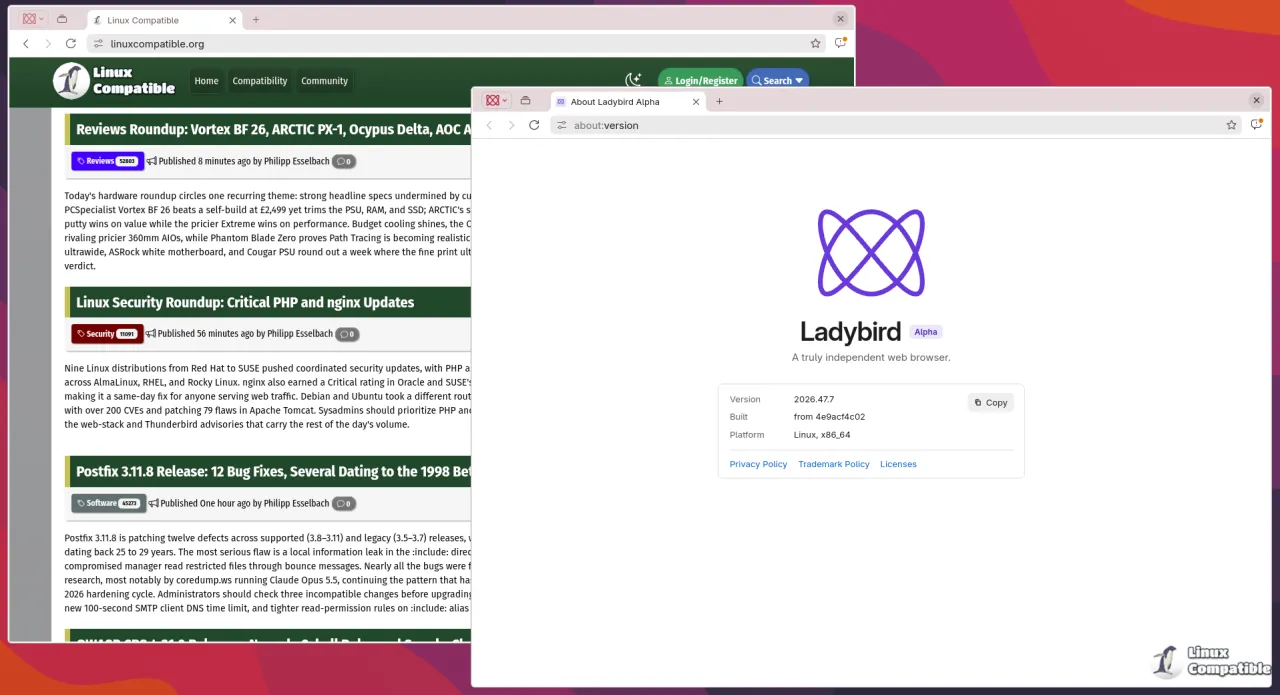
Ladybird, an open-source browser with a from-scratch engine, released its first alpha build on November 23, 2026, ending roughly seven years of development that began as a SerenityOS hobby project. It is one of the first genuinely independent browser engines in decades, ignoring Chromium, WebKit, and Gecko entirely, and it runs as a San Francisco non-profit funded by donations rather than advertising. In a controversial June 2026 move, the project stopped accepting public pull requests, citing AI-generated code that undermined the old "patches welcome" model. Progress has been rapid, with Ladybird recently surpassing Safari Technology Preview on web standards tests, though the software remains alpha and still crashes sometimes.
Ladybird Browser Ships First Alpha After Years of From-Scratch Development @ Linux Compatible
Ladybird Browser Ships First Alpha After Years of From-Scratch Development
Ladybird, an open-source browser developed from scratch, released its first alpha build on November 23, 2026, after seven years of development originating from a SerenityOS project. As an independent browser engine, Ladybird does not rely on established engines like Chromium, WebKit, or Gecko, and aims to provide a user-focused alternative funded by donations rather than advertisements. The project has made significant progress, recently surpassing Safari Technology Preview in web standards tests, although it remains in alpha and is still prone to crashes. With a roadmap leading to a beta release in 2027 and stable release in 2028, Ladybird is positioned as a new contender in the browser space, inviting community feedback while emphasizing trust over speed