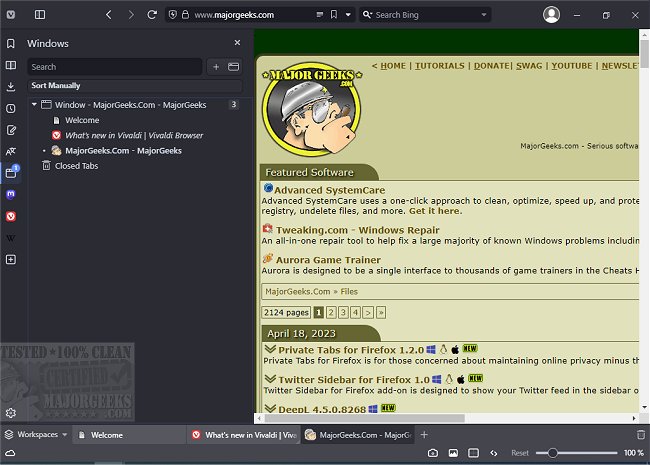
Vivaldi 7.8.3925.66 has been officially released, showcasing the continuous development of this free web browser created by the original founders of the Opera Web Browser back in 1994. Designed for both Windows and Linux operating systems, Vivaldi aims to provide users with a customizable browsing experience. The browser has an interface reminiscent of Google Chrome, featuring standard navigation buttons like forward, back, refresh, and home located next to the address bar. Users can easily open new tabs with a simple click on the "+" icon and close them with the "X" tab.
One of Vivaldi's distinctive features is its sidebar, which offers quick access to bookmarks, downloads, contacts, and notes, although the mail feature is not yet available. Some users have suggested that the options gear icon could be better placed in the sidebar or top right corner for improved accessibility. Additionally, Vivaldi includes options to manage image display settings, allowing users to improve browsing speed by showing or hiding images or displaying only cached images.
For those who find web pages difficult to read, Vivaldi provides an adaptable zoom feature, enabling users to adjust the viewing size easily. The browser also offers various rendering options, including filters like grayscale and 3D effects, which can enhance readability or simply provide an engaging browsing experience.
Despite entering a competitive browser market, Vivaldi has garnered attention for its unique features and customization options, appealing to those looking for alternatives to mainstream browsers. While the name "Vivaldi" may not be the most memorable, the browser's innovative approach could potentially position it as a significant player in the industry.
In summary, Vivaldi is carving out its niche with features that cater to user preferences for customization and accessibility, suggesting that it may become a favored choice among users seeking a more tailored web browsing experience. As the browser continues to evolve, it will be interesting to see how it competes with established names in the market and whether it can attract a loyal user base
One of Vivaldi's distinctive features is its sidebar, which offers quick access to bookmarks, downloads, contacts, and notes, although the mail feature is not yet available. Some users have suggested that the options gear icon could be better placed in the sidebar or top right corner for improved accessibility. Additionally, Vivaldi includes options to manage image display settings, allowing users to improve browsing speed by showing or hiding images or displaying only cached images.
For those who find web pages difficult to read, Vivaldi provides an adaptable zoom feature, enabling users to adjust the viewing size easily. The browser also offers various rendering options, including filters like grayscale and 3D effects, which can enhance readability or simply provide an engaging browsing experience.
Despite entering a competitive browser market, Vivaldi has garnered attention for its unique features and customization options, appealing to those looking for alternatives to mainstream browsers. While the name "Vivaldi" may not be the most memorable, the browser's innovative approach could potentially position it as a significant player in the industry.
In summary, Vivaldi is carving out its niche with features that cater to user preferences for customization and accessibility, suggesting that it may become a favored choice among users seeking a more tailored web browsing experience. As the browser continues to evolve, it will be interesting to see how it competes with established names in the market and whether it can attract a loyal user base
Vivaldi 7.8.3925.66 released
Vivaldi is a free web browser from the original Opera Web Browser founders in 1994, designed for Windows and Linux. Download the beta version here.