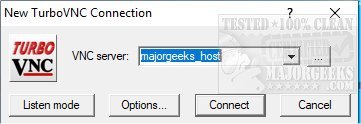
TurboVNC 3.3 has been released, enhancing the user experience of remote desktop connections for both Windows and Linux platforms. As a high-performance, enterprise-quality version of VNC, TurboVNC is built on the foundations of TightVNC, TigerVNC, and X.org, enabling efficient server connections. One of its standout features is a Tight encoding variant that optimizes performance and compression, especially beneficial for 3D applications when used in conjunction with VirtualGL. This combination allows for high-quality remote displays of 3D applications, maintaining interactivity.
Since its inception in 2004, TurboVNC has maintained compatibility with TightVNC's features while introducing numerous enhancements and bug fixes. It significantly outperforms TightVNC in compressing 3D and video workloads, using only a fraction (5-20%) of the CPU resources that TightVNC would typically require. On modern hardware, TurboVNC can achieve impressive streaming capabilities of over 50 Megapixels per second over a 100 Megabit per second local area network, with perceptually lossless image quality. On lower bandwidth connections, such as a 5 Megabit per second broadband, it can still stream between 10 and 12 Megapixels per second at a reduced but acceptable image quality.
Key features of TurboVNC include:
- Fine control over JPEG image quality and chrominance subsampling
- Client-side double buffering to minimize tearing in 3D applications
- Configurable full-screen and multi-screen support
- Full IPv6 support
- Advanced flow control for improved performance on high-latency connections
- Authentication options with one-time passwords or Unix login credentials
- Access control lists for user-specific session sharing
- Global security policies for server machines
- Multithreaded encoding capabilities
- "Lossless refresh" for obtaining high-quality screen images on demand
- A high-performance, zero-install Java viewer deployable via Java Web Start, utilizing libjpeg-turbo for native performance.
As TurboVNC continues to evolve, users can expect ongoing improvements in remote desktop technology, further bridging the gap between local and remote computing experiences
Since its inception in 2004, TurboVNC has maintained compatibility with TightVNC's features while introducing numerous enhancements and bug fixes. It significantly outperforms TightVNC in compressing 3D and video workloads, using only a fraction (5-20%) of the CPU resources that TightVNC would typically require. On modern hardware, TurboVNC can achieve impressive streaming capabilities of over 50 Megapixels per second over a 100 Megabit per second local area network, with perceptually lossless image quality. On lower bandwidth connections, such as a 5 Megabit per second broadband, it can still stream between 10 and 12 Megapixels per second at a reduced but acceptable image quality.
Key features of TurboVNC include:
- Fine control over JPEG image quality and chrominance subsampling
- Client-side double buffering to minimize tearing in 3D applications
- Configurable full-screen and multi-screen support
- Full IPv6 support
- Advanced flow control for improved performance on high-latency connections
- Authentication options with one-time passwords or Unix login credentials
- Access control lists for user-specific session sharing
- Global security policies for server machines
- Multithreaded encoding capabilities
- "Lossless refresh" for obtaining high-quality screen images on demand
- A high-performance, zero-install Java viewer deployable via Java Web Start, utilizing libjpeg-turbo for native performance.
As TurboVNC continues to evolve, users can expect ongoing improvements in remote desktop technology, further bridging the gap between local and remote computing experiences
TurboVNC 3.3 released
TurboVNC is a high-performance, enterprise-quality version of VNC for Windows and Linux based on TightVNC, TigerVNC, and X.org that allows efficient VNC server connections.