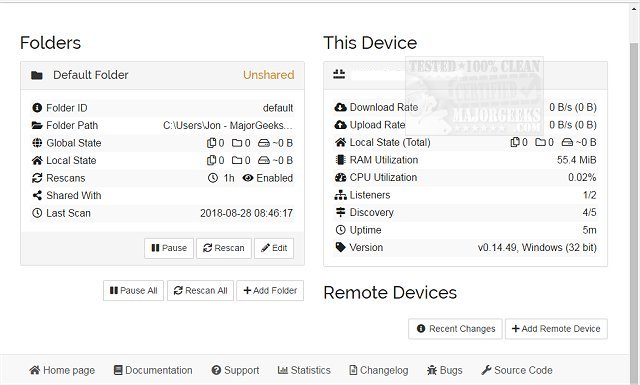
Syncthing has recently released version 2.0.16, continuing its mission as a decentralized, open-source alternative to proprietary file synchronization and cloud services. This innovative tool stands out by continuously synchronizing files across multiple computers with minimal user interaction required. Its user-friendly browser-based GUI makes configuration and monitoring of file-sharing activities straightforward.
A key advantage of Syncthing is that it provides users with full control over their data, allowing them to dictate where their files are stored, whether they are shared with third parties, and how they are transmitted online. Unlike other similar applications, Syncthing does not rely on any third-party servers for data storage. Instead, it ensures that all communications are encrypted via TLS, enhancing security. Furthermore, each node in the Syncthing network is authenticated through robust cryptographic certificates, ensuring that only authorized devices can connect to your file-sharing cluster.
In summary, Syncthing 2.0.16 reinforces its position as a secure, user-centric file synchronization tool that prioritizes privacy and control over user data. Its decentralized nature and strong security measures make it an excellent choice for individuals and organizations looking to manage their files without relying on external servers or services.
As a potential extension of this discussion, users may want to explore how Syncthing can be integrated into their existing workflows, or investigate additional features such as versioning, folder sharing permissions, and cross-platform compatibility. Additionally, with the growing emphasis on data privacy and security, the relevance of tools like Syncthing in the context of remote work and data management in the cloud is more significant than ever
A key advantage of Syncthing is that it provides users with full control over their data, allowing them to dictate where their files are stored, whether they are shared with third parties, and how they are transmitted online. Unlike other similar applications, Syncthing does not rely on any third-party servers for data storage. Instead, it ensures that all communications are encrypted via TLS, enhancing security. Furthermore, each node in the Syncthing network is authenticated through robust cryptographic certificates, ensuring that only authorized devices can connect to your file-sharing cluster.
In summary, Syncthing 2.0.16 reinforces its position as a secure, user-centric file synchronization tool that prioritizes privacy and control over user data. Its decentralized nature and strong security measures make it an excellent choice for individuals and organizations looking to manage their files without relying on external servers or services.
As a potential extension of this discussion, users may want to explore how Syncthing can be integrated into their existing workflows, or investigate additional features such as versioning, folder sharing permissions, and cross-platform compatibility. Additionally, with the growing emphasis on data privacy and security, the relevance of tools like Syncthing in the context of remote work and data management in the cloud is more significant than ever
Syncthing 2.0.16 released
Syncthing is a portable Open Source replacement from proprietary sync and cloud services designed to be safe, secure, and decentralized.