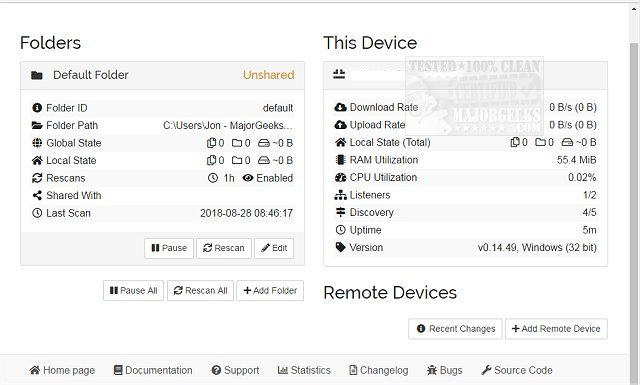
Syncthing has recently released version 2.0.12, enhancing its functionality as a portable, open-source alternative to proprietary synchronization and cloud services. It is designed to be safe, secure, and decentralized, allowing users to maintain control over their data. Syncthing operates by continuously synchronizing files across multiple computers with minimal user intervention required. Its browser-based graphical user interface (GUI) simplifies the configuration and monitoring of file-sharing activities.
One of the key features of Syncthing is that it does not store user data on external servers, ensuring that files are only shared directly between devices. This approach minimizes the risk of data exposure to third parties. Communications between devices are secured using Transport Layer Security (TLS), and each device in the network is identified by a strong cryptographic certificate. Only explicitly authorized nodes can connect, providing an additional layer of security.
In summary, Syncthing 2.0.12 continues to emphasize user privacy and data control, making it a compelling solution for those seeking an alternative to traditional cloud services. As more users become concerned about data security, decentralized solutions like Syncthing may become increasingly popular for personal and professional file-sharing needs.
Future developments may include enhanced features for ease of use, integration with other applications, and further improvements in security protocols to ensure data integrity and privacy
One of the key features of Syncthing is that it does not store user data on external servers, ensuring that files are only shared directly between devices. This approach minimizes the risk of data exposure to third parties. Communications between devices are secured using Transport Layer Security (TLS), and each device in the network is identified by a strong cryptographic certificate. Only explicitly authorized nodes can connect, providing an additional layer of security.
In summary, Syncthing 2.0.12 continues to emphasize user privacy and data control, making it a compelling solution for those seeking an alternative to traditional cloud services. As more users become concerned about data security, decentralized solutions like Syncthing may become increasingly popular for personal and professional file-sharing needs.
Future developments may include enhanced features for ease of use, integration with other applications, and further improvements in security protocols to ensure data integrity and privacy
Syncthing 2.0.12 released
Syncthing is a portable Open Source replacement from proprietary sync and cloud services designed to be safe, secure, and decentralized.