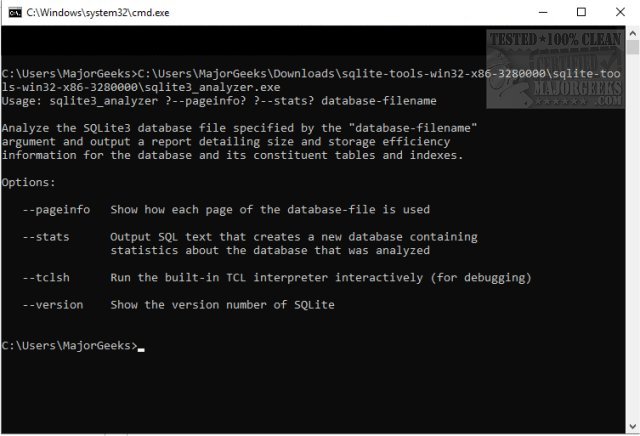
SQLite version 3.51.1 has been released, introducing a more user-friendly command-line interface for managing SQLite databases, along with an available GUI version. SQLite is a self-contained, serverless, and zero-configuration SQL database engine that operates as an embedded SQL database. Unlike traditional SQL databases, it does not require a separate server process, allowing it to read and write directly to standard disk files. The entire database, including multiple tables, indices, triggers, and views, is stored within a single disk file that is cross-platform compatible. This feature facilitates easy transfers of databases between different systems and architectures, making SQLite a favored choice for applications that require a file format. Notably, the US Library of Congress recommends SQLite database files for storage.
SQLite is compact, with a library size often under 600 KB, and it balances memory usage with performance, generally performing well even in low-memory environments. In fact, it can outperform direct filesystem I/O depending on the application. The library undergoes rigorous testing before each release, boasting a reputation for reliability due to an extensive automated test suite that runs millions of test cases and achieves 100% branch test coverage. SQLite is designed to handle memory allocation failures and disk I/O errors gracefully, ensuring that transactions adhere to ACID properties even under adverse conditions like system crashes.
While SQLite strives for perfection, it remains transparent about any bugs and provides comprehensive documentation regarding code changes and issues.
In addition to its compact size and flexibility, SQLite's robustness and reliability make it an ideal choice for developers looking for a lightweight database solution that does not compromise on the integrity or performance of data handling. With its ongoing updates and community support, SQLite continues to evolve, addressing user needs and incorporating feedback to remain relevant in a rapidly changing technological landscape
SQLite is compact, with a library size often under 600 KB, and it balances memory usage with performance, generally performing well even in low-memory environments. In fact, it can outperform direct filesystem I/O depending on the application. The library undergoes rigorous testing before each release, boasting a reputation for reliability due to an extensive automated test suite that runs millions of test cases and achieves 100% branch test coverage. SQLite is designed to handle memory allocation failures and disk I/O errors gracefully, ensuring that transactions adhere to ACID properties even under adverse conditions like system crashes.
While SQLite strives for perfection, it remains transparent about any bugs and provides comprehensive documentation regarding code changes and issues.
In addition to its compact size and flexibility, SQLite's robustness and reliability make it an ideal choice for developers looking for a lightweight database solution that does not compromise on the integrity or performance of data handling. With its ongoing updates and community support, SQLite continues to evolve, addressing user needs and incorporating feedback to remain relevant in a rapidly changing technological landscape
SQLite 3.51.1 released
SQLite enables a simplified command-line option for working with SQLite databases. GUI version is also available.