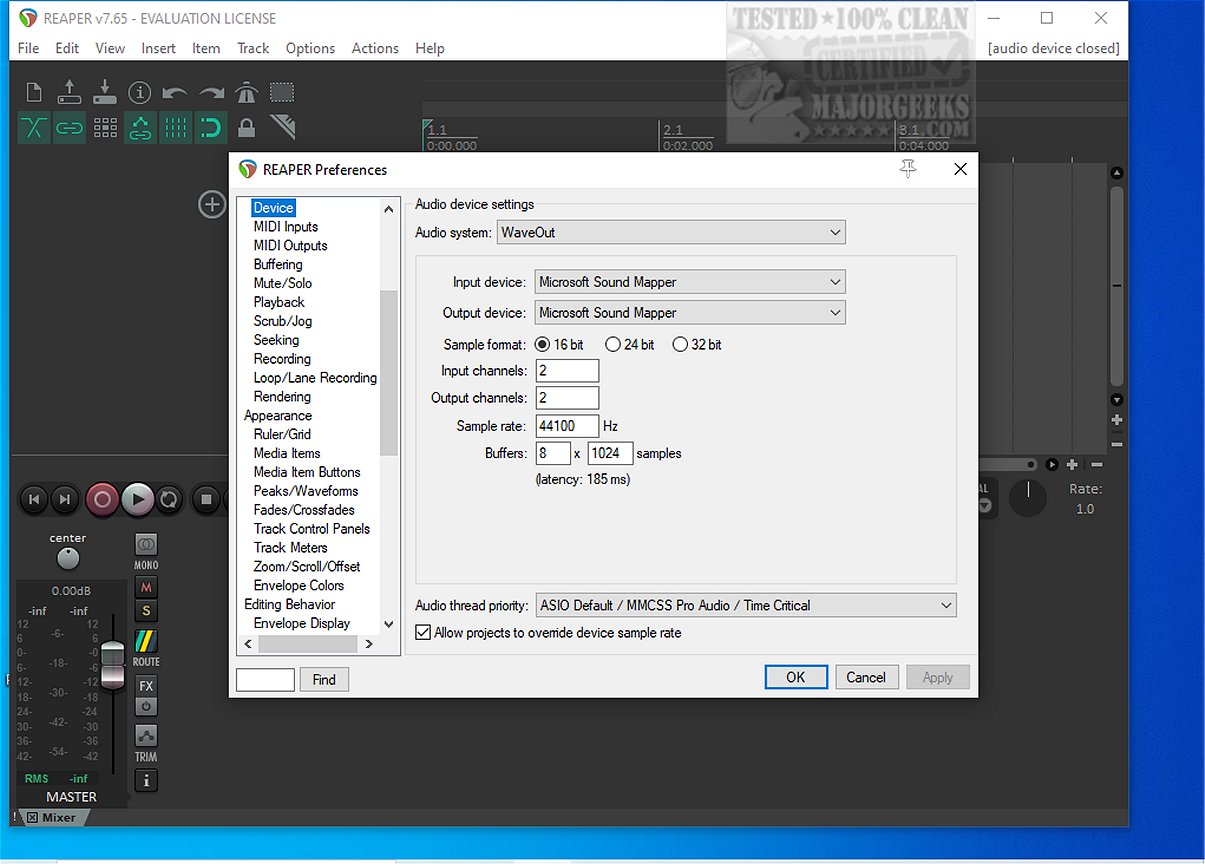
Reaper 7.66 has recently been released, continuing its legacy as a powerful digital audio workstation (DAW) that allows users to record, arrange, edit, and render multi-track audio. This latest version remains the only freeware option available, making it an appealing choice for audio enthusiasts and professionals alike.
Reaper stands out in the crowded field of DAWs for several key reasons. It is known for its fast startup time, efficient performance, and minimal resource demands, allowing it to run smoothly on a wide range of systems, including older machines. Unlike heavier DAWs such as Studio One, Reaper avoids the pitfalls of excessive sample content and unnecessary complexity, making it a favorite among those who prioritize functionality over aesthetics.
Key features of Reaper include:
- Driver Support: It supports ASIO, Kernel Streaming, WaveOut, and DirectSound, allowing users to switch drivers seamlessly if issues arise, thus saving crucial time during mixing sessions.
- File Support: Reaper can read common audio formats like WAV, OGG, MP3, and MIDI, and it records in clean WAV and MIDI formats without unnecessary frills.
- Unlimited Tracks: Users can arrange unlimited items across unlimited tracks, allowing for extensive vocal stacks or complex arrangements without limitations or hidden fees.
- Plugin Compatibility: It supports various plugins, including DirectX, VST, and Jesusonic plugins, which are fully automatable. The bundled JSFX tools are lightweight yet powerful for quick fixes.
- Efficient Automation: Reaper provides consistent automation lanes for per-track volume, pan, and envelope control, reducing frustration often associated with automation in other DAWs.
- Customizable UI: While the default interface may seem outdated, it offers extensive customization options for those who prefer a more modern look.
Reaper is particularly well-suited for users who value a lightweight workstation, prioritize stability, and enjoy tweaking settings to achieve their desired setup. However, it may not appeal to those looking for an abundance of built-in instruments or polished defaults.
Interestingly, Reaper is also beginner-friendly despite its initial complexity. Many professionals use it, and while the interface may take some getting used to, its logical workflow and lightweight design make it manageable for newcomers.
In summary, Reaper is a robust, efficient, and highly customizable DAW that caters to a wide range of audio production needs. While it may require some initial investment of time to learn and customize, its reliability and performance make it a top choice for both amateurs and seasoned professionals in the audio industry.
As the audio production landscape continues to evolve, Reaper remains a relevant player, consistently updating its features and capabilities to meet the demands of modern users. With its strong community support and frequent updates, it is positioned to maintain its status as a go-to DAW for years to come. Whether you are an audio geek or just starting out, Reaper offers a solid platform for all your audio editing and production needs
Reaper stands out in the crowded field of DAWs for several key reasons. It is known for its fast startup time, efficient performance, and minimal resource demands, allowing it to run smoothly on a wide range of systems, including older machines. Unlike heavier DAWs such as Studio One, Reaper avoids the pitfalls of excessive sample content and unnecessary complexity, making it a favorite among those who prioritize functionality over aesthetics.
Key features of Reaper include:
- Driver Support: It supports ASIO, Kernel Streaming, WaveOut, and DirectSound, allowing users to switch drivers seamlessly if issues arise, thus saving crucial time during mixing sessions.
- File Support: Reaper can read common audio formats like WAV, OGG, MP3, and MIDI, and it records in clean WAV and MIDI formats without unnecessary frills.
- Unlimited Tracks: Users can arrange unlimited items across unlimited tracks, allowing for extensive vocal stacks or complex arrangements without limitations or hidden fees.
- Plugin Compatibility: It supports various plugins, including DirectX, VST, and Jesusonic plugins, which are fully automatable. The bundled JSFX tools are lightweight yet powerful for quick fixes.
- Efficient Automation: Reaper provides consistent automation lanes for per-track volume, pan, and envelope control, reducing frustration often associated with automation in other DAWs.
- Customizable UI: While the default interface may seem outdated, it offers extensive customization options for those who prefer a more modern look.
Reaper is particularly well-suited for users who value a lightweight workstation, prioritize stability, and enjoy tweaking settings to achieve their desired setup. However, it may not appeal to those looking for an abundance of built-in instruments or polished defaults.
Interestingly, Reaper is also beginner-friendly despite its initial complexity. Many professionals use it, and while the interface may take some getting used to, its logical workflow and lightweight design make it manageable for newcomers.
In summary, Reaper is a robust, efficient, and highly customizable DAW that caters to a wide range of audio production needs. While it may require some initial investment of time to learn and customize, its reliability and performance make it a top choice for both amateurs and seasoned professionals in the audio industry.
As the audio production landscape continues to evolve, Reaper remains a relevant player, consistently updating its features and capabilities to meet the demands of modern users. With its strong community support and frequent updates, it is positioned to maintain its status as a go-to DAW for years to come. Whether you are an audio geek or just starting out, Reaper offers a solid platform for all your audio editing and production needs
Reaper 7.66 released
REAPER is an application that lets you record, arrange, edit, and render multi-track waveform audio. The last freeware version also available.