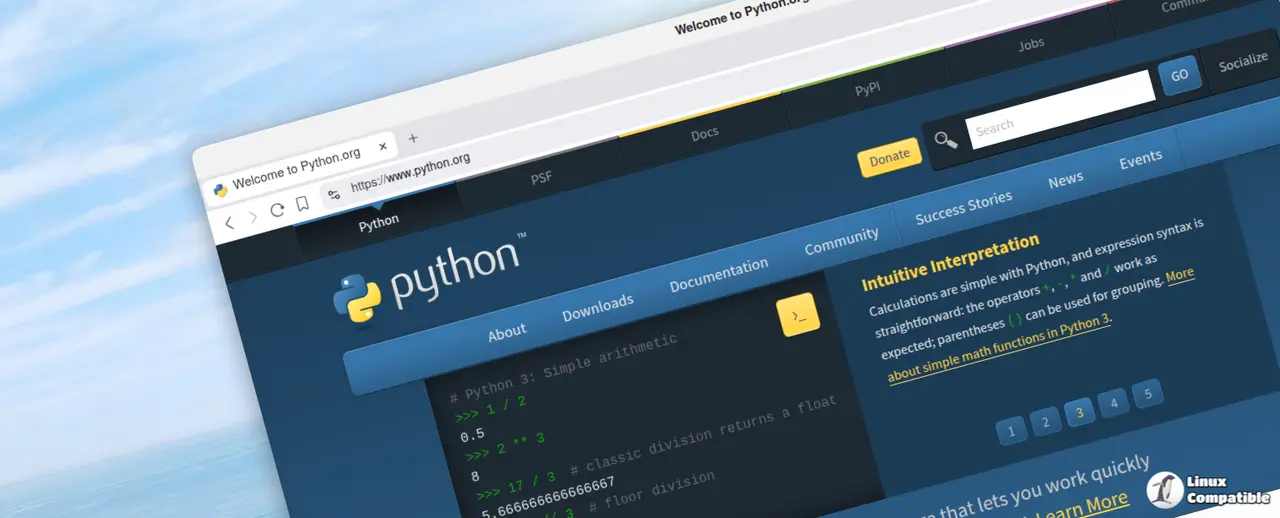
Python 3.15.0 Alpha 3 has been released as a part of the ongoing development of the Python programming language and is now available for download from the official Python website. This alpha release represents a significant milestone in the development cycle, allowing developers to experiment with new features and bug fixes prior to the stabilization of the final code. Although this version remains in a state of flux, it introduces several anticipated enhancements compared to its predecessor, Python 3.14.
The alpha release serves as a checkpoint in the development process, enabling developers to test the current state of the project. This early access provides an opportunity for the community to offer feedback and identify potential issues that could affect the final product. However, developers are cautioned that this version is not suitable for production use, as it is still undergoing significant changes.
Among the key updates expected in Python 3.15.0 Alpha 3 are the introduction of a statistical sampling profiler (PEP 799), the establishment of UTF-8 as the default character encoding for Python (PEP 686), and a new C API designed for creating bytes objects (PEP 782). These changes aim to enhance the language's performance and usability.
As the development progresses, further updates and features may be added or refined, leading up to the beta phase anticipated in May 2026, followed by the eventual release candidate. This ongoing evolution reflects the commitment of the Python development team to continuously improve the language, and the community’s involvement is crucial in shaping its future direction.
In addition to these core changes, developers are encouraged to engage actively with the alpha version by testing its functionalities and sharing feedback. This collaborative approach not only helps identify and resolve issues early on but also fosters innovation within the Python ecosystem. As such, while the alpha version is not ready for real-world projects, it serves as a valuable platform for experimentation and community engagement in the evolution of Python
The alpha release serves as a checkpoint in the development process, enabling developers to test the current state of the project. This early access provides an opportunity for the community to offer feedback and identify potential issues that could affect the final product. However, developers are cautioned that this version is not suitable for production use, as it is still undergoing significant changes.
Among the key updates expected in Python 3.15.0 Alpha 3 are the introduction of a statistical sampling profiler (PEP 799), the establishment of UTF-8 as the default character encoding for Python (PEP 686), and a new C API designed for creating bytes objects (PEP 782). These changes aim to enhance the language's performance and usability.
As the development progresses, further updates and features may be added or refined, leading up to the beta phase anticipated in May 2026, followed by the eventual release candidate. This ongoing evolution reflects the commitment of the Python development team to continuously improve the language, and the community’s involvement is crucial in shaping its future direction.
In addition to these core changes, developers are encouraged to engage actively with the alpha version by testing its functionalities and sharing feedback. This collaborative approach not only helps identify and resolve issues early on but also fosters innovation within the Python ecosystem. As such, while the alpha version is not ready for real-world projects, it serves as a valuable platform for experimentation and community engagement in the evolution of Python
Python 3.15.0 Alpha 3 released
Python 3.15.0 Alpha 3 has been released as part of its ongoing development process and is now available for download on the official Python website. This alpha release marks a checkpoint in the development process, allowing developers to try out new features and bug fixes before final code stabilization begins. Although still very much in flux, several planned changes are expected, including a statistical sampling profiler, UTF-8 as Python's default character encoding, and an updated C API for creating bytes objects. Developers are encouraged to provide feedback on missing feature ideas, but it's too early in the lifecycle for use in actual projects due to ongoing development and potential changes.