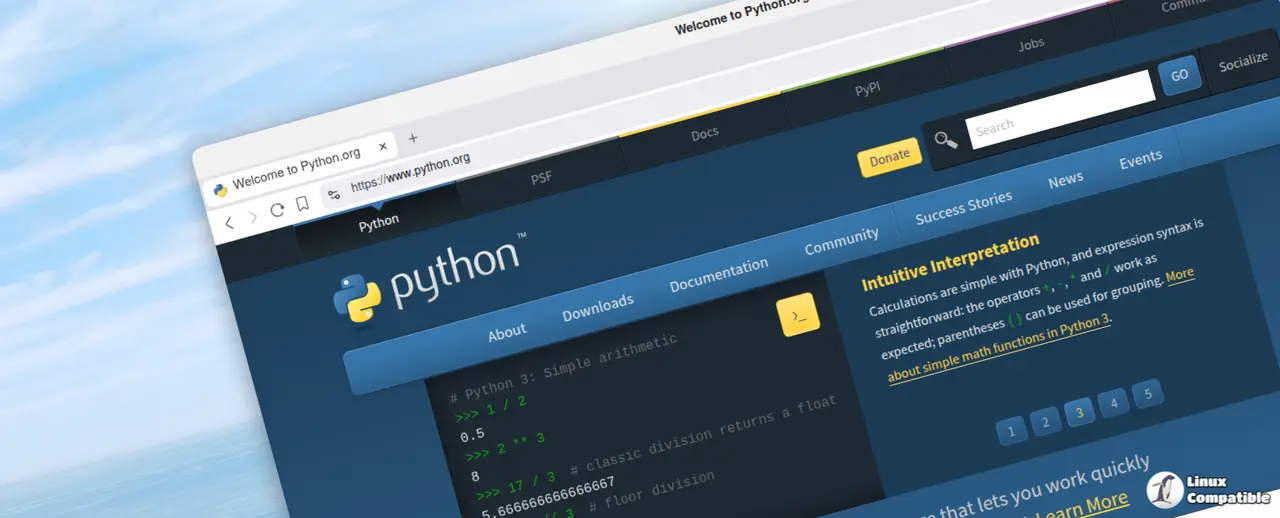
Python has recently released two significant updates: Python 3.14.1, which is the first maintenance release for version 3.14, and Python 3.13.10. These updates introduce a variety of new features and improvements that enhance the programming experience and improve performance.
A notable addition is the official support for free-threaded builds, which allows for more efficient handling of concurrent tasks. Improvements in annotation handling have also been made, particularly with deferred evaluation, which clarifies their semantics when heavily utilized. Another significant enhancement is the introduction of template string literals, or 't-strings', which facilitate easier custom string formatting and align with existing patterns.
In terms of functionality, the new compression.zstd module supports the Zstandard algorithm, improving the efficiency of data compression and reducing memory usage for large datasets. There are also simplifications in error handling, allowing developers to omit brackets in except and except* statements.
User experience has been improved with syntax highlighting in PyREPL, making code navigation easier during interactive sessions. Additionally, core command-line utilities such as unittest, argparse, json, and calendar now feature basic color support, enhancing usability. The uuid module has also seen performance improvements, particularly in the generation of certain UUID versions.
Internally, Python has made strides in streamlining development with enhancements to the C API for better configuration tasks. A new type of interpreter has been introduced that offers performance benefits for specific setups, though it requires opting in and building from source.
Developer tools also benefit from these updates, with improvements to error messages for easier debugging, a more secure built-in HMAC implementation, and dedicated command-line tools for inspecting loaded libraries in running processes. The pdb module has further refined debugging capabilities, allowing for remote attachment to processes, which aids in diagnosing issues in real-time and complex projects.
In summary, these updates not only improve core language features but also significantly enhance the overall developer experience through better tools and performance optimizations. To get started, users can download Python 3.14.1 or 3.13.10 from the official links provided.
Extended Insights:
As Python continues to evolve, these updates signal a strong commitment to enhancing both performance and user experience. The adoption of features like free-threaded builds and Zstandard support indicates a focus on concurrent programming and data handling efficiency, essential for modern applications. Additionally, the emphasis on user-friendly debugging and error messaging reflects a growing recognition of the challenges developers face in a complex coding environment. Looking ahead, the Python community can anticipate further innovations aimed at making programming more intuitive and efficient, while also addressing the security needs of developers. The integration of these features suggests a proactive approach to making Python a competitive choice for both new and experienced programmers in diverse fields
A notable addition is the official support for free-threaded builds, which allows for more efficient handling of concurrent tasks. Improvements in annotation handling have also been made, particularly with deferred evaluation, which clarifies their semantics when heavily utilized. Another significant enhancement is the introduction of template string literals, or 't-strings', which facilitate easier custom string formatting and align with existing patterns.
In terms of functionality, the new compression.zstd module supports the Zstandard algorithm, improving the efficiency of data compression and reducing memory usage for large datasets. There are also simplifications in error handling, allowing developers to omit brackets in except and except* statements.
User experience has been improved with syntax highlighting in PyREPL, making code navigation easier during interactive sessions. Additionally, core command-line utilities such as unittest, argparse, json, and calendar now feature basic color support, enhancing usability. The uuid module has also seen performance improvements, particularly in the generation of certain UUID versions.
Internally, Python has made strides in streamlining development with enhancements to the C API for better configuration tasks. A new type of interpreter has been introduced that offers performance benefits for specific setups, though it requires opting in and building from source.
Developer tools also benefit from these updates, with improvements to error messages for easier debugging, a more secure built-in HMAC implementation, and dedicated command-line tools for inspecting loaded libraries in running processes. The pdb module has further refined debugging capabilities, allowing for remote attachment to processes, which aids in diagnosing issues in real-time and complex projects.
In summary, these updates not only improve core language features but also significantly enhance the overall developer experience through better tools and performance optimizations. To get started, users can download Python 3.14.1 or 3.13.10 from the official links provided.
Extended Insights:
As Python continues to evolve, these updates signal a strong commitment to enhancing both performance and user experience. The adoption of features like free-threaded builds and Zstandard support indicates a focus on concurrent programming and data handling efficiency, essential for modern applications. Additionally, the emphasis on user-friendly debugging and error messaging reflects a growing recognition of the challenges developers face in a complex coding environment. Looking ahead, the Python community can anticipate further innovations aimed at making programming more intuitive and efficient, while also addressing the security needs of developers. The integration of these features suggests a proactive approach to making Python a competitive choice for both new and experienced programmers in diverse fields
Python 3.14.1 and 3.13.10 released
Recent updates to Python 3.14.1, the first maintenance release for version 3.14, and Python 3.13.10 have brought several features and improvements. The new versions include official support for free-threaded builds and enhanced annotation handling, as well as template string literals for easier custom string formatting and improved concurrent execution handling. Additionally, user experience benefits from syntax highlighting in PyREPL, basic color support in command-line utilities, and performance improvements in the uuid module. These updates extend to developer tools, including better error messages, enhanced security features, and refined debugging capabilities.