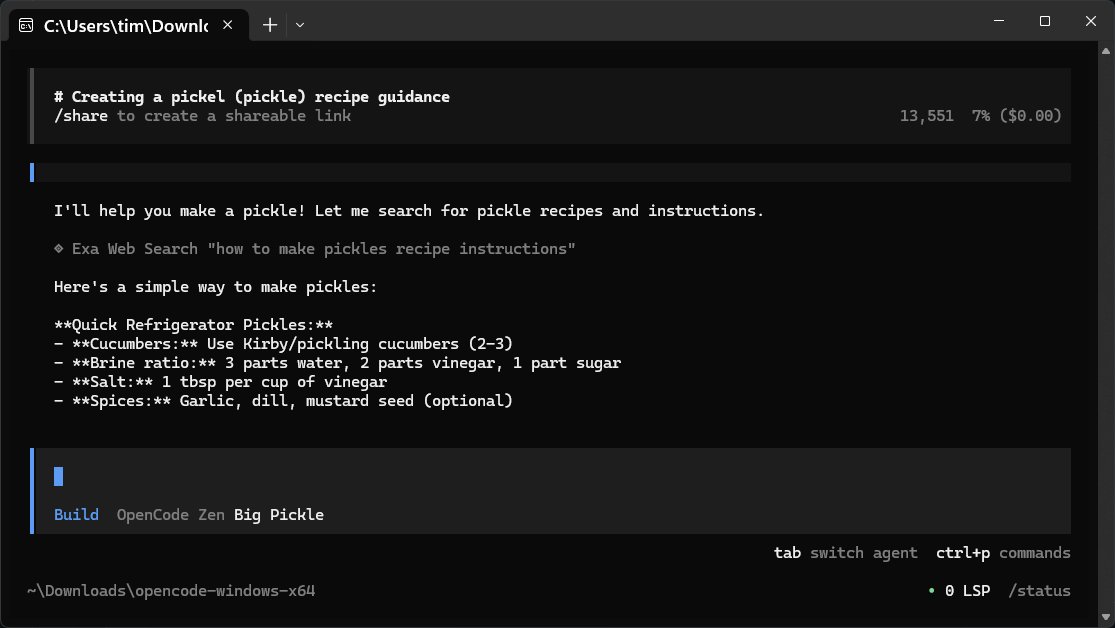
OpenCode 1.0.125 has been released as a free and open-source AI assistant designed to assist developers by helping them write code, fix bugs, and understand their projects. It operates locally on the user's computer, allowing for a secure environment where no data is shared externally, which is particularly beneficial for work projects. OpenCode is versatile and compatible with various programming languages, functioning as a command-line tool that interprets normal English queries and executes the necessary technical commands.
Unlike many AI tools that require accounts, cloud syncing, or complex interfaces, OpenCode is lightweight and straightforward. Users simply download, unzip, and run the executable file to start working. The tool does not come with its own large language model (LLM) or built-in knowledge base; instead, it connects to an external online repository or allows integration with over 75 different LLMs, such as OpenAI and Anthropic, for more advanced capabilities.
For developers who prefer a more traditional coding environment, OpenCode's minimalistic design without a graphical user interface (GUI) may be a drawback, but it enhances speed and efficiency for users comfortable in terminals or IDEs. Additionally, OpenCode can assist with general inquiries, research, and even provide recipes, making it a versatile tool beyond coding tasks.
To set up OpenCode with various LLMs, users can follow a simple command-line process to authenticate and manage their API keys securely. The program does not save sessions automatically, so users are advised to export their work if they want to retain it. For those looking to keep operations entirely local, OpenCode can also work with local models via tools like LM Studio or Ollama, enhancing privacy and control.
In summary, OpenCode 1.0.125 offers a clean, efficient, and flexible coding assistant for developers who value simplicity and privacy. While it may not cater to all user preferences, especially those seeking a more polished interface, its strengths lie in its speed, openness, and the control it gives users over their coding environment. For troubleshooting, users can seek assistance on forums such as MajorGeeks.
Extension: Future Developments and Use Cases
As OpenCode continues to evolve, potential future developments could include improved integration capabilities with popular IDEs, enhancements to its command-line functionalities, and the addition of more user-friendly features without compromising its lightweight nature. Furthermore, as AI technology advances, OpenCode could incorporate more sophisticated algorithms for code analysis, automatic bug detection, and even personalized coding suggestions based on a user's specific coding habits.
Use cases for OpenCode extend beyond individual developers; teams could adopt it for collaborative coding projects, where its ability to interact with multiple LLMs can facilitate a diverse range of coding styles and needs. Educational institutions may also find value in using OpenCode as a teaching tool, allowing students to engage with coding concepts interactively and receive instant feedback on their coding practices.
Ultimately, OpenCode represents a step towards democratizing access to powerful AI tools in software development, making it an appealing choice for anyone looking to enhance their coding workflow while maintaining control over their data and environment
Unlike many AI tools that require accounts, cloud syncing, or complex interfaces, OpenCode is lightweight and straightforward. Users simply download, unzip, and run the executable file to start working. The tool does not come with its own large language model (LLM) or built-in knowledge base; instead, it connects to an external online repository or allows integration with over 75 different LLMs, such as OpenAI and Anthropic, for more advanced capabilities.
For developers who prefer a more traditional coding environment, OpenCode's minimalistic design without a graphical user interface (GUI) may be a drawback, but it enhances speed and efficiency for users comfortable in terminals or IDEs. Additionally, OpenCode can assist with general inquiries, research, and even provide recipes, making it a versatile tool beyond coding tasks.
To set up OpenCode with various LLMs, users can follow a simple command-line process to authenticate and manage their API keys securely. The program does not save sessions automatically, so users are advised to export their work if they want to retain it. For those looking to keep operations entirely local, OpenCode can also work with local models via tools like LM Studio or Ollama, enhancing privacy and control.
In summary, OpenCode 1.0.125 offers a clean, efficient, and flexible coding assistant for developers who value simplicity and privacy. While it may not cater to all user preferences, especially those seeking a more polished interface, its strengths lie in its speed, openness, and the control it gives users over their coding environment. For troubleshooting, users can seek assistance on forums such as MajorGeeks.
Extension: Future Developments and Use Cases
As OpenCode continues to evolve, potential future developments could include improved integration capabilities with popular IDEs, enhancements to its command-line functionalities, and the addition of more user-friendly features without compromising its lightweight nature. Furthermore, as AI technology advances, OpenCode could incorporate more sophisticated algorithms for code analysis, automatic bug detection, and even personalized coding suggestions based on a user's specific coding habits.
Use cases for OpenCode extend beyond individual developers; teams could adopt it for collaborative coding projects, where its ability to interact with multiple LLMs can facilitate a diverse range of coding styles and needs. Educational institutions may also find value in using OpenCode as a teaching tool, allowing students to engage with coding concepts interactively and receive instant feedback on their coding practices.
Ultimately, OpenCode represents a step towards democratizing access to powerful AI tools in software development, making it an appealing choice for anyone looking to enhance their coding workflow while maintaining control over their data and environment
OpenCode 1.0.125 released
OpenCode is a free, open-source AI assistant that runs on your computer and helps you write code, fix bugs, and understand what your files are doing.