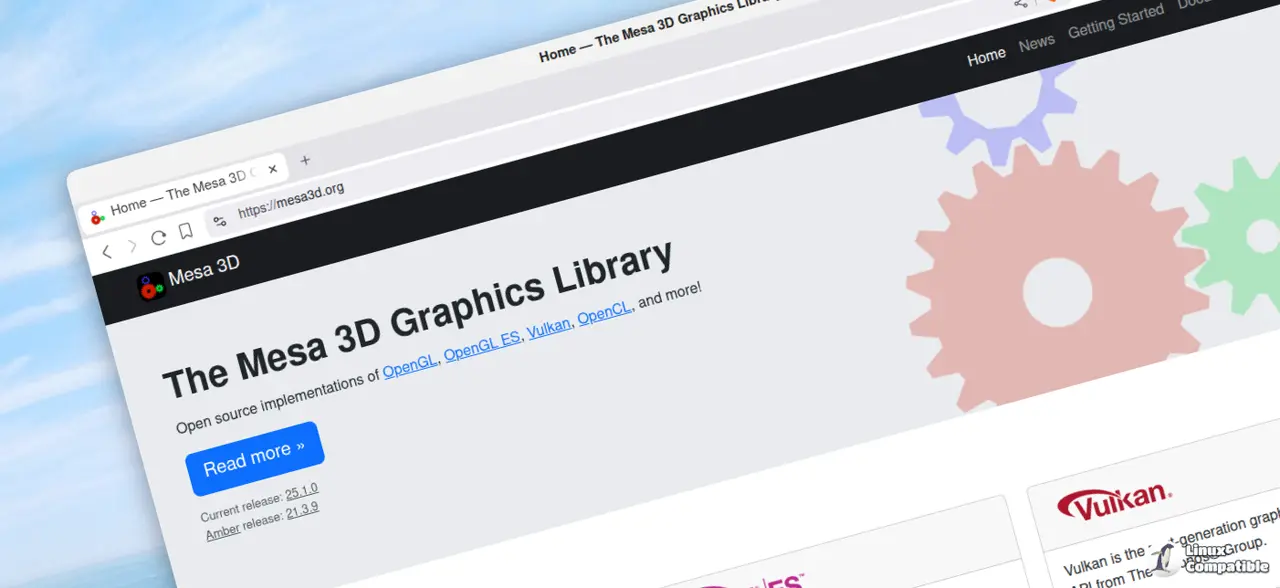
Mesa 25.2.8 has been officially released, signifying the conclusion of development for the 25.2 branch and prompting users to transition to the more stable 25.3 branch. This update features a wealth of bug fixes contributed by a diverse group of developers, tackling critical areas including Vulkan command queues, Radeon graphics support, and Gallium3D drivers. With contributions from over two dozen developers, significant issues such as memory leaks, assertion failures, and compatibility problems across various hardware and software components have been addressed.
Key contributors made notable advancements: Aitor Camacho resolved issues related to Vulkan command queues and WSI presentations, while Anna Maniscalco focused on legacy graphics data within the Radeon driver. Benjamin Cheng enhanced video support in the Radeon driver, ensuring compatibility with various encoding standards. Calder Young addressed Intel hardware bugs, particularly on Arc GPUs, and Christian Gmeiner updated the Meson build system requirements, which now necessitate sysprof-capture-4 for optimal operation.
The updates also include targeted improvements from multiple contributors on Gallium3D drivers, addressing issues like compatibility during instance creation failures and enhancing Radeon video capabilities, which involved enabling encoding and resolving AV1-related problems. Emma Anholt tackled memory leaks in the Tianxia driver's compute shader pipeline, while Eric Engestrom contributed to the clarity of release notes by adding SHA sums and managing the automatic disabling of LLVM support when necessary.
Developers also focused on improving error handling, memory management, and compatibility across different hardware configurations. This version also sees fixes in the SVGA drivers to prevent crashes and optimizations in the Broadwell driver to enhance overall performance.
Overall, the 25.2.8 release showcases a collaborative effort to enhance the Mesa graphics stack, ensuring better stability and functionality for users. The source code for this version is available for download, allowing developers and users to benefit from the latest enhancements and fixes.
Developers working with Mesa are encouraged to keep an eye on ongoing discussions and contributions within the community, as collaboration remains a vital aspect of the project's success. Future releases will likely continue to address emerging challenges in graphics rendering, especially with the rapid evolution of hardware and software technologies.
Moreover, as the open-source graphics landscape becomes increasingly competitive, Mesa's commitment to innovation and responsiveness to user feedback will be essential in maintaining its position as a leading graphics stack. As new features and enhancements roll out in future versions, users can look forward to improved support for advanced graphics APIs, better performance optimizations, and broader hardware compatibility, ultimately enriching the overall user experience
Key contributors made notable advancements: Aitor Camacho resolved issues related to Vulkan command queues and WSI presentations, while Anna Maniscalco focused on legacy graphics data within the Radeon driver. Benjamin Cheng enhanced video support in the Radeon driver, ensuring compatibility with various encoding standards. Calder Young addressed Intel hardware bugs, particularly on Arc GPUs, and Christian Gmeiner updated the Meson build system requirements, which now necessitate sysprof-capture-4 for optimal operation.
The updates also include targeted improvements from multiple contributors on Gallium3D drivers, addressing issues like compatibility during instance creation failures and enhancing Radeon video capabilities, which involved enabling encoding and resolving AV1-related problems. Emma Anholt tackled memory leaks in the Tianxia driver's compute shader pipeline, while Eric Engestrom contributed to the clarity of release notes by adding SHA sums and managing the automatic disabling of LLVM support when necessary.
Developers also focused on improving error handling, memory management, and compatibility across different hardware configurations. This version also sees fixes in the SVGA drivers to prevent crashes and optimizations in the Broadwell driver to enhance overall performance.
Overall, the 25.2.8 release showcases a collaborative effort to enhance the Mesa graphics stack, ensuring better stability and functionality for users. The source code for this version is available for download, allowing developers and users to benefit from the latest enhancements and fixes.
Extension
As the Mesa project moves forward with the 25.3 branch, users can expect more frequent updates and improvements that build upon the solid foundation established in 25.2.8. The transition to a more stable branch is crucial as it not only promises better performance and fewer bugs but also integrates the latest advancements in graphics technology.Developers working with Mesa are encouraged to keep an eye on ongoing discussions and contributions within the community, as collaboration remains a vital aspect of the project's success. Future releases will likely continue to address emerging challenges in graphics rendering, especially with the rapid evolution of hardware and software technologies.
Moreover, as the open-source graphics landscape becomes increasingly competitive, Mesa's commitment to innovation and responsiveness to user feedback will be essential in maintaining its position as a leading graphics stack. As new features and enhancements roll out in future versions, users can look forward to improved support for advanced graphics APIs, better performance optimizations, and broader hardware compatibility, ultimately enriching the overall user experience
Mesa 25.2.8 released
Mesa 25.2.8 has been released, marking the end of development on this line and encouraging users to switch to the more stable 25.3 branch instead. This update includes numerous bug fixes contributed by developers worldwide, covering various areas such as Vulkan command queues, Radeon graphics support, and Gallium3D drivers. The fixes were made by a team of over two dozen contributors, who addressed issues like memory leaks, assertion failures, and compatibility problems with different hardware and software components.