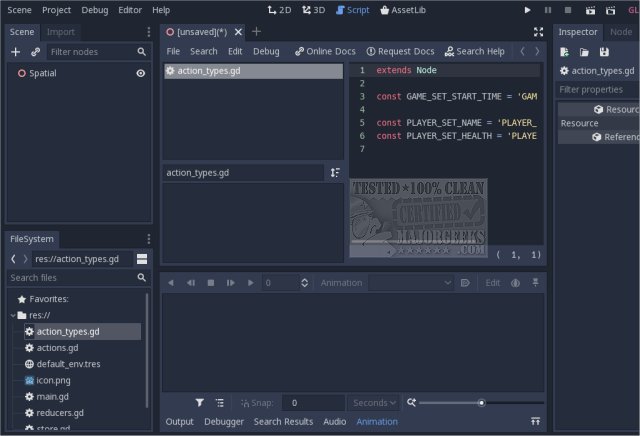
The Godot Game Engine has recently released version 4.6, further solidifying its reputation as a premier open-source platform for both 2D and 3D game development. Designed to streamline the game creation process, Godot offers a comprehensive suite of standard tools that eliminate unnecessary complexities, making it particularly appealing for newcomers to game development. However, its capabilities extend far beyond simple projects; the engine is equipped with robust coding tools that empower developers to produce complex, multi-layered games directly from their own machines.
A key feature of Godot is its unique node-based approach to game development, which allows users to build games with relative ease. The engine includes hundreds of built-in nodes that simplify game design, while also enabling users to create custom nodes for tailored behaviors and functionalities. Godot's flexible scene system supports the composition of nodes through instancing and inheritance, enhancing the modularity of game design. Its visual editor boasts a clean, context-sensitive UI that provides all necessary tools at the user's fingertips.
In addition to these features, Godot's content creation pipeline supports a variety of contributors, including artists, level designers, and animators, ensuring a collaborative environment. The engine also offers persistent live editing, allowing developers to make changes without losing progress after stopping the game, which is particularly useful during the development process. Moreover, Godot is compatible with mobile devices, expanding the potential for game deployment.
With the release of version 4.6, Godot continues to evolve, offering developers even more tools and options to create engaging and innovative games. As the game development landscape becomes increasingly competitive, Godot stands out as a versatile and powerful resource for both indie developers and established studios alike.
In the future, we can expect further enhancements to Godot's user interface, new features for enhanced gameplay mechanics, and continued support for emerging platforms, ensuring that it remains a relevant and vital tool in the game development community
A key feature of Godot is its unique node-based approach to game development, which allows users to build games with relative ease. The engine includes hundreds of built-in nodes that simplify game design, while also enabling users to create custom nodes for tailored behaviors and functionalities. Godot's flexible scene system supports the composition of nodes through instancing and inheritance, enhancing the modularity of game design. Its visual editor boasts a clean, context-sensitive UI that provides all necessary tools at the user's fingertips.
In addition to these features, Godot's content creation pipeline supports a variety of contributors, including artists, level designers, and animators, ensuring a collaborative environment. The engine also offers persistent live editing, allowing developers to make changes without losing progress after stopping the game, which is particularly useful during the development process. Moreover, Godot is compatible with mobile devices, expanding the potential for game deployment.
With the release of version 4.6, Godot continues to evolve, offering developers even more tools and options to create engaging and innovative games. As the game development landscape becomes increasingly competitive, Godot stands out as a versatile and powerful resource for both indie developers and established studios alike.
In the future, we can expect further enhancements to Godot's user interface, new features for enhanced gameplay mechanics, and continued support for emerging platforms, ensuring that it remains a relevant and vital tool in the game development community
Godot Game Engine 4.6 released
Godot Game Engine is the perfect Open Source platform for 2D and 3D game development.