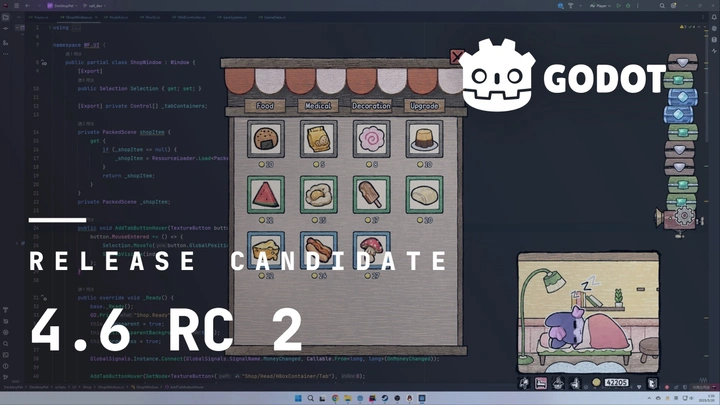
Godot 4.6 Release Candidate 2 (RC2) has been released for testing, showcasing various enhancements over its predecessor, RC1. This update emphasizes bug fixes and performance improvements across multiple platforms. Notable fixes include the resolution of a data stripping issue in ClassDB's method list and corrections to viewport rotation gizmo alignment errors. Additionally, the functionality of TileMap Dock buttons has been restored, and adjustments have been made to address Android build regressions related to vendor plugins.
Performance optimizations have been implemented, particularly for macOS and Wayland users. MacOS users will notice changes in how system events are managed during the boot splash screen, while Wayland now supports non-interactive window resizing by default. Further optimizations include the removal of unnecessary SPIR-V rendering storage unless needed for pipeline statistics.
Moreover, updates to OpenXR support allow users to specify the version of initialization, enhancing the framework's usability for virtual and augmented reality development.
As Godot 4.6 reaches this crucial testing phase, developers encourage users to explore the new features and improvements. Users can find a comprehensive overview in the original release announcement. This version aims to streamline the development experience and prepare for a stable release, inviting feedback from the community to identify any lingering issues before the final launch.
As Godot continues to evolve, developers are looking for further enhancements and features to be integrated into future updates, showcasing their commitment to user experience and performance optimization. The Godot team remains dedicated to community engagement, ensuring that user feedback plays a vital role in shaping the development of the engine
Performance optimizations have been implemented, particularly for macOS and Wayland users. MacOS users will notice changes in how system events are managed during the boot splash screen, while Wayland now supports non-interactive window resizing by default. Further optimizations include the removal of unnecessary SPIR-V rendering storage unless needed for pipeline statistics.
Moreover, updates to OpenXR support allow users to specify the version of initialization, enhancing the framework's usability for virtual and augmented reality development.
As Godot 4.6 reaches this crucial testing phase, developers encourage users to explore the new features and improvements. Users can find a comprehensive overview in the original release announcement. This version aims to streamline the development experience and prepare for a stable release, inviting feedback from the community to identify any lingering issues before the final launch.
As Godot continues to evolve, developers are looking for further enhancements and features to be integrated into future updates, showcasing their commitment to user experience and performance optimization. The Godot team remains dedicated to community engagement, ensuring that user feedback plays a vital role in shaping the development of the engine
Godot 4.6 RC 2 released
The second release candidate of Godot 4.6, known as RC2, is now available for testing and features various improvements over the previous snapshot. Key updates include bug fixes, such as resolving a data stripping issue in ClassDB's method list and squashing alignment errors in the viewport rotation gizmo. Additionally, performance tweaks have been made on macOS and Wayland platforms, including enabling non-interactive window resizing by default on Wayland and removing unnecessary storage for SPIR-V rendering. The OpenXR support has also received updates, allowing users to specify the version of initialization.