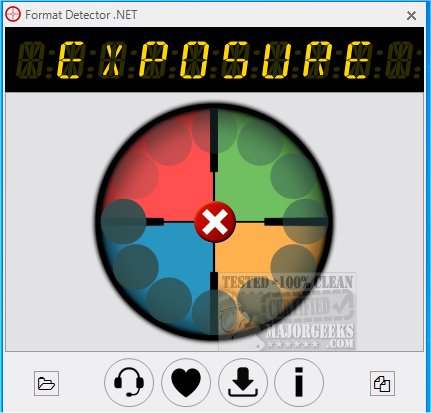
The latest release of Format Detector .NET, version 18.45, introduces an effective and user-friendly tool tailored for analyzing and detecting the file type of virtually any file format. This software provides precise identification of file formats, making it straightforward to ascertain file types and decide on the appropriate actions to take. Whether dealing with images, audio files, video files, or documents, Format Detector .NET stands out as a reliable choice for file analysis.
One of the key advantages of Format Detector .NET is its portability; it can easily be installed on a flash drive, enabling users to utilize it on-the-go. The interface is designed for simplicity, resembling the popular Simon Says game. Users can quickly drag and drop files into the tool, and the analysis begins instantly, with results rapidly displayed at the top of the interface.
In our increasingly digital world, encountering files with unknown formats can pose significant challenges. Format Detector .NET addresses this issue by allowing users to identify file formats even when the file extension is absent or unrecognized. This capability is crucial for selecting the right software for opening, editing, or viewing files. The tool is ideal for a wide range of users, from professional developers and students to everyday computer users, making it an essential component of any digital toolkit.
Key Features of Format Detector .NET:
- Full offline processing with an embedded file-type database
- Dual detection methods utilizing both signature and metadata analysis
- Compatibility with ASCII, Hex, ISO, and Unicode formats
- Utilizes the fastest parsing algorithm available for efficient performance
Additional Resources:
Similar tools and resources include guides on how to show or hide file name extensions in the Windows File Explorer context menu and methods to display the actual path in Windows 10 and 11 File Explorer.
Conclusion:
The release of Format Detector .NET 18.45 not only enhances file management efficiency but also empowers users to tackle file format-related challenges with confidence. By incorporating this tool into your workflow, you can streamline your processes and handle a diverse array of file types with ease
One of the key advantages of Format Detector .NET is its portability; it can easily be installed on a flash drive, enabling users to utilize it on-the-go. The interface is designed for simplicity, resembling the popular Simon Says game. Users can quickly drag and drop files into the tool, and the analysis begins instantly, with results rapidly displayed at the top of the interface.
In our increasingly digital world, encountering files with unknown formats can pose significant challenges. Format Detector .NET addresses this issue by allowing users to identify file formats even when the file extension is absent or unrecognized. This capability is crucial for selecting the right software for opening, editing, or viewing files. The tool is ideal for a wide range of users, from professional developers and students to everyday computer users, making it an essential component of any digital toolkit.
Key Features of Format Detector .NET:
- Full offline processing with an embedded file-type database
- Dual detection methods utilizing both signature and metadata analysis
- Compatibility with ASCII, Hex, ISO, and Unicode formats
- Utilizes the fastest parsing algorithm available for efficient performance
Additional Resources:
Similar tools and resources include guides on how to show or hide file name extensions in the Windows File Explorer context menu and methods to display the actual path in Windows 10 and 11 File Explorer.
Conclusion:
The release of Format Detector .NET 18.45 not only enhances file management efficiency but also empowers users to tackle file format-related challenges with confidence. By incorporating this tool into your workflow, you can streamline your processes and handle a diverse array of file types with ease
Format Detector .NET 18.45 released
Format Detector .NET is an effective and user-friendly tool designed to analyze and detect the file type of virtually any file.