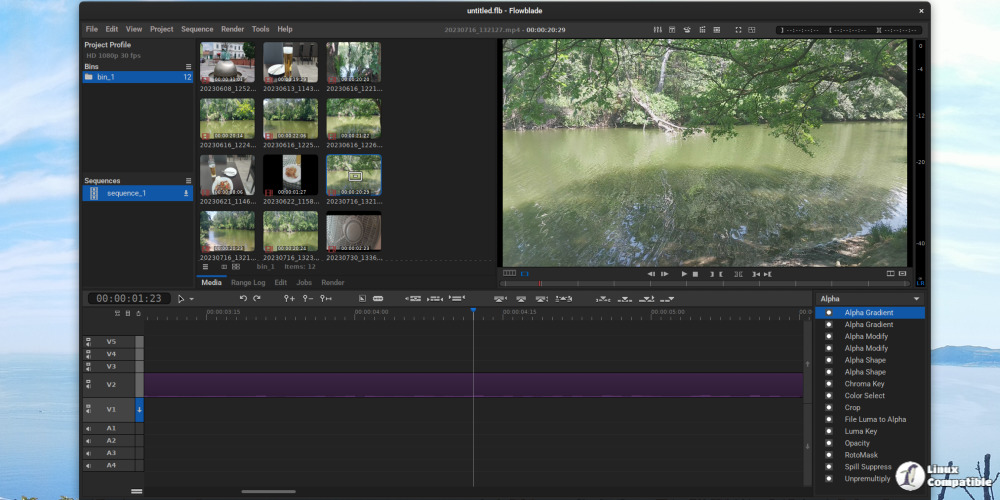
Flowblade 2.24 has been officially released, offering an enhanced video editing experience for Linux users. This free and open-source editor adheres to the principles of the GNU General Public License (GPL) v3. The latest version comes with upgraded core editing tools and advanced features, such as clip parenting and audio level synchronization, allowing for a more refined editing process. The image compositing capabilities have also been significantly improved, featuring filters, keyframing, and standard track-based methods, which enable users to create complex animations.
Notably, the integration of the G'Mic Tool allows users to apply unique and complex effects, while generator plugins facilitate the creation of animated text and custom backgrounds. The editor supports a wide range of media formats, including various audio, video, and graphic file types, and it boasts a flexible output engine for encoding into popular formats.
A major focus of this release was the transition to the GTK 4 toolkit, which has accelerated development progress toward a planned completion in fall 2025. This transition, along with the move away from SDL2-based display systems on X11 and the creation of new video handling components for Wayland, introduced additional challenges.
User contributions have played a crucial role in shaping this release, with community involvement leading to various small features, UI enhancements, and bug fixes. Significant stability improvements are included, addressing issues such as freezing audio levels, undo/redo problems, and user interface refinements.
Additionally, the update features clearer distinctions between the Clip Monitor and Timeline views, restored functionality for batch rendering operations, and a new Box Select Move edit mode, which streamlines the editing workflow by allowing users to group multiple edit points together.
Overall, Flowblade 2.24 reflects ongoing progress and responsiveness to user feedback, solidifying its reputation as a robust video editing tool for Linux enthusiasts and professionals alike. Users can download the source code from GitHub and find detailed installation instructions online.
Extension:
Future developments for Flowblade may focus on further enhancing user experience through advanced AI-driven editing features, which could automate repetitive tasks or provide intelligent suggestions based on user behavior. Additionally, expanding support for collaborative editing could enable multiple users to work on the same project simultaneously, fostering a more interactive and communal approach to video editing. As the community continues to contribute, we can expect Flowblade to evolve into an even more powerful tool for creative professionals, keeping pace with current industry standards and user expectations
Notably, the integration of the G'Mic Tool allows users to apply unique and complex effects, while generator plugins facilitate the creation of animated text and custom backgrounds. The editor supports a wide range of media formats, including various audio, video, and graphic file types, and it boasts a flexible output engine for encoding into popular formats.
A major focus of this release was the transition to the GTK 4 toolkit, which has accelerated development progress toward a planned completion in fall 2025. This transition, along with the move away from SDL2-based display systems on X11 and the creation of new video handling components for Wayland, introduced additional challenges.
User contributions have played a crucial role in shaping this release, with community involvement leading to various small features, UI enhancements, and bug fixes. Significant stability improvements are included, addressing issues such as freezing audio levels, undo/redo problems, and user interface refinements.
Additionally, the update features clearer distinctions between the Clip Monitor and Timeline views, restored functionality for batch rendering operations, and a new Box Select Move edit mode, which streamlines the editing workflow by allowing users to group multiple edit points together.
Overall, Flowblade 2.24 reflects ongoing progress and responsiveness to user feedback, solidifying its reputation as a robust video editing tool for Linux enthusiasts and professionals alike. Users can download the source code from GitHub and find detailed installation instructions online.
Extension:
Future developments for Flowblade may focus on further enhancing user experience through advanced AI-driven editing features, which could automate repetitive tasks or provide intelligent suggestions based on user behavior. Additionally, expanding support for collaborative editing could enable multiple users to work on the same project simultaneously, fostering a more interactive and communal approach to video editing. As the community continues to contribute, we can expect Flowblade to evolve into an even more powerful tool for creative professionals, keeping pace with current industry standards and user expectations
Flowblade 2.24 released
Flowblade 2.24 is now available for Linux users as a free and open-source video editor built on GNU General Public License (GPL) v3 principles. The latest release includes upgraded core editing tools, advanced features like clip parenting and audio level synchronization, and improved image compositing with filters and keyframing capabilities. The editor has also undergone significant updates, including porting to the newer GTK 4 toolkit and integrating G'Mic Tool for complex effects, as well as numerous bug fixes and stability improvements.