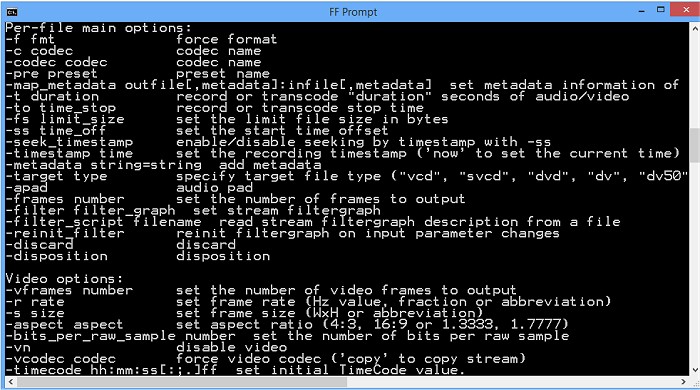
FFmpeg 8.1.0-2026-03-16 has been released, enhancing its status as a leading open-source command-line tool for converting multimedia files across various formats. FFmpeg excels in its ability to decode, encode, transcode, mux, demux, stream, filter, and play nearly any multimedia content, supporting everything from obscure legacy formats to the latest innovations.
The FFmpeg framework includes several libraries such as libavcodec, libavutil, libavformat, libavfilter, libavdevice, libswscale, and libswresample, which developers can utilize to build applications. End users can take advantage of tools like ffmpeg, ffserver, ffplay, and ffprobe for tasks like transcoding, streaming, and playback. The FFmpeg project is dedicated to delivering the most technically advanced solutions for both developers and users by integrating the best available free software options while minimizing dependencies on other libraries.
Users should note that FFmpeg is distributed in 7z format, requiring a separate application for file extraction. The project emphasizes user choice by supporting various options, allowing users to determine what they consider the "best" solution for their needs.
In addition to the core functionalities of FFmpeg, users may also find it helpful to explore related topics such as enabling Windows Sonic Surround Sound, converting media files using VLC Media Player, and troubleshooting audio issues in Windows 10 and 11. As the multimedia landscape continues to evolve, FFmpeg remains a vital tool for anyone working with audio and video files.
As the multimedia framework continues to develop, future updates may include enhanced support for new formats, improved performance, and additional functionalities, ensuring that FFmpeg remains at the forefront of multimedia processing technology
The FFmpeg framework includes several libraries such as libavcodec, libavutil, libavformat, libavfilter, libavdevice, libswscale, and libswresample, which developers can utilize to build applications. End users can take advantage of tools like ffmpeg, ffserver, ffplay, and ffprobe for tasks like transcoding, streaming, and playback. The FFmpeg project is dedicated to delivering the most technically advanced solutions for both developers and users by integrating the best available free software options while minimizing dependencies on other libraries.
Users should note that FFmpeg is distributed in 7z format, requiring a separate application for file extraction. The project emphasizes user choice by supporting various options, allowing users to determine what they consider the "best" solution for their needs.
In addition to the core functionalities of FFmpeg, users may also find it helpful to explore related topics such as enabling Windows Sonic Surround Sound, converting media files using VLC Media Player, and troubleshooting audio issues in Windows 10 and 11. As the multimedia landscape continues to evolve, FFmpeg remains a vital tool for anyone working with audio and video files.
As the multimedia framework continues to develop, future updates may include enhanced support for new formats, improved performance, and additional functionalities, ensuring that FFmpeg remains at the forefront of multimedia processing technology
FFmpeg 8.1.0-2026-03-16 released
FFmpeg is a freeware command-line tool to convert multimedia files between formats.