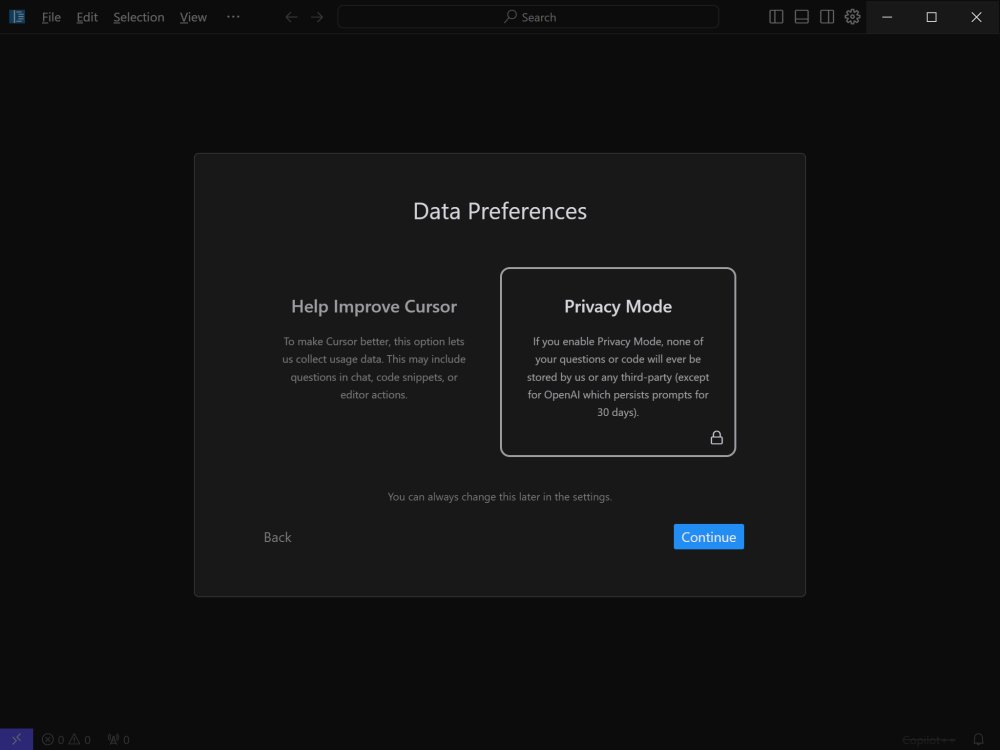
Cursor is an innovative AI-powered integrated development environment (IDE) designed to enhance coding efficiency and productivity. With its robust AI features, Cursor is engineered for intermediate to professional developers who seek to streamline their coding processes.
Key Features of Cursor:
1. Smart Code Suggestions and Auto-Completion: Utilizing advanced AI algorithms, Cursor provides contextual code suggestions, which helps in writing code swiftly and accurately.
2. Automatic Code Generation and Fixes: Users can generate new code or rectify lint errors with simple commands, allowing for a smoother coding experience.
3. In-Editor Chat: This feature enables real-time communication within the IDE, allowing developers to ask questions about their projects and receive immediate guidance.
4. Seamless Integration: Cursor supports numerous VSCode extensions, themes, and keybindings, making the transition for existing VSCode users seamless.
5. Enhanced Debugging: The IDE automatically processes stack traces to identify errors, simplifying the debugging process.
6. Local Mode for Privacy: Cursor ensures user data remains private by storing no information on external servers, which is crucial for sensitive projects.
7. Blazing-Fast Performance: Powered by GPT-4, Cursor offers speeds up to three times faster than traditional APIs, enabling uninterrupted productivity.
8. Wide Language Support: Cursor accommodates various programming languages, including Python, JavaScript, TypeScript, Java, C++, Ruby, and Go.
Pricing Plans:
Cursor presents two tiers of service: Free and Pro. The Free plan offers essential AI support, limited to 2,000 monthly completions and basic features powered by GPT-3.5. The Pro plan, available for $20 per month (or $16 monthly with an annual commitment), removes limitations on completions and provides access to advanced models like GPT-4 and Claude 3.5 Opus. Pro users benefit from features like Copilot++, which intelligently modifies code based on context, as well as enhanced integration and management of multiple files.
Conclusion:
Cursor stands out as a powerful AI-driven IDE that redefines the coding experience. It combines intelligent codebase understanding with seamless integration and advanced features, making it an invaluable tool for developers looking to optimize their workflow. Whether working on large-scale software projects or seeking to improve individual coding efficiency, Cursor has the potential to transform coding practices.
Future Prospects:
As AI continues to evolve, Cursor is likely to expand its capabilities further, potentially incorporating more advanced features such as machine learning-driven predictive coding, enhanced collaboration tools for team projects, and customizable AI functionalities tailored to individual developer needs. The commitment to maintaining user privacy with local modes and the ongoing support for a variety of programming languages will also remain critical as the development landscape changes. Users can expect ongoing updates and enhancements that will keep Cursor at the forefront of AI-powered coding environments
Key Features of Cursor:
1. Smart Code Suggestions and Auto-Completion: Utilizing advanced AI algorithms, Cursor provides contextual code suggestions, which helps in writing code swiftly and accurately.
2. Automatic Code Generation and Fixes: Users can generate new code or rectify lint errors with simple commands, allowing for a smoother coding experience.
3. In-Editor Chat: This feature enables real-time communication within the IDE, allowing developers to ask questions about their projects and receive immediate guidance.
4. Seamless Integration: Cursor supports numerous VSCode extensions, themes, and keybindings, making the transition for existing VSCode users seamless.
5. Enhanced Debugging: The IDE automatically processes stack traces to identify errors, simplifying the debugging process.
6. Local Mode for Privacy: Cursor ensures user data remains private by storing no information on external servers, which is crucial for sensitive projects.
7. Blazing-Fast Performance: Powered by GPT-4, Cursor offers speeds up to three times faster than traditional APIs, enabling uninterrupted productivity.
8. Wide Language Support: Cursor accommodates various programming languages, including Python, JavaScript, TypeScript, Java, C++, Ruby, and Go.
Pricing Plans:
Cursor presents two tiers of service: Free and Pro. The Free plan offers essential AI support, limited to 2,000 monthly completions and basic features powered by GPT-3.5. The Pro plan, available for $20 per month (or $16 monthly with an annual commitment), removes limitations on completions and provides access to advanced models like GPT-4 and Claude 3.5 Opus. Pro users benefit from features like Copilot++, which intelligently modifies code based on context, as well as enhanced integration and management of multiple files.
Conclusion:
Cursor stands out as a powerful AI-driven IDE that redefines the coding experience. It combines intelligent codebase understanding with seamless integration and advanced features, making it an invaluable tool for developers looking to optimize their workflow. Whether working on large-scale software projects or seeking to improve individual coding efficiency, Cursor has the potential to transform coding practices.
Future Prospects:
As AI continues to evolve, Cursor is likely to expand its capabilities further, potentially incorporating more advanced features such as machine learning-driven predictive coding, enhanced collaboration tools for team projects, and customizable AI functionalities tailored to individual developer needs. The commitment to maintaining user privacy with local modes and the ongoing support for a variety of programming languages will also remain critical as the development landscape changes. Users can expect ongoing updates and enhancements that will keep Cursor at the forefront of AI-powered coding environments
Cursor 2.5.20 released
Cursor is bottom-up designed with the goal of creating an integrated development environment to build software faster using AI.