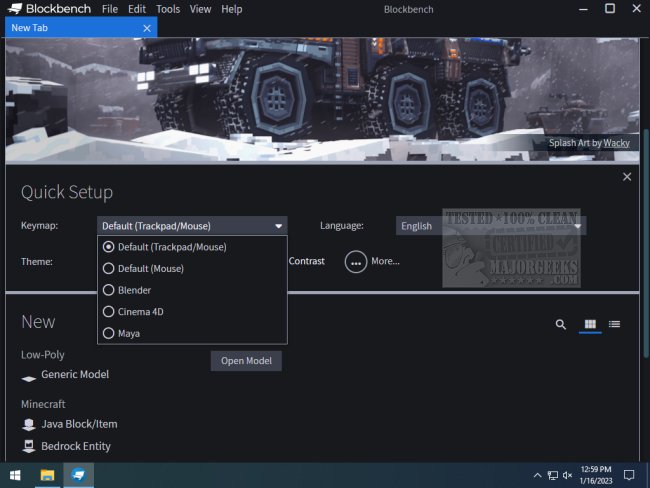
Blockbench has released its 5.1.0 Beta 3 and 5.0.7 versions, continuing to establish itself as a premier open-source model editor tailored for low-poly and boxy models, especially those featuring pixel art textures. With a focus on accessibility, Blockbench is ideal for creators at any skill level, from novices to experienced modelers, seeking to dive into the world of 3D modeling without the burden of complex menus and extensive tutorials.
Originally designed with Minecraft in mind, Blockbench offers seamless integration for modding, resource pack creation, and even supports the Bedrock Edition, allowing users to export their models directly for these purposes. However, its utility extends beyond Minecraft. Game developers can leverage Blockbench to create characters, props, and environments compatible with popular game engines like Unity, Unreal, and Godot. 3D printing enthusiasts can design custom figurines and prototypes, though they may need to export to formats like OBJ and further refine their models in software like Blender or TinkerCad. Additionally, the built-in animation tools make it easy for animators to produce motion sequences and short clips, while educators can utilize it as a user-friendly introduction to 3D modeling.
Key Features of Blockbench:
- User-Friendly Interface: A straightforward design that welcomes users of all experience levels.
- Animation Tools: Simplified yet powerful features for creating animations.
- Minecraft Integration: Direct export options for mods and resource packs, enhancing usability for Minecraft enthusiasts.
- Plugin Support: The ability to add functionality through community plugins or by creating custom ones.
- Cross-Platform Functionality: Compatible with Windows, macOS, and Linux.
Pros:
- Free and open-source, making it an attractive option for creators.
- Beginner-friendly while still offering advanced capabilities.
- Ideal for Minecraft creators, thanks to direct export options.
- Highly customizable through plugins.
- Smooth performance across different operating systems.
Cons:
- Primarily focused on low-poly designs, which may not appeal to all users.
- May lack the depth needed for advanced modeling techniques.
- Plugin development requires some coding knowledge.
Conclusion: Blockbench stands out as an exceptional tool for both Minecraft creators and enthusiasts of low-poly art. Its refreshing simplicity and versatility make 3D modeling enjoyable and accessible. Whether you're involved in animation, modding, or prototyping, Blockbench provides a valuable resource that is completely free to use—what’s not to love?
Future Outlook: As Blockbench continues to evolve, users can look forward to more features and improvements that enhance its functionality, making it an even more powerful tool for a wide range of creative projects. The growing community around Blockbench may also lead to more plugins and resources, enriching the user experience and expanding its applicability in various fields, from gaming to education and beyond
Originally designed with Minecraft in mind, Blockbench offers seamless integration for modding, resource pack creation, and even supports the Bedrock Edition, allowing users to export their models directly for these purposes. However, its utility extends beyond Minecraft. Game developers can leverage Blockbench to create characters, props, and environments compatible with popular game engines like Unity, Unreal, and Godot. 3D printing enthusiasts can design custom figurines and prototypes, though they may need to export to formats like OBJ and further refine their models in software like Blender or TinkerCad. Additionally, the built-in animation tools make it easy for animators to produce motion sequences and short clips, while educators can utilize it as a user-friendly introduction to 3D modeling.
Key Features of Blockbench:
- User-Friendly Interface: A straightforward design that welcomes users of all experience levels.
- Animation Tools: Simplified yet powerful features for creating animations.
- Minecraft Integration: Direct export options for mods and resource packs, enhancing usability for Minecraft enthusiasts.
- Plugin Support: The ability to add functionality through community plugins or by creating custom ones.
- Cross-Platform Functionality: Compatible with Windows, macOS, and Linux.
Pros:
- Free and open-source, making it an attractive option for creators.
- Beginner-friendly while still offering advanced capabilities.
- Ideal for Minecraft creators, thanks to direct export options.
- Highly customizable through plugins.
- Smooth performance across different operating systems.
Cons:
- Primarily focused on low-poly designs, which may not appeal to all users.
- May lack the depth needed for advanced modeling techniques.
- Plugin development requires some coding knowledge.
Conclusion: Blockbench stands out as an exceptional tool for both Minecraft creators and enthusiasts of low-poly art. Its refreshing simplicity and versatility make 3D modeling enjoyable and accessible. Whether you're involved in animation, modding, or prototyping, Blockbench provides a valuable resource that is completely free to use—what’s not to love?
Future Outlook: As Blockbench continues to evolve, users can look forward to more features and improvements that enhance its functionality, making it an even more powerful tool for a wide range of creative projects. The growing community around Blockbench may also lead to more plugins and resources, enriching the user experience and expanding its applicability in various fields, from gaming to education and beyond
Blockbench 5.1.0 Beta 3 / 5.0.7 released
Blockbench provides you with an Open Source model editor for low-poly and boxy models with pixel art textures.