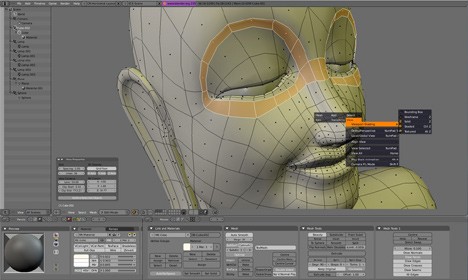
Blender 5.0.1 has been officially released, enhancing this popular free and open-source 3D animation suite that encompasses the entire 3D production pipeline. Users can engage in modeling, rigging, animation, simulation, rendering, compositing, motion tracking, video editing, and game development, all within a single application.
Advanced users can leverage Blender’s API for Python scripting to customize their experience and develop specialized tools, many of which are later integrated into subsequent releases of the software. This flexibility makes Blender particularly appealing to individual artists and small studios that benefit from its cohesive workflow and agile development cycle. The software is cross-platform and functions seamlessly on Linux, Windows, and macOS, utilizing OpenGL for a consistent user interface across different operating systems.
As a community-driven project governed by the GNU General Public License (GPL), Blender invites contributions from users, ranging from minor tweaks to major enhancements. This collaborative nature fosters continuous improvement, resulting in new features, swift bug fixes, and enhanced usability. While Blender is free to use, users are encouraged to invest in the project, whether through financial contributions, participation in forums, or sharing their own creations, thus helping to propel this powerful collaborative tool forward.
Looking ahead, Blender's development is expected to continue focusing on expanding its features and user accessibility, potentially integrating more advanced tools for virtual reality and augmented reality, as well as improving its rendering capabilities with real-time rendering engines. The community's ongoing contributions will likely pave the way for innovative uses of Blender in various industries, including film, gaming, and education, solidifying its place as a leading choice in 3D software
Advanced users can leverage Blender’s API for Python scripting to customize their experience and develop specialized tools, many of which are later integrated into subsequent releases of the software. This flexibility makes Blender particularly appealing to individual artists and small studios that benefit from its cohesive workflow and agile development cycle. The software is cross-platform and functions seamlessly on Linux, Windows, and macOS, utilizing OpenGL for a consistent user interface across different operating systems.
As a community-driven project governed by the GNU General Public License (GPL), Blender invites contributions from users, ranging from minor tweaks to major enhancements. This collaborative nature fosters continuous improvement, resulting in new features, swift bug fixes, and enhanced usability. While Blender is free to use, users are encouraged to invest in the project, whether through financial contributions, participation in forums, or sharing their own creations, thus helping to propel this powerful collaborative tool forward.
Looking ahead, Blender's development is expected to continue focusing on expanding its features and user accessibility, potentially integrating more advanced tools for virtual reality and augmented reality, as well as improving its rendering capabilities with real-time rendering engines. The community's ongoing contributions will likely pave the way for innovative uses of Blender in various industries, including film, gaming, and education, solidifying its place as a leading choice in 3D software
Blender 5.0.1 released
Blender is a free and Open Source 3D animation suite that supports the entirety of the 3D pipeline—modeling, rigging, animation, simulation, rendering, compositing, motion tracking, even video editing, and game creation.