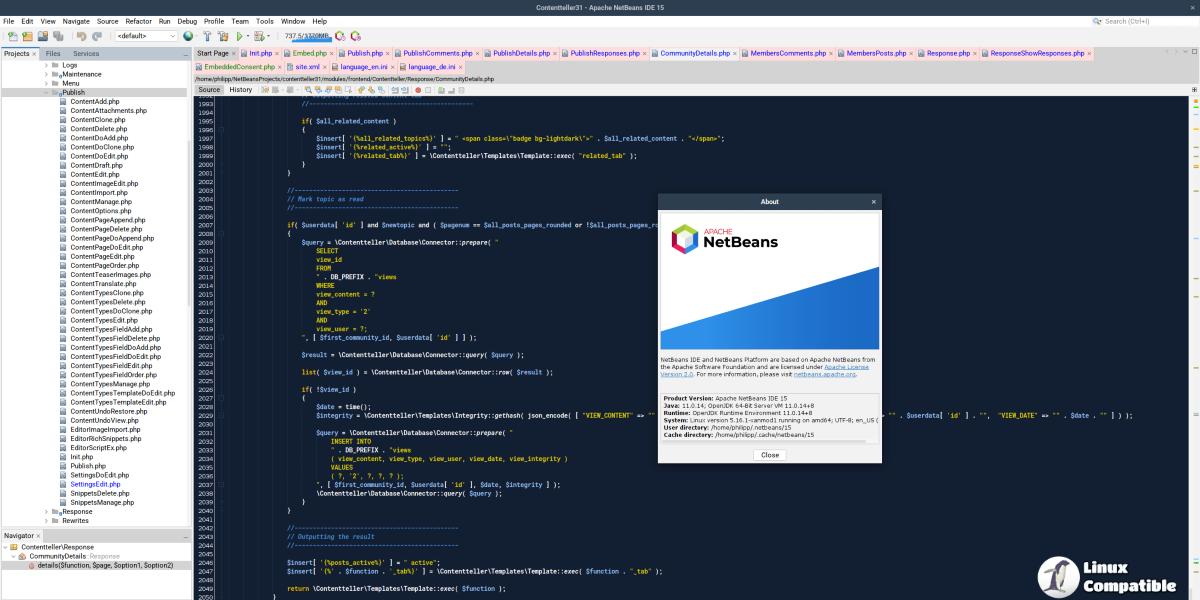
Apache NetBeans IDE 28 has officially launched, bringing a host of enhancements and bug fixes designed to enhance the overall development experience for users. One of the standout features of this release is improved support for Gradle, which addresses several key issues, including the prevention of null pointer exceptions (NPE) that could arise when a buildscript was absent. This fix allows for a smoother operation and greater reliability in project builds.
Additionally, the integration of Maven and Gradle-JUnit has been fortified, allowing developers to handle tests at various levels more effectively and ensuring that results are consistently extracted. The release also resolves a notorious Gradle Gatling Project loading issue, further stabilizing the Gradle toolset within the IDE. Other noteworthy improvements for Gradle include enhanced stability in the GradleTestProgressListener, which aids in the overall reliability of testing processes.
Maven users will appreciate the corrections made to Maven coordinates in embedded lists and improvements in the DAP server's synchronization with the LSP, ensuring projects are fully prepared and accessible from the outset. The UI has also seen enhancements, including a new copy button for the Maven action customizer and improved handling of Maven goals during re-runs.
Java developers benefit from several significant updates, including the upgrade of the net.java.html library to version 1.8.2, which may introduce new capabilities or optimizations. There's also been progress on Jackpot rules that address target typing failures, along with a subtle adjustment in the Abstract Syntax Tree (AST) output during pretty printing that may change how implicit yield is presented.
Groovy support has been slightly enhanced with better file extension handling, while PHP users will notice quality-of-life improvements in autocompletion features and inline comment coloring, making their coding sessions more efficient. The Enterprise module has kept pace with the addition of Java SE 26 compatibility updates for popular server platforms like Tomcat, TomEE, and GlassFish.
Beyond these specific areas, the release contains numerous additional tweaks aimed at improving user experience. Navigation with dark themes has been refined, keyboard behaviors may be more intuitive, and new tooltips help users keep track of active tabs for Projects, Files, and Favorites. Maintainers will also find updates to crucial dependencies, including actions/checkout and actions/download-artifact, which have been upgraded to version 5, as well as the PHP toolkit.
In summary, Apache NetBeans IDE 28 marks a significant advancement for this popular open-source IDE, offering a range of tangible improvements in core functionality, enhanced stability, and an overall more robust environment for developers as they build and refine their applications.
Looking ahead, the Apache NetBeans community continues to prioritize user feedback, which will likely inform future updates and improvements, keeping the IDE competitive and aligned with modern development practices. Developers can look forward to ongoing enhancements that will further streamline their workflows and bolster the IDE's capabilities
Additionally, the integration of Maven and Gradle-JUnit has been fortified, allowing developers to handle tests at various levels more effectively and ensuring that results are consistently extracted. The release also resolves a notorious Gradle Gatling Project loading issue, further stabilizing the Gradle toolset within the IDE. Other noteworthy improvements for Gradle include enhanced stability in the GradleTestProgressListener, which aids in the overall reliability of testing processes.
Maven users will appreciate the corrections made to Maven coordinates in embedded lists and improvements in the DAP server's synchronization with the LSP, ensuring projects are fully prepared and accessible from the outset. The UI has also seen enhancements, including a new copy button for the Maven action customizer and improved handling of Maven goals during re-runs.
Java developers benefit from several significant updates, including the upgrade of the net.java.html library to version 1.8.2, which may introduce new capabilities or optimizations. There's also been progress on Jackpot rules that address target typing failures, along with a subtle adjustment in the Abstract Syntax Tree (AST) output during pretty printing that may change how implicit yield is presented.
Groovy support has been slightly enhanced with better file extension handling, while PHP users will notice quality-of-life improvements in autocompletion features and inline comment coloring, making their coding sessions more efficient. The Enterprise module has kept pace with the addition of Java SE 26 compatibility updates for popular server platforms like Tomcat, TomEE, and GlassFish.
Beyond these specific areas, the release contains numerous additional tweaks aimed at improving user experience. Navigation with dark themes has been refined, keyboard behaviors may be more intuitive, and new tooltips help users keep track of active tabs for Projects, Files, and Favorites. Maintainers will also find updates to crucial dependencies, including actions/checkout and actions/download-artifact, which have been upgraded to version 5, as well as the PHP toolkit.
In summary, Apache NetBeans IDE 28 marks a significant advancement for this popular open-source IDE, offering a range of tangible improvements in core functionality, enhanced stability, and an overall more robust environment for developers as they build and refine their applications.
Looking ahead, the Apache NetBeans community continues to prioritize user feedback, which will likely inform future updates and improvements, keeping the IDE competitive and aligned with modern development practices. Developers can look forward to ongoing enhancements that will further streamline their workflows and bolster the IDE's capabilities
Apache NetBeans IDE 28 released
Apache NetBeans IDE 28 has been released, featuring several enhancements and bug fixes to improve the development experience. The latest release includes better support for Gradle, resolving issues such as null pointer exceptions and improving Maven/Gradle-JUnit integration. Other notable updates include improved stability around Gradle tools, enhanced UI features for Maven users, and upgrades to Java libraries and PHP support.